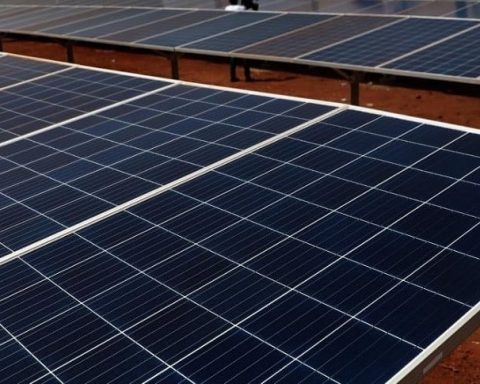
The Centre for the Promotion of Private Enterprise (CPPE) has said banning the importation of solar panels in Nigeria would worsen the problem of energy access in the country.
CPPE stated this while reacting to the recent announcement of a proposed ban on the importation of solar panels in Nigeria.
Join our WhatsApp ChannelMinister of Science and Technology, Mr Uche Nnaji, who announced the proposed ban at the unveiling of the NEV T6 electric buses in Abuja, on 26 March, said the aim is to encourage local manufacturing of solar panels.
However, in a statement signed by CPPE CEO, Dr Muda Yusuf, the group highlighted reasons the Federal Government should not outrightly ban the importation of solar panels into the country at this time.
According to CPPE, Nigeria is one of the countries with the worst energy access, with a per capita electricity consumption of about 160 kWh, far below the sub-Saharan average of 350 kWh.
The centre underscored the importance of the adoption of solar energy solutions in tackling the problem of energy access across the country and warned that “a ban on the importation of solar panels in the face of glaringly inadequate domestic production capacity would worsen the country’s energy crisis.”
The economic think tank stressed that the proposed ban negates the government policy on promoting the adoption of renewable energy solutions by households, small businesses, rural communities, government institutions and other corporate organisations.
READ ALSO: How Nigerian Govt’s Proposed Solar Panels Import Ban Threatens Renewable Energy Projects
It noted that the adoption of solar solutions has gained impressive momentum in the last two years, especially since the unprecedented hike in energy costs caused by the removal of subsidies on fuel.
“It would worsen the problem of energy access as it would make the cost of solar energy solutions prohibitive, putting it beyond the average Nigerian,” CPPE warned.
While noting that the cost of acquiring solar solutions in Nigeria is already high, the centre expressed concerns that the ban on importation would further escalate it.
“What is desirable at this time is to seek ways to drive affordability, rather than escalate costs.”
While stating that it shares the Minister’s vision of encouraging domestic production of solar panels, which is good for self-reliance and conservation of foreign exchange, CPPE, however, stated that the transition process should be a “gradual” one.
READ ALSO: Can Investment In Renewable Energy Resolve Nigeria’s Power Crisis?
It warned that resorting to “hasty decision of banning importation of solar panels would be very disruptive and counter-productive.”
It emphasised the need for building adequate local capacity to fill the supply-demand gaps, before banning importation.
“Nigeria is not ripe for a ban on importation of solar panels given the acute energy deficit in the economy and the glaring domestic capacity limitations for the production of solar panels,” it further stated.
The group also pointed out that the Minister’s announcement of a proposed ban has created anxiety among the renewable energy investing community, the business community, households as well as multilateral organisations, thereby posing a threat to investing in renewable energy solutions in Nigeria. “This should be avoided because of the adverse impact on investors’ confidence,” it advised, adding that the government needs to urgently clarify its position to restore confidence.
The group recommended that the government should support investors in the solar panel production with fiscal and monetary incentives such as tax waivers, tariff concessions on intermediate products and long-term low-interest financing to encourage domestic production.
CPPE further urged the government to slash the import duty on batteries, inverters and wind turbines to 5 per cent, emphasizing that it “would significantly improve energy access, energy security and productivity in the economy.”
The Centre noted that a banning the importation of solar panels is a fundamental trade policy matter which is not the responsibility of the science and technology ministry, but is something that should be driven by Coordinating Minister of the Economy, in collaboration with the Ministers of Industry, Trade, and Investment, as well as National Planning and Budget.
The centre clarified that the Executive Order 5, which the minister made reference to while justifying the proposed import ban, is a procurement policy which directs the MDAs to give preference to Nigerian service providers in their procurement process for goods and services, and is therefore different from a trade policy which it said has wider economic implications.
It called for extensive stakeholder consultations to ensure an inclusive policy formulation process.
“This would allow for a comprehensive analysis of the wider economic and social implications of such a fundamental policy change,” it explained.

Victor Ezeja is a passionate journalist with seven years of experience writing on economy, politics and energy. He holds a Master's degree in Mass Communication.