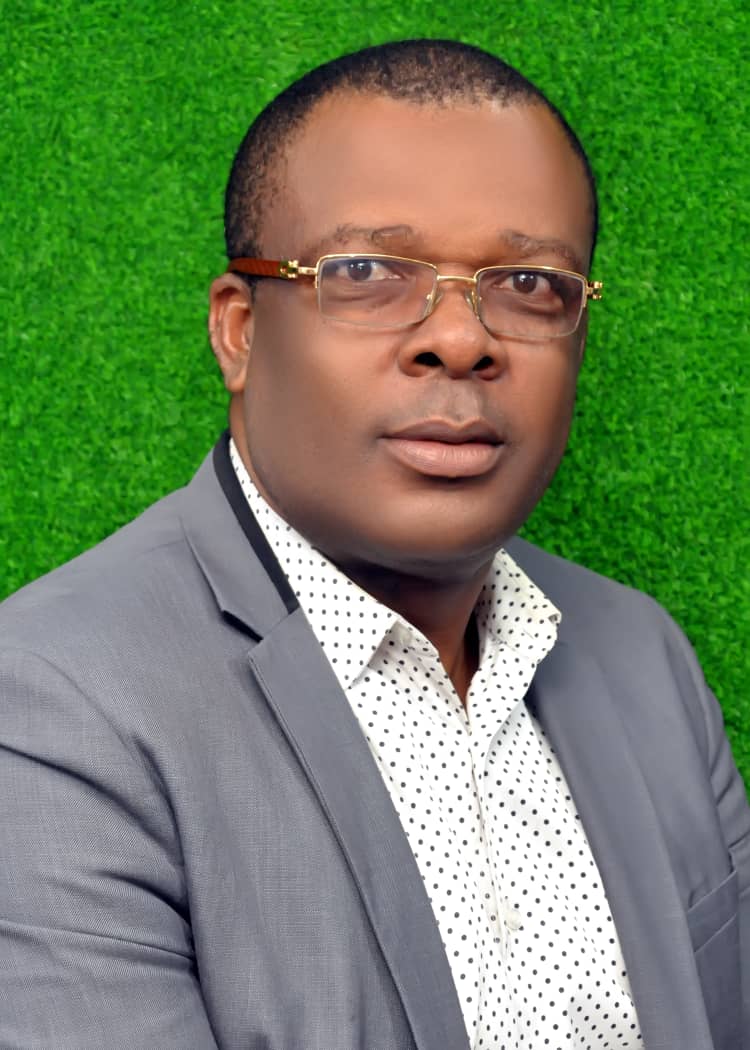
 MARCEL MBAMALU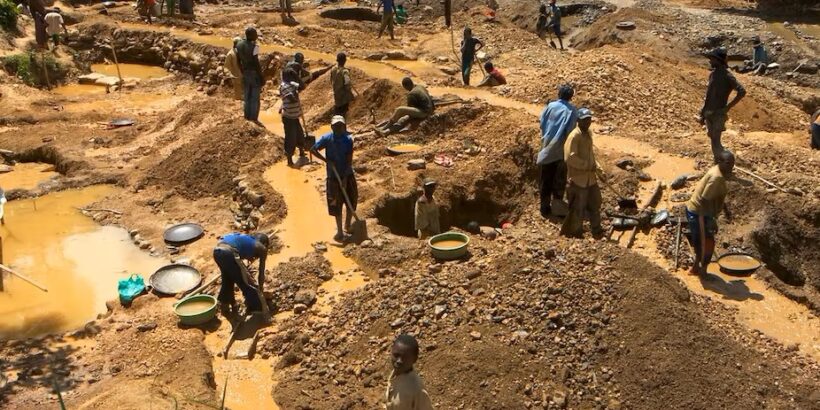
Environmental activist and author Nnimmo Bassey has warned that Nigeria risks creating new “sacrifice zones” if it rushes into lithium, gold and other critical mineral extraction without fixing the governance failures that defined nearly 70 years of oil exploitation in the Niger Delta.
Speaking on July 14, 2026 at the 3rd Nigeria Socio-Ecological Alternatives Convergence (NSAC) in Abuja, Bassey said the country’s new push for mining and carbon trading is repeating the same extractivist logic that has driven deforestation, displacement and conflict.
Join our WhatsApp ChannelThe convergence, convened under the theme “Deforestation, Mining and the Crisis of Human Security in Nigeria,” brought together communities, movements and researchers to review what Bassey called “uncomfortable realities” in Nigeria’s environment and to propose alternatives rooted in justice and ecological integrity.
“Every ecological crisis is a crisis of values and governance”
Bassey opened with a simple premise: forests cannot regenerate while chainsaws are still running, and rivers cannot recover while mining waste poisons them.
“We also believe that every crisis created by human choices can be addressed through human responsibility. The first step towards healing is to stop causing harm,” he told delegates.
He argued that the current development model treats forests as timber reserves, mountains as barriers to minerals, rivers as waste channels, and communities as “expendable and disposable sacrificial zones.”
Mining boom, familiar warnings
The warning comes as the Federal Government announces the discovery of what it describes as a world-class polymetallic mineral province in Kaduna State containing platinum group metals, gold, nickel, copper, lithium and rare earth elements. There are also growing investments in lithium processing and beneficiation as Nigeria positions itself in the global race for “critical minerals” for energy transition technologies.
Bassey questioned the rush to celebrate.
“Have we learned the lessons of almost seven decades of oil extraction in the Niger Delta? Confirming that we are not ready to learn the hard lessons of how crude oil has literally set the Niger Delta on fire, we recently saw the celebration of oil finds in Ogun State,” he said.
He asked whether communities will again bear the environmental costs while others take the wealth, and whether people have the right to reject mining or logging in their territories.
“Critical minerals may indeed be essential for the technologies driving the global energy transition. But the transition itself cannot become another excuse for colonial extractivism. There is no justice in replacing fossil fuel sacrifice zones with so-called green minerals extracted in the same destructive manner,” Bassey said.
READ ALSO: HOMEF At 10: Climate Change, Environmental Justice In Africa Dominate Discourse
Across gold fields, lithium deposits and limestone quarries, he noted, the pattern is already familiar: polluted streams, degraded farmlands, abandoned pits, and communities inheriting health risks and conflict while profits leave the area.
Deforestation at “football field” scale
On forests, Bassey cited data showing Nigeria is losing 250,000 to 300,000 hectares annually — the equivalent of 350,000 to 420,000 football fields per year. At that rate, he warned, Nigeria may have no forests left by 2052.
Primary forests now cover only 1.3% of the nation’s landmass. The drivers include commercial logging, agricultural expansion, infrastructure, and mining.
He also flagged the rise of “carbon colonialism.” Delta State has earmarked 250,000 hectares of mangroves for restoration projects tied to carbon credits. Niger State has allocated over 760,000 hectares to UAE-based Blue Carbon to plant one billion trees for the same purpose.
“The enclosure of the commons always means the displacement of the poor who at best become forest guards and forgo the benefits that centuries of dependence on forests had developed,” Bassey said.
From ecological collapse to criminal fiefdoms
Bassey linked environmental destruction directly to human security. When livelihoods collapse, he said, conflicts intensify and territories become vulnerable.
“Some forests have become habitats not for wild life but for wild humans, bandits and terrorists, who disconnect communities from their forest and sometimes turn the territories into exclusive islands of criminal fiefdoms,” he stated.
He rejected the idea that militarization equals security. “Working behind military shields does not ensure human security. A nation cannot claim to be secure when its people lack clean water, fertile soils, healthy forests, safe food and safe air.”
Community solutions and intergenerational duty
Bassey argued that the best-preserved forests in Nigeria today are those managed by communities. Indigenous knowledge, he said, treats forests as living communities and land as a shared inheritance, not a commodity.
“Community-driven agroforestry techniques are proven ways of forest regeneration,” he noted, adding that Nigeria should learn from places like southern Niger Republic, which he said is greener than northern Nigeria.
He called for stronger forest governance, support for the forestry service, and the popularization of people-centered regeneration techniques.
Bassey framed NSAC as both reflection and mobilization.
“We are here not merely to diagnose problems but to strengthen movements, exchange experiences, build alliances and advance practical alternatives,” he said.
“Our responsibility extends beyond the present generation. Intergenerational justice demands that we leave behind forests rather than deserts, living rivers rather than toxic dumps, thriving communities rather than sacrifice zones. We owe this duty to ourselves, to our children, and to generations yet unborn.”
He concluded: “The time to change course is now.”
The 3-day NSAC convergence in Abuja features community testimonies, policy dialogues and strategy sessions on alternatives to extractivism in Nigeria.

Dr. Marcel Mbamalu is a distinguished communication scholar, journalist, and entrepreneur with three decades of experience in the media industry. He holds a Ph.D. in Mass Communication from the University of Nigeria, Nsukka, and serves as the publisher of Prime Business Africa, a renowned multimedia news platform catering to Nigeria and Africa's socio-economic needs.
Dr. Mbamalu's journalism career spans over two decades, during which he honed his skills at The Guardian Newspaper, rising to the position of senior editor. Notably, between 2018 and 2023, he collaborated with the World Health Organization (WHO) in Northeast Nigeria, training senior journalists on conflict reporting and health journalism.
Dr. Mbamalu's expertise has earned him international recognition. He was the sole African representative at the 2023 Jefferson Fellowship program, participating in a study tour of the United States and Asia (Japan and Hong Kong) on inclusion, income gaps, and migration issues.
In 2020, he was part of a global media team that covered the United States presidential election.
Dr. Mbamalu has attended prestigious media trainings, including the Bloomberg Financial Journalism Training and the Reuters/AfDB Training on "Effective Coverage of Infrastructural Development in Africa."
As a columnist for The Punch Newspaper, with insightful articles published in other prominent Nigerian dailies, including ThisDay, Leadership, The Sun, and The Guardian, Dr. Mbamalu regularly provides in-depth analysis on socio-political and economic issues.