 Prosper Okoye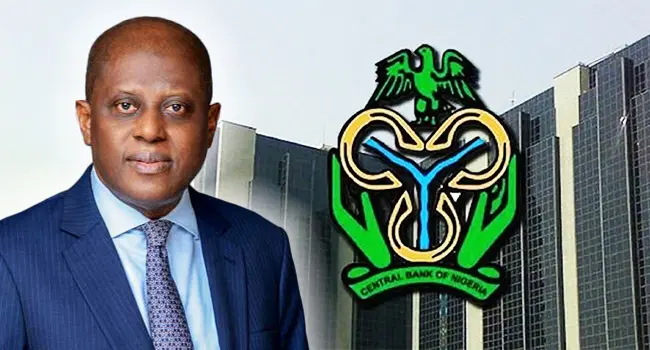
Nigeria’s banking sector is nearing a recapitalisation deadline set by the Central Bank of Nigeria, with most lenders having met new capital requirements while others pursue mergers or remain under regulatory supervision.
Data reviewed ahead of the March 31 deadline show that 32 of the country’s 36 banks have complied with the revised minimum capital thresholds, part of broader reforms aimed at strengthening financial stability and supporting long-term economic growth.
The recapitalisation drive, launched in 2024, is expected to raise about 6 trillion naira, including more than 1.5 trillion naira in pending deals likely to be completed before the deadline.
Join our WhatsApp ChannelThe policy marks the first major overhaul of bank capital requirements since reforms led by former central bank governor Charles Soludo in 2004, when the minimum capital base for commercial banks was increased from 2 billion naira to 25 billion naira.
Under the current framework, banks with international licences are required to hold at least 500 billion naira in capital, while those with national and regional licences must meet thresholds of 200 billion naira and 50 billion naira respectively. Merchant banks must maintain 50 billion naira, while non-interest banks are required to hold between 10 billion and 20 billion naira depending on their scope.
Central bank governor Olayemi Cardoso said the deadline remains firm, although institutions under regulatory intervention — including Polaris Bank, Union Bank of Nigeria and Keystone Bank — may follow different timelines due to legal and structural constraints.
“We remain actively engaged with stakeholders to ensure an orderly and credible outcome while maintaining financial stability,” Cardoso said.
As of February, banks had raised about 4.05 trillion naira in verified capital, with roughly 72% sourced domestically and the rest from foreign investors, according to the central bank.
At a recent policy forum, Cardoso said the progress had strengthened the banking system’s ability to support investment and economic expansion, including Nigeria’s ambition of building a $1 trillion economy.
Industry executives say the recapitalisation will improve banks’ resilience to inflation, currency volatility and global economic shocks, while positioning them to finance infrastructure, manufacturing and emerging sectors such as financial technology and renewable energy.
However, analysts warn that stronger bank balance sheets may not automatically translate into increased lending to the real economy.
The Centre for the Promotion of Private Enterprises said private sector credit remains low relative to gross domestic product, highlighting a gap between the financial system and productive sectors.
Economist Uche Uwaleke said the recapitalisation had boosted investor confidence and capital market activity but cautioned that regulators must now focus on risk supervision, governance and ensuring that new capital supports productive lending rather than speculative activity.
READ ALSO:
CBN Orders Naira-Only Payout for Diaspora Remittances from May 2026
Final Countdown to CBN Deadline: How Recapitalisation Is Redrawing Nigeria’s Banking Order
With the deadline hours away, attention is turning to the remaining banks and whether they can close the gap in time or be forced into consolidation as regulators push to preserve stability in Africa’s largest economy.

Prosper Okoye is a Correspondent and Research Writer at Prime Business Africa, a Nigerian journalist with experience in development reporting, public affairs, and policy-focused storytelling across Africa