 Amanze Chinonye
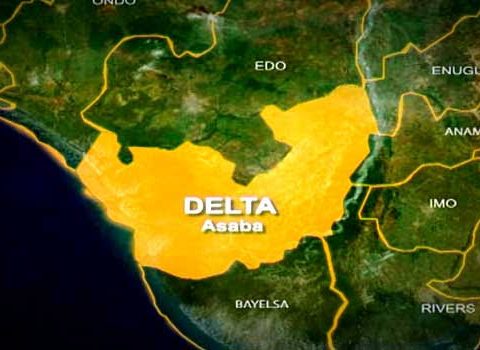
Nigeria’s push to diversify its economy beyond oil took centre stage at the Delta State Economic and Investment Summit, where government leaders, investors and development experts called for greater domestic investment, stronger infrastructure and policies aimed at unlocking new growth opportunities, Prime Business Africa reports.
The summit, themed “Harnessing Our Strengths, Unlocking Our Potentials,” brought together Vice President Kashim Shettima, World Trade Organisation (WTO) Director-General Ngozi Okonjo-Iweala, Anambra State Governor Prof. Charles Soludo, pan-African scholar Prof. Patrick Lumumba, investors and development partners in Asaba.
READ ALSO :
Join our WhatsApp ChannelU.S. Tariffs And Nigeria’s Economy: The Imperative For Industrial Diversification
Discussions focused on investment opportunities across key sectors, including Delta’s special economic zone, blue economy, transport infrastructure, digital economy, agriculture, solid minerals, power and the broader energy ecosystem.
The Delta State Government said the summit was aimed at strengthening investor confidence, attracting strategic partnerships and positioning the state as a competitive destination for domestic and international capital. The event attracted business leaders and foreign delegations, including representatives from Brazil and China.
Governor Sheriff Oborevwori said Delta’s economic future could not depend solely on oil, despite the sector’s historic contribution to the state, stressing the need for diversification.
“Oil has made us proud as a state, but we need to diversify,” Oborevwori said, describing Delta as peaceful and open for investment.
He said his administration had continued to execute infrastructure projects without commercial borrowing, adding that the state had not borrowed from any bank and had no plans to do so.
“Despite the huge investment in improving public infrastructure, we have not borrowed a kobo from any bank, and we do not intend to borrow,” he said.
Chairman of the summit, Engr. Austin Avuru, identified security as a critical foundation for investment, saying businesses could only thrive where people, goods and services could move freely.
“The focus moving forward should be to build a security architecture that guarantees the free movement of people, goods and services beyond the existing security system. Investment thrives where businesses can operate with confidence,” Avuru said.
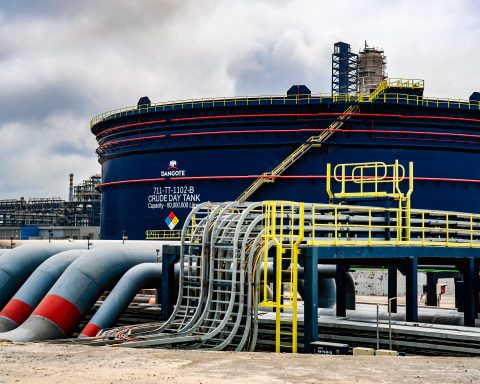
The summit highlighted Delta’s position as one of Nigeria’s leading oil and gas hubs, with investment opportunities spanning exploration and production, gas processing, petrochemicals, refining, marine logistics, power generation and energy infrastructure.
The state’s investment prospects are supported by its extensive energy infrastructure, strategic coastal location, natural gas reserves and expanding downstream sector.
Opportunities in the electricity sector were also highlighted, including power generation, distribution, renewable energy and smart energy solutions, supported by initiatives such as the Delta State Electricity Policy and the Light Up Delta Initiative.
Vice President Kashim Shettima commended Governor Oborevwori’s vision and urged investors, entrepreneurs and development partners to explore opportunities in Delta State.
He also praised Okonjo-Iweala for her global contributions, saying, “We cherish and adore you; thank you for all you do and contribute to the world.”
Shettima defended the Federal Government’s economic direction, saying President Bola Tinubu deserved support for his efforts.
“The President deserves commendation and not condemnation,” he said.
Anambra State Governor Prof. Charles Soludo, a former Central Bank of Nigeria governor, said the country’s economy had stabilised and was showing signs of recovery, describing the outlook from a microeconomic perspective as positive.
“From a microeconomic standpoint, Nigeria has stabilised and is on the rise,” Soludo said, adding that he had not borrowed since becoming governor.
Soludo urged Nigerians to support local industries by reducing dependence on imported goods, arguing that increased demand for locally made products would strengthen domestic production and create jobs.
“We cannot create the kind of jobs we want with all of us using foreign or imported goods,” he said.
He added that if Nigeria’s population of about 247 million people embraced locally produced clothing and other goods, the country could create more than 10 million jobs.
Kenyan lawyer and pan-African scholar Prof. Patrick Lumumba urged African leaders to convert the continent’s population advantage into economic strength, questioning how effectively Africa was leveraging its 1.4 billion people.
“We are quick to say that we are 1.4 billion people in Africa. But what are we doing about the 1.4 billion?” he asked.
Lumumba said Africa must recognise its own investment capacity, arguing that fellow Africans were often overlooked as investors.
“It is tragic that in our understanding of who an investor is on the continent of Africa, we still don’t think that fellow Africans are investors,” he said.
He called for greater movement of people across Africa to deepen trade and investment, while urging Delta to prioritise energy development as a foundation for industrial growth.
READ MORE :
Asaba Eyes Conference, Tourism Boom as Delta Opens Newton Jibunoh Convention Centre
World Trade Organisation Director-General Ngozi Okonjo-Iweala urged Delta State to leverage digital infrastructure and artificial intelligence (AI) to improve productivity, innovation and competitiveness.
She also called for stronger oil and gas pipeline connectivity and closer cooperation with the Federal Government to expand gas access.
On the blue economy, the WTO chief stressed the need for sustainable management of marine resources, warning against activities that undermine coastal economies.
“Building a blue economy is not about letting trawlers come to fish off your coast,” she said, citing the WTO’s agreement aimed at reducing harmful fishing practices.
Okonjo-Iweala said natural resources and government spending alone could not deliver development without effective implementation and maintenance of public assets.
“Endowments alone do not add value; budgetary allocations alone do not lead to new roads and good maintenance. We lack a good maintenance culture in the country,” she said.
The summit showcased Delta State’s economic potential, including an estimated 2024 gross domestic product (GDP) of about ₦16.97 trillion and a strong non-oil contribution, as stakeholders explored opportunities for investment, industrial growth and sustainable development.

Amanze Chinonye is a Staff Correspondent at Prime Business Africa, a rising star in the literary world, weaving captivating stories that transport readers to the vibrant landscapes of Nigeria and the rest of Africa. With a unique voice that blends with the newspaper's tradition and style, Chinonye's writing is a masterful exploration of the human condition, delving into themes of identity, culture, and social justice. Through her words, Chinonye paints vivid portraits of everyday African life, from the bustling markets of Nigeria's Lagos to the quiet villages of South Africa's countryside . With a keen eye for detail and a deep understanding of the complexities of Nigerian society, Chinonye's writing is both a testament to the country's rich cultural heritage and a powerful call to action for a brighter future. As a writer, Chinonye is a true storyteller, using her dexterity to educate, inspire, and uplift readers around the world.