 Prosper Okoye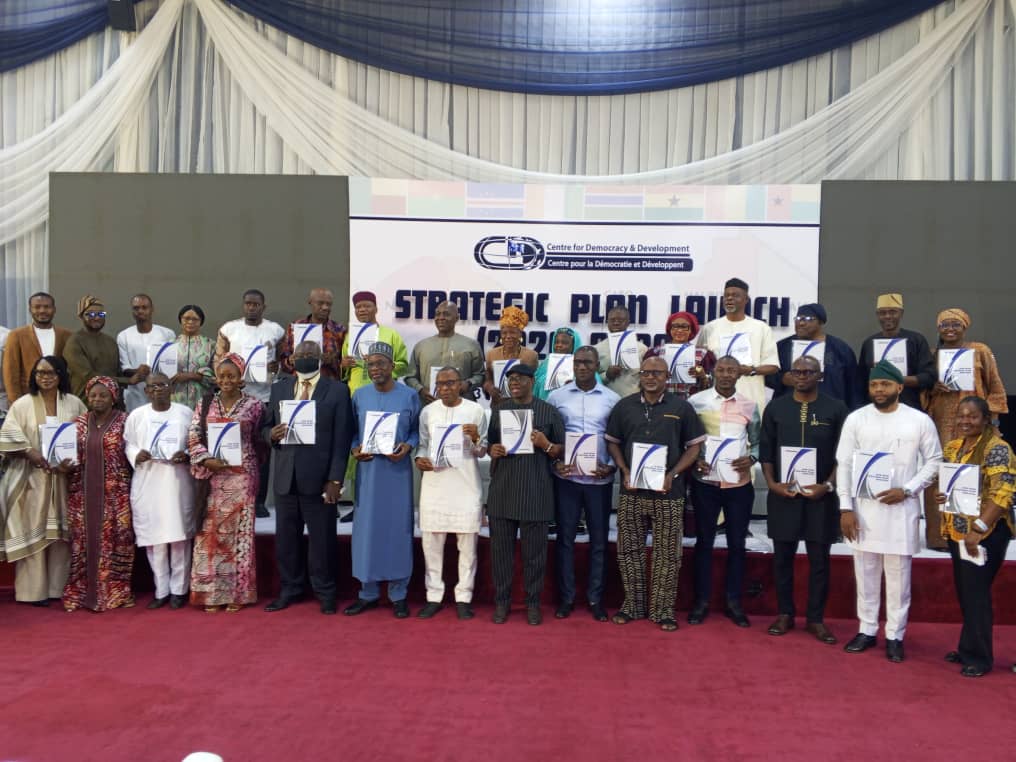
The Centre for Democracy and Development (CDD–West Africa) has raised fresh concerns over what it describes as a gradual return to democratic decline across the sub-region, warning that decades of progress since the end of military rule are at risk of being eroded by weak governance, elite manipulation, and shifting global dynamics.
The warning was delivered on Tuesday in Abuja during the launch of the organisation’s 2026–2030 strategic plan, where former Ekiti State governor and chairman of its governing council, Kayode Fayemi, said West Africa is facing a renewed cycle of “democratic deficits” despite earlier gains in constitutional rule.
Fayemi noted that decades after many countries in the region transitioned from authoritarian regimes and military coups to democratic governance, recent developments suggest a troubling reversal. According to him, the resurgence of governance challenges, coupled with political instability in several countries, signals that the foundations of democracy in the region remain fragile.
Join our WhatsApp Channel“It is worrying that, years after moving away from coups and authoritarian rule, we now seem to be backsliding,” he said, stressing the need for urgent collective action to prevent further deterioration.
His remarks come against the backdrop of a series of military takeovers and constitutional crises in parts of West Africa in recent years, developments that have tested the authority and response mechanisms of the Economic Community of West African States (ECOWAS), long regarded as a key stabilising force in the region.
While acknowledging that countries such as Ghana and Senegal continue to demonstrate elements of democratic resilience and active civic engagement, Fayemi said the broader regional picture remains uneven, with several states experiencing setbacks in governance and accountability.
He emphasised the need to rebuild and strengthen civic coalitions—alliances of civil society groups, reform advocates, and policy actors—that historically played a central role in promoting democratic norms, security sector reforms, and constitutional governance across West Africa.
Fayemi also urged organisations like CDD to adapt to changing realities, including declining external funding and shifting geopolitical interests, while maintaining institutional integrity. He highlighted the importance of leadership succession, transparency, and internal reforms, arguing that sustainable democracy must be anchored on strong institutions rather than individuals.
“We have not yet achieved a peaceful, prosperous, stable and democratic West Africa,” he said. “That means the work is not finished.”
Expanding the conversation beyond political structures, CDD Senior Fellow, Jibrin Ibrahim, linked the region’s democratic challenges to longstanding failures in economic planning and inclusive development.
He argued that democracy cannot be sustained in the absence of tangible improvements in citizens’ welfare, noting that economic growth in many West African countries has not translated into broad-based prosperity. According to him, the region’s inability to pursue consistent, people-centred development strategies has contributed to rising poverty and social instability.
Ibrahim pointed to a shifting global consensus on development planning, referencing recent changes in the positions of institutions such as the World Bank and the International Monetary Fund, which have begun to acknowledge the role of structured economic planning in achieving sustainable development outcomes.
Drawing historical parallels, he recalled Nigeria’s early post-independence development strategies under Abubakar Tafawa Balewa, noting that state-led planning once played a central role in infrastructure and industrial growth. However, he said subsequent policy shifts—particularly during the post-1999 democratic era under Olusegun Obasanjo—tilted heavily towards market-driven reforms, with limited success in reducing poverty.
According to Ibrahim, the consequences of these policy choices are evident in today’s socio-economic realities, where large segments of the population remain excluded from the benefits of economic growth, creating fertile ground for instability and political discontent.
He further argued that the current democratic crisis in West Africa cannot be reduced to a simple dichotomy between military and civilian rule. Instead, he said, many of the challenges stem from within democratic systems themselves, particularly from political leaders who undermine institutions and attempt to extend their hold on power.
“The real challenge is about building systems that prevent abuse of power, regardless of who is in office,” he said, adding that democracy must be driven and defended by citizens rather than left solely in the hands of political elites.
Also speaking, CDD Director, Dauda Garuba, traced the region’s current trajectory to both historical and emerging factors, including the rise of disinformation and the growing influence of digital media in shaping political narratives.
Garuba noted that while West Africa had made notable progress in institutionalising democratic norms after the Cold War—through frameworks developed in collaboration with ECOWAS—the past eight years have witnessed a sharp reversal, with a wave of coups disrupting previously established systems of governance.
He identified misinformation and disinformation as major drivers of this trend, particularly in the context of what he described as “military populism,” where digital platforms are used to project military regimes in a favourable light, often disconnected from realities on the ground.
According to him, the proliferation of unverified information—amplified by social media and emerging technologies—has weakened public trust in democratic institutions and complicated efforts to promote accountability.
Garuba added that while citizen journalism has expanded access to information and reduced reliance on traditional media gatekeepers, it has also created vulnerabilities that allow false narratives to spread rapidly, especially on platforms such as TikTok.
READ ALSO:
Group Berates APC Convention for Undermining Democracy
Electoral Reforms: Nigeria’s Senate on the Spot as Protests Highlight Flawed Democracy
Information Sovereignty, Global Tech Giants, and Democracy in Africa
Beyond information dynamics, he pointed to deeper structural issues within the political class, arguing that many actors enter politics primarily to gain access to state resources rather than to serve public interest. This, he said, reflects a broader governance crisis that cuts across multiple African countries.
“The key question is how to get the political class to agree on rules that prioritise the national interest,” Garuba said, noting that the absence of such consensus continues to undermine democratic consolidation in the region.
Collectively, the interventions at the event underscored a central theme: that West Africa’s democratic future depends not only on resisting military incursions into politics, but also on addressing internal weaknesses within civilian governance, strengthening civic engagement, and ensuring that democratic systems deliver meaningful outcomes for citizens.

Prosper Okoye is a Correspondent and Research Writer at Prime Business Africa, a Nigerian journalist with experience in development reporting, public affairs, and policy-focused storytelling across Africa