Arize Nwobu
By Arize Nwobu
Some of the parameters that are used to define a healthy economy include the levels of imports and exports, exchange rate, interest rate, unemployment rate, consumer confidence and inflation rate.
Join our WhatsApp ChannelExchange rate is the price of one currency in terms of another. It affects trade surplus or deficit and determines a nation’s economic health and wellbeing of citizens. A low exchange rate supports exports and forex inflows, while a high exchange rate hampers exports.
An economy is healthy when imports and exports are growing. A healthy economy is also where the unemployment rate and inflation rate are in balance; with the unemployment rate between 4.7 per cent to 5.8 per cent and the target inflation rate at 2.0 per cent.
Experts have also noted that a healthy economic growth rate in an economy would be between 2.0 per cent – 3.0 per cent, and that a GDP growth rate above 4.0 per cent for several quarters would overheat the economy and create an asset bubble and investor ‘madness’, which would eventually throw the economy into a recession and finally to a record low before the ‘madness’ would stop.
In 2007-2013, CBN’s policies enabled a healthy economic performance. Data from CBN showed that the economy expanded by an average of 7.0 per cent, above the average of sub-Saharan Africa’s real GDP growth of 5.2 per cent.
And in the fourth quarter of 2013, real GDP grew by 7.7 per cent, driven mainly by an 8.8 per cent growth in the non-oil sector. For the 2013 fiscal year, the economy grew by 6.9 per cent with non-oil sector providing 8.1 per cent to the strong growth.
Other major indicators also looked good. Debt to GDP ratio fell to 11.0 per cent, forex reserves stood at US$37.15 billion in 2014 and could fund about eight months of imports.
From 2010-2013, the country attracted over US$22 billion in foreign direct investments (FDI) which made Nigeria one of the top FDI destinations in Africa.
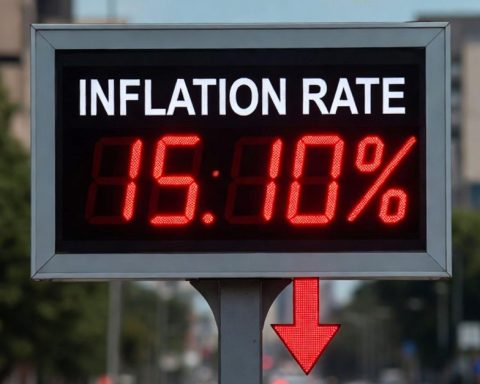
In 2017, CBN also received accolades from the World Bank and the Lagos Chamber of Commerce and Industry (LCCI). The inflation rate was at 15.37 per cent as at end of December 2017, having dropped consistently from 18.72 at end of January 2017. World Bank commended CBN and called for the sustenance of the policies. LCCI noted that CBN policies helped to reduce exchange rate volatility.
According to LCCI, “CBN has been consistent in its interventions in the forex market. This has helped to reduce exchange rate volatility. With the interventions, we have seen improved liquidity of the foreign exchange and stability of the naira against the dollar. Confidence is gradually returning to the market and we expect that this would be sustained.’’
READ ALSO: Our Banks Stable, Your Funds Are Safe, CBN Assures Depositors
But in 2022, the World Bank in a report titled, “Development Updates on Nigeria’’, highlighted the challenges of the economy which included threatening inflation that stood then at 17.70 per cent. The report noted that the inflation rate worsened the impact of the minimum wage of N30,000. 00 and would push seven million more people into poverty by the end of 2022.
Inflation is cancerous because it creates many adverse effects on the economy. Inflation is a “thief of value’’ and a nightmare to citizens. It hurts citizen’s purchasing power and makes it difficult for people to afford the basic necessities of life. A high inflation rate makes citizens unhappy and affects their mental health.
Inflation can render a currency useless and chase away foreign investors and can destabilize an economy. Central banks across the world worry about inflation and do whatever they can to curb and keep it at a minimal level.
Inflation determines the way a central bank regulates the money supply to ensure the circulation of the right quantum of money in the system.
Inflation management is a technical and tactical thing, but generally, central banks raise rates as inflation rises, in order to dampen the economy’s “animal spirits.’’
In recent years, CBN used a combination strategy to manage inflation. The apex bank used a tight monetary policy and strident efforts to boost the productive capacity of the economy to increase local production and decrease imports.
Some analysts noted that the strategy made sense because it was the growth of a country’s supply-side productive potential that gave an economy the energy to grow without suffering from acceleration in cost and price inflation.
Presently, the economy is unhealthy, going by the major indicators, but CBN is working hard to heal and restore the health of the economy. A former CBN Governor, Sanusi Lamido Sanusi had advised the Bank to fight inflation.
Under him as CBN Governor, inflation was at a six-year low, the exchange rate was stable, the monetary policy provided a consistent guide to the financial community, the financial system was stable and no depositors lost money in any banks in the wake of the global financial crisis of 2007-2009.
CBN had noted that it would introduce new forex laws and guidelines to address the devaluation of the naira and achieve exchange rate stability, and adopt an explicit inflation targeting framework to enhance the effectiveness of monetary policy. The Bank is optimistic that inflation would drop in the next two quarters.
Nwobu, a Chartered Stockbroker and Policy Analyst, wrote via arizenwobu@yahoo.com Tel: 08033021230