Bobi Wine: When Uganda’s Politics Turned Personal

January 30, 2026

Inside Bobi Wine’s home, the front door is no longer a barrier but a line of confrontation. Soldiers have occupied the space where he lives with his wife and children, questioning, filming and searching, leaving traces of fear and defiance in every room.

In Uganda, the political struggle has now reached the most private corners of life, turning a family home into a frontline.

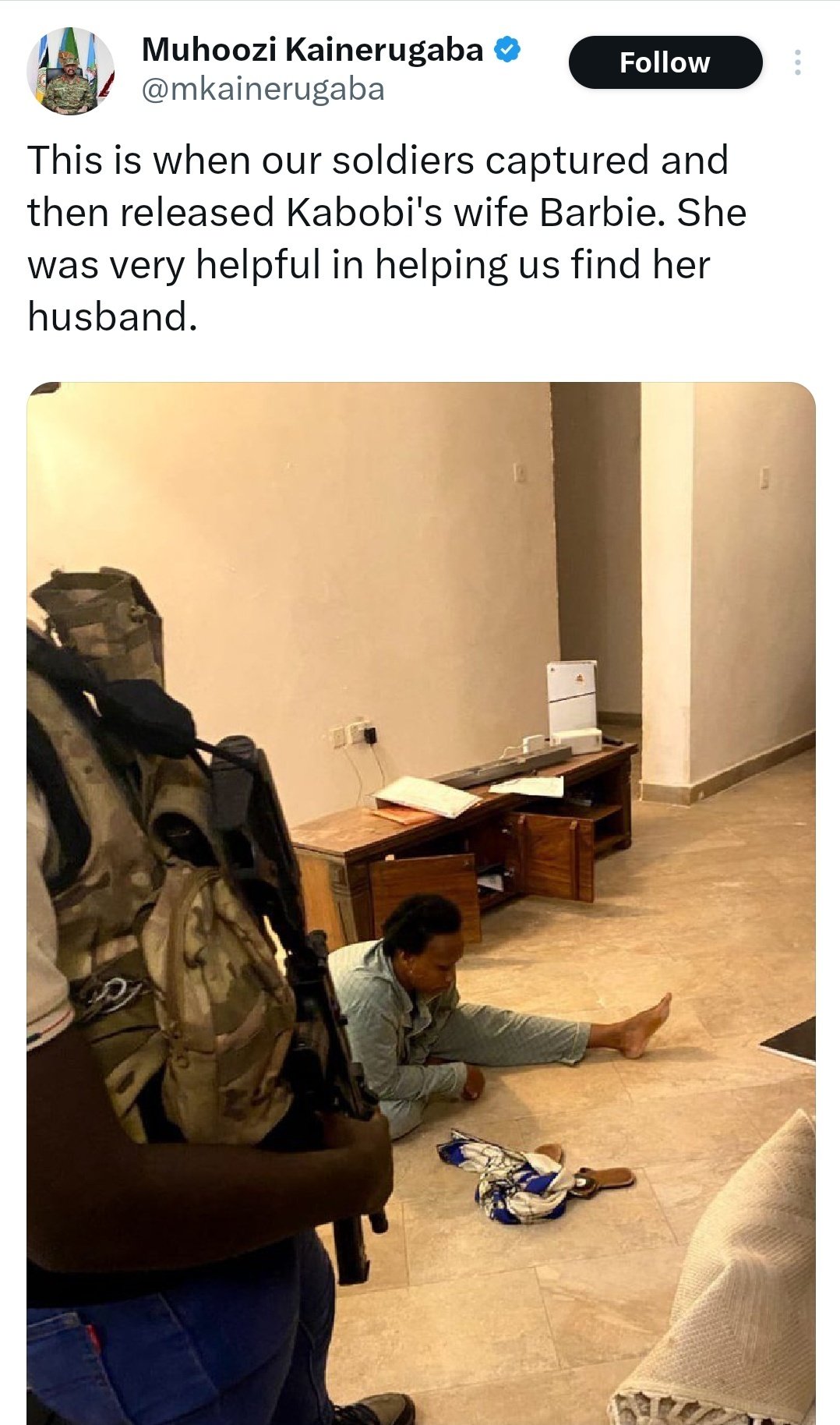
Bobi Wine, who remains in hiding, shared footage online showing soldiers allegedly acting under orders from President Yoweri Museveni’s son, General Muhoozi Kainerugaba — who also heads Uganda’s military — raiding their home in search of him.

Join our WhatsApp Channel

Earlier, Kainerugaba, in a now-deleted online post, declared Wine wanted “dead or alive.”

According to Wine, his wife was questioned at gunpoint about his whereabouts and her phone, before collapsing and being taken to hospital.

He said the soldiers filmed the encounter and sent the footage to their commander. The post, accompanied by an image of Barbie Kyagulanyi that Wine said had been shared by Kainerugaba, has sent shockwaves through Uganda and beyond — not simply because of the political message, but because it reveals how deeply the struggle between the state and its most prominent opponent has penetrated private life.

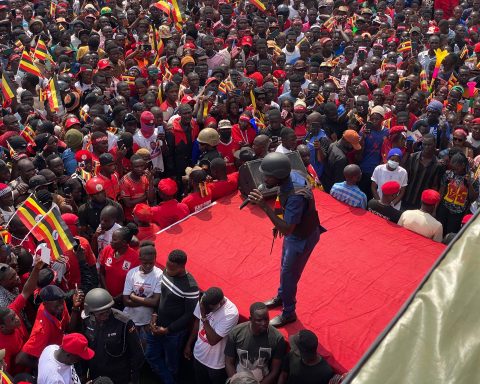
A former pop star who became the face of a youthful opposition movement, Wine has long accused Museveni’s government of using security forces to intimidate critics. His home, he says, remains under military occupation, with relatives barred from delivering even basic necessities like food.

For many Ugandans, the episode crystallises a persistent fear: that opposition politics in the country is no longer just a contest of ideas, but a battle in which families, homes and personal safety can be pulled into the conflict.

The role of General Kainerugaba has sharpened those anxieties. Known for provocative online posts, the army chief has previously made statements about opposition figures that critics say blur the line between rhetoric and threat. His prominence adds an unpredictable dimension to a political system already dominated by his father’s 40-year rule.

Human rights groups and international observers have warned that Uganda’s political climate is growing increasingly volatile, citing arrests of opposition figures, restrictions on assembly, and hostile rhetoric from senior officials.

The raid on Bobi Wine’s family home has sharpened divisions among observers on social media.Supporters of the opposition leader view the incident as stark proof of the government’s readiness to extend repression beyond politicians themselves. Alex J Muhangi, a marketer and self-described activist aligned with the ruling National Resistance Movement, defended the actions in his comments, stating: “Thank you afande…she thought she would lie to us  ” He followed up elsewhere by describing Bobi Wine and his wife as “agents of chaos and drama,” suggesting the confrontation was provoked.
Similarly, Fahad Wa Great MK, an ardent supporter of Gen Muhoozi Kainerugaba, dismissed Barbie with the blunt remark: “She is very cowardly,” framing her as weak in the face of the operation.
Critics, however, condemned the raid and the gloating that followed it as crossing ethical lines. South African journalist Luyolo Mkentane called out the boasting as unacceptable: “Trampling on basic human rights and then boasting about it is wild, Sister. I honestly don’t know how your account hasn’t been blocked yet.”
Engineer Ismail Crat Ali, founder of a technology firm, focused on the gender dimension, writing: “Not good to humiliate a woman like Barbie.”
For ordinary Ugandans, the details of this raid cut through political debate. A politician can be detained. A protest can be broken up. But when a family home becomes a target, it speaks to something more sinister: a system in which fear is used not only to silence dissent, but to reach into the lives of those around it.

As Bobi Wine remains in hiding and his home continues under military watch, the incident has come to symbolise a wider question hanging over Uganda’s future — how far a state will go to protect power, and what price its citizens may be asked to pay for daring to challenge it.

+ posts

Prosper Okoye is a Correspondent and Research Writer at Prime Business Africa, a Nigerian journalist with experience in development reporting, public affairs, and policy-focused storytelling across Africa

Prosper Okoye

Prosper Okoye is a Correspondent and Research Writer at Prime Business Africa, a Nigerian journalist with experience in development reporting, public affairs, and policy-focused storytelling across Africa
Leave a Reply

Your email address will not be published.

Previous Story

Air Peace Rejects SaharaReporters’ Allegations on Lagos–São Paulo Route

Next Story

Akeredolu Breaks Ranks With Obi Endorsement

Featured Stories

Latest from Africa

Africa No Longer Facing Mpox Emergency, CDC Says

Africa is no longer experiencing a mpox public health emergency, the Africa Centres for Disease Control and Prevention (Africa CDC) has announced. Although the viral infection remains endemic in parts of the continent. The statement, made on Saturday by Jean Kaseya, Director

Why Africa Tourism Is Growing?

Africa is emerging as one of the world’s fastest-growing tourism regions, even as global travel settles into a slower, post-pandemic recovery. New figures from the UN World Tourism Barometer show the continent welcomed about 81 million international visitors in 2025, an eight

Somalia Parliament Ratifies Revised IGAD Treaty

Somalia’s federal parliament has ratified a revised treaty of the Intergovernmental Authority on Development (IGAD), a move regional officials say clears the way for deeper cooperation across the Horn of Africa. The endorsement by the House of the People makes Somalia the

Uganda Partially Restores Internet After Museveni Wins Seventh Term

Ugandan authorities have partially restored internet services following President Yoweri Museveni’s victory in Thursday’s presidential election, while keeping social media platforms offline. Users reported reconnecting to the internet around 11:00 p.m. local time on Saturday, with some internet service providers confirming that
Previous Story

Air Peace Rejects SaharaReporters’ Allegations on Lagos–São Paulo Route

Next Story

Akeredolu Breaks Ranks With Obi Endorsement

Don't Miss

NBS

Nigerians’ Spending On Household Consumption Rises To N108tn – NBS

The National Bureau of Statistics (NBS) has disclosed that Nigerian
ECOWAS Gives Burkina Faso Mali Niger Six Months To Reconsider Membership Withdrawal 

ECOWAS Gives Burkina Faso, Mali, Niger Six Months To Reconsider Membership Withdrawal 

The Authority of Heads of State and Government of the