 Amanze Chinonye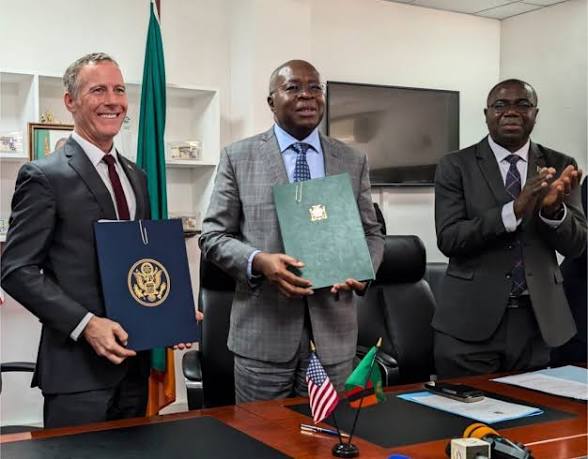
Zambia and the United States have signed a five-year, $2.49 billion health financing agreement after revising contentious provisions on patient data and biological specimen sharing.
The agreement provides for $1.52 billion in U.S. funding, while Zambia has committed $975 million in additional domestic health spending over five years, according to the U.S. State Department.
Join our WhatsApp Channel
READ ALSO :
Ramaphosa Calls US Aid Cut A ‘Wake-Up Call’ For South Africa
Zambia’s Health Minister Roma Chilengi said the final agreement removed provisions requiring the transfer of biological specimens to the United States. Data sharing has also been limited to information needed to monitor and evaluate U.S.-funded programmes, according to reports on the revised terms.
The funding will support programmes targeting HIV/AIDS, tuberculosis and malaria, as well as maternal and child healthcare, disease surveillance and emergency outbreak response. The agreement also provides for support to a frontline health workforce of at least 40,000 workers.
The deal forms part of President Donald Trump’s America First Global Health Strategy, which seeks to increase recipient countries’ financial contributions to healthcare as Washington reshapes its foreign assistance. The approach places greater emphasis on domestic funding and bilateral agreements with partner countries.
Provisions on health data and biological specimens have complicated similar negotiations between Washington and other African governments, raising concerns about patient privacy, national sovereignty and the use of information collected from local populations. Ghana, Namibia and Zimbabwe have also resisted or declined similar proposals over concerns including data protection and specimen sharing.
READ MORE :
Zambia’s Foreign Minister Mulambo Haimbe said on Thursday that negotiations over a separate critical-minerals agreement with Washington were continuing after the two sets of discussions were separated. The health agreement is not linked to access to Zambia’s mineral resources, according to the government’s position.
The deal follows a deterioration in health cooperation last year, when Washington announced the withdrawal of $50 million in annual health assistance to Zambia, citing what it described as systemic theft of donated medicines and medical supplies.
The agreement establishes a new framework for U.S. health financing while requiring Zambia to increase its own contribution. Its impact will depend on the timely disbursement of funds, implementation of the programmes and the government’s ability to sustain domestic spending on essential health services.

Amanze Chinonye is a Staff Correspondent at Prime Business Africa, a rising star in the literary world, weaving captivating stories that transport readers to the vibrant landscapes of Nigeria and the rest of Africa. With a unique voice that blends with the newspaper's tradition and style, Chinonye's writing is a masterful exploration of the human condition, delving into themes of identity, culture, and social justice. Through her words, Chinonye paints vivid portraits of everyday African life, from the bustling markets of Nigeria's Lagos to the quiet villages of South Africa's countryside . With a keen eye for detail and a deep understanding of the complexities of Nigerian society, Chinonye's writing is both a testament to the country's rich cultural heritage and a powerful call to action for a brighter future. As a writer, Chinonye is a true storyteller, using her dexterity to educate, inspire, and uplift readers around the world.