 Amanze Chinonye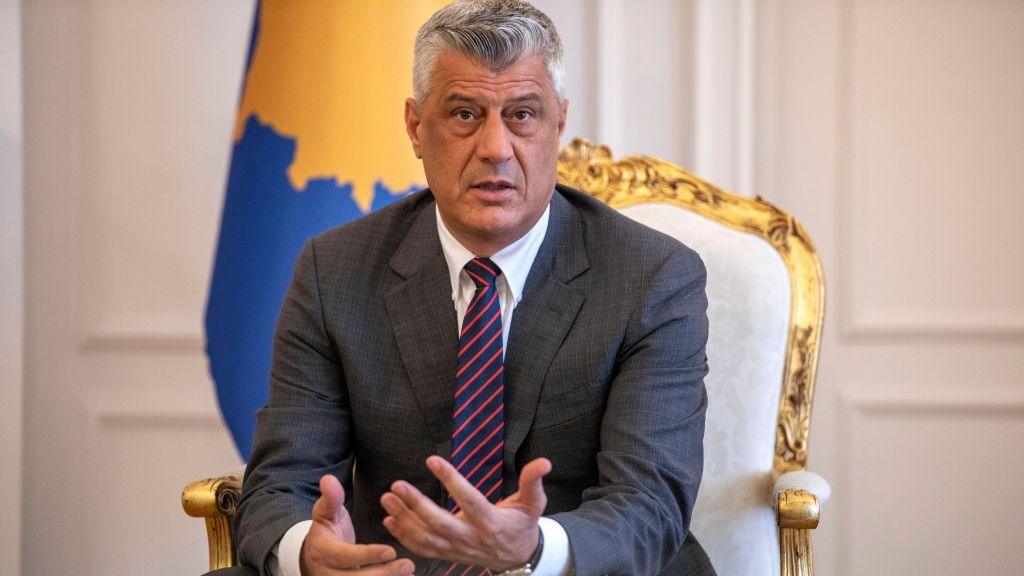
Former Kosovo President Hashim Thaçi was sentenced to 25 years in prison on Wednesday after the Kosovo Specialist Chambers found him and three other former Kosovo Liberation Army leaders criminally responsible for war crimes committed during the 1998-99 Kosovo conflict.
Join our WhatsApp Channel
The Trial Panel found Thaçi, Kadri Veseli, Rexhep Selimi and Jakup Krasniqi responsible for arbitrary detention involving 385 people, cruel treatment of 49, torture of 303 and the murder of 96 people.
Thaçi was sentenced to 25 years, Veseli to 18 years, Selimi to 13 years and Krasniqi to 25 years, with credit for time already served.
READ ALSO:
Madagascar Ex-Senate President Sentenced to 10 Years Over Protest Crackdown
The court found that the four men had contributed significantly to a common criminal purpose targeting people perceived as opponents of the KLA’s political and military objectives. The victims included Kosovo Albanians associated with rival political or military organisations, people alleged to have links to Yugoslav or Serbian authorities, and members of Roma and Serb communities.
The panel said the targeting involved killings, arrests and detention without due process, physical and psychological mistreatment, intimidation and other abuses. With limited exceptions, it found no evidence that the victims had committed crimes, actively participated in hostilities or otherwise posed a legitimate security threat to the KLA.
The judges acquitted the four defendants of crimes against humanity, finding that prosecutors had failed to prove beyond reasonable doubt that the alleged crimes formed part of a widespread or systematic attack directed against a civilian population. They were also acquitted in relation to several specific allegations of war crimes.
In determining the sentences, the judges considered the gravity of the offences, each defendant’s individual involvement and aggravating and mitigating circumstances, including the vulnerability of some victims and cases in which people witnessed the killing or mistreatment of relatives.
The court stressed that the trial was not an assessment of the KLA’s campaign for an independent Kosovo. Presiding Judge Charles Smith said it concerned the alleged use of criminal means by some KLA members and did not address crimes committed by Serbian forces and paramilitaries against Kosovo Albanians.
READ MORE :
Vucic Calls October Snap Vote as Serbia’s Protest Movement Presses for Change
The panel found that Thaçi, as a member of the KLA General Staff and head of its Political Directorate, was a key figure in formulating and implementing the common criminal purpose. It said he was involved in establishing detention facilities, identifying perceived opponents and organising their arrest and detention.
The court also found that Thaçi personally participated in the arrest, arbitrary detention and interrogation of 13 parliamentarians and in the arrest, detention, transfer and murder of Behajdin Allaqi. It said he also disseminated false information about detainees and victims and contributed to a policy of impunity for perpetrators.
Veseli, who headed the KLA Intelligence Directorate, was found to have played a central role in identifying and targeting alleged collaborators. The panel said much of the intelligence used against victims consisted of unverified rumours.
Selimi, a member of the General Staff who served as head of the Operational Directorate and inspector general, was found to have participated in the arrest and detention of 13 parliamentarians and to have tolerated serious violations of international humanitarian law.
Krasniqi, a member of the General Staff and Political Directorate who served as KLA spokesman and deputy commander, was found to have helped formulate and implement the policy of targeting opponents. The panel said his public statements, communiques and orders encouraged or expressed tolerance for crimes against perceived collaborators.
The judges also highlighted what they described as a persistent climate of witness intimidation during the proceedings. Some prosecution witnesses withdrew or changed earlier accounts, avoided details or gave evidence the panel found to be false. The judges nevertheless said most witnesses testified with courage despite intimidation and attempts to discourage them from appearing.
READ ALSO :
Brazil’s Supreme Court Orders House Arrest Of Bolsonaro Amid Coup Trial
The indictment was confirmed in October 2020 and amended several times before the trial began in April 2023. The four defendants had been transferred to the Specialist Chambers’ detention facilities in The Hague in November 2020.
The prosecution concluded its case in April 2025, followed by submissions from victims’ counsel and the defence teams. The evidentiary proceedings ended in December 2025, while closing statements were heard in February 2026.
The panel heard evidence from 273 witnesses and admitted 5,467 exhibits. It also took judicial notice of 1,017 adjudicated facts and 29 agreed facts, while the trial transcript ran to 29,238 pages.
The judgment is subject to appeal.

Amanze Chinonye is a Staff Correspondent at Prime Business Africa, a rising star in the literary world, weaving captivating stories that transport readers to the vibrant landscapes of Nigeria and the rest of Africa. With a unique voice that blends with the newspaper's tradition and style, Chinonye's writing is a masterful exploration of the human condition, delving into themes of identity, culture, and social justice. Through her words, Chinonye paints vivid portraits of everyday African life, from the bustling markets of Nigeria's Lagos to the quiet villages of South Africa's countryside . With a keen eye for detail and a deep understanding of the complexities of Nigerian society, Chinonye's writing is both a testament to the country's rich cultural heritage and a powerful call to action for a brighter future. As a writer, Chinonye is a true storyteller, using her dexterity to educate, inspire, and uplift readers around the world.