 Amanze Chinonye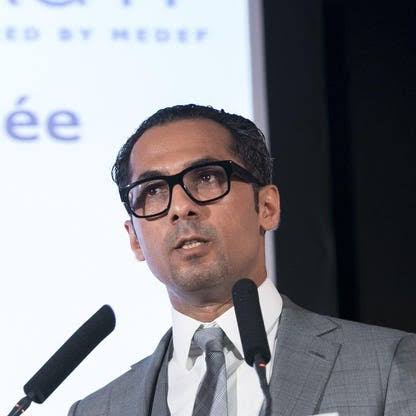
Tanzania’s richest businessman, Mohammed Dewji, has expressed interest in investing $100 million in Aliko Dangote’s proposed $17 billion crude oil refinery in East Africa, signalling growing investor confidence in what is expected to become one of the continent’s largest energy infrastructure projects.
Tanzania’s richest businessman, Mohammed Dewji, has expressed interest in investing $100 million in Aliko Dangote’s proposed $17 billion crude oil refinery in East Africa, signalling growing investor confidence in what is expected to become one of the continent’s largest energy infrastructure projects.
READ ALSO :
Join our WhatsApp ChannelMuseveni, Dangote Discuss Proposed East African Regional Refinery
According to Bloomberg, Dewji, President of MeTL Group, said he intends to approach Dangote to discuss the investment, although no formal talks have yet taken place between the two businessmen.
“I would lean more toward Tanzania than Kenya,” Dewji said in an interview, adding that he would still consider participating if Dangote proceeds with the project in Kenya.
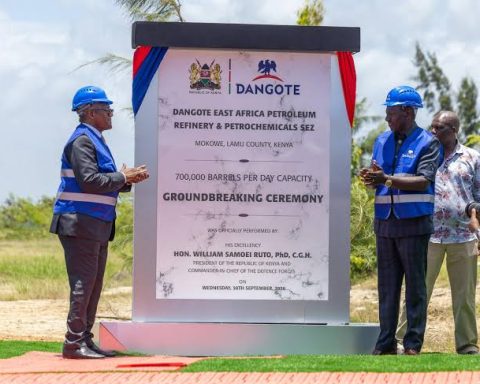
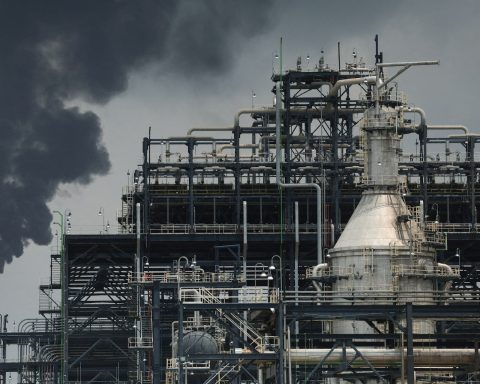
The proposed refinery, which is expected to process about 700,000 barrels of crude oil per day, is designed to replicate the capacity of the Dangote Petroleum Refinery in Lagos.
Once completed, it is projected to become East Africa’s largest refinery and the second largest on the African continent, significantly expanding the region’s refining capacity and reducing its dependence on imported petroleum products.
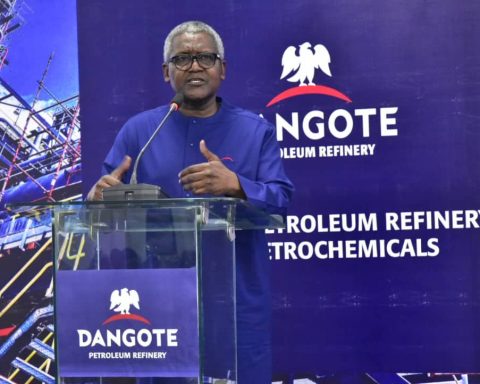
Dangote Group has confirmed plans to build the facility in Lamu, a coastal town in southeastern Kenya, after initially considering Tanzania’s Tanga region. Dangote said the Kenyan location was selected for “commercial and technical” reasons, while company officials have cited favourable infrastructure, logistics and market access as key factors behind the decision. Soil investigations have commenced at the site, alongside engineering and design work, with construction expected to take about three years.
The refinery is expected to supply refined petroleum products across Kenya and neighbouring countries, strengthening regional energy security, lowering import costs and boosting intra-African trade in refined fuels.
READ MORE :
Dangote Backs Museveni’s Mineral Policy, Eyes East Africa Refinery Project
Dangote Group plans to finance the multibillion-dollar project through a combination of internally generated funds, bond issuances and proceeds from a planned initial public offering (IPO). Company executives have indicated that the investment will be comparable in scale to the Dangote Petroleum Refinery in Nigeria, which ultimately cost more than $20 billion following years of construction and expansion.
Although no investment agreement has been reached, Dewji’s proposed $100 million commitment represents one of the first publicly declared expressions of interest from a major East African private-sector investor since Dangote unveiled the project. Dewji said he would “definitely reach out” to Dangote to discuss the opportunity.
A Dangote Group executive also disclosed that the refinery has attracted considerable investor interest.
“So many potential investors have been approaching us,” the executive said.
Kenyan President William Ruto has expressed optimism that construction of the refinery will commence this year.
If realised, the project is expected to reshape East Africa’s downstream petroleum industry by increasing local refining capacity, reducing the region’s reliance on imported fuels, creating thousands of jobs and positioning Kenya as a strategic energy hub for the wider East African market.
Dewji’s interest further reinforces confidence in the commercial viability of the project and highlights growing African private-sector participation in large-scale infrastructure development.

Amanze Chinonye is a Staff Correspondent at Prime Business Africa, a rising star in the literary world, weaving captivating stories that transport readers to the vibrant landscapes of Nigeria and the rest of Africa. With a unique voice that blends with the newspaper's tradition and style, Chinonye's writing is a masterful exploration of the human condition, delving into themes of identity, culture, and social justice. Through her words, Chinonye paints vivid portraits of everyday African life, from the bustling markets of Nigeria's Lagos to the quiet villages of South Africa's countryside . With a keen eye for detail and a deep understanding of the complexities of Nigerian society, Chinonye's writing is both a testament to the country's rich cultural heritage and a powerful call to action for a brighter future. As a writer, Chinonye is a true storyteller, using her dexterity to educate, inspire, and uplift readers around the world.