 MARCEL MBAMALU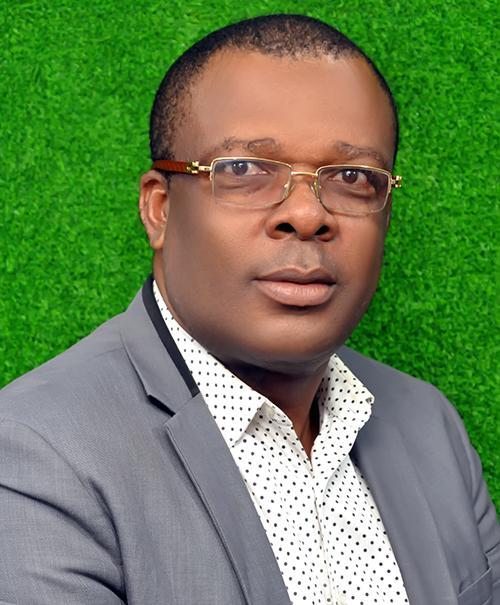
They flew to Rome as unknowns and returned as world beaters. 10 gold, 3 silver, 9 bronze. Two Nigerians named Overall Second Best in the World.
But don’t expect a presidential tweet. Don’t expect a call from the Ministry of Education.
The students of Gonzaga Jesuit College, Okija did what Nigeria’s public system keeps failing to do: compete and win on the global stage. Yet their triumph reveals a harsher truth — Nigeria only produces world-class minds by accident, in private classrooms with leaking roofs patched by philanthropists, not by policy.
Join our WhatsApp ChannelIf excellence must be privately funded, privately sponsored, and privately celebrated, then what exactly is government responsibility in education?
Gonzaga’s victory is not just a story of STEM. It is an indictment.
They were not tourists in Rome. They were contenders.
At the 2026 International STEM Olympiad Grand Finale held July 2–8, Gonzaga Jesuit College, Okija students went up against 1,154 of the brightest young minds from 54 countries. And they didn’t just show up. They dominated.
READ ALSO: Beyond the North: How the Almajiri System Shapes Nigeria’s Social and Security Landscape
The haul was staggering: 10 gold medals, 3 silver, 9 bronze, and 3 honourable mentions. Twenty-five awards in total. Two Anambra boys — Okeke Somtochukwu and Nwafor Emmanuel Chinedu — were even named Overall Second Best in the World. That puts a Nigerian school, not MIT, not Eton, not Tsinghua, on the podium of global STEM.
Ordinarily, this should have been front-page news in Aso Rock. It should have triggered press releases, scholarships, and a national conversation on how to replicate the model. Instead, silence. No statement from the Federal Ministry of Education. No recognition from the government that sent no one.
And that silence tells you everything. Because this win did not happen by accident, and it did not happen in a public school. It happened in a Jesuit institution built on a 500-year tradition of discipline, critical thinking and leadership. It happened in a philanthropic project founded and funded by Dr Ernest Azudialu-Obiejesi in partnership with the Society of Jesus. It happened because someone decided to invest in teachers, coaches, labs, and global exposure — the very things our public system keeps promising and never delivering.
Ask the hard question: would these boys have won if they were studying under leaking roofs, with no power, no internet, and no textbooks? The answer embarrasses us all. Gonzaga proves what Nigerian children are capable of when the environment is right. The tragedy is that the right environment in Nigeria still depends on private wealth, not public policy.
The man who paid when government wouldn’t
If Gonzaga had a godfather in Rome, it was Alex Onyia.
The CEO of Educare didn’t wait for a memo from the Ministry. He sponsored 3 Nigerian students and their teachers to the Olympiad. Flights. Visas. Registration. Accommodation. Bill: over €40,000.
This is the same Onyia who runs the South East Mathematics Olympiad that pulled 11,500 students off the streets and into competition halls. The same Onyia who, in June, called out the Federal Ministry of Education for failing to sponsor a 15-year-old math prodigy to the International Mathematics Olympiad in China. The same Onyia who in May dragged JAMB for score “glitches” that buried real candidates.
Love him or hate him, he keeps forcing one question into public view: why is a private citizen doing the job of the state? Why are we crowdfunding brilliance while the budget for education keeps growing?
According to UNESCO, Nigeria spends 5.4% of its budget on education. The global recommendation is 15-20%. Ghana spends 18%. South Africa spends 17%. We are not broke. We are mis-prioritized.
Silence is also a policy
Look at public schools today. No labs. No internet. No books. Teachers owed for months. Then look at what happens when a private school wins globally. Crickets from Abuja.
In February 2026, students of Government Secondary School, Gwagwalada, FCT, wrote WAEC under trees because their 6 classrooms collapsed in a rainstorm. No lab. No computers. One generator for 2,400 students. That’s the pipeline we expect to produce Olympians from.
It’s not that government should hate private success. It should. The problem is that government has not built a system where public schools can even dream of this.
And it gets worse. This isn’t just about classrooms. It’s about the students we actually send abroad on government scholarships. In recent months, videos surfaced of Nigerian scholars in the UK, Russia and Cyprus begging for help. Delayed stipends. Rent arrears. Some reportedly hospitalized. One allegedly died. Government said “we didn’t abandon them.” But why are beneficiaries of a state program forced to go on Instagram to survive?
TETFund reported in 2025 that over 70% of public tertiary institutions in Nigeria lack functional STEM laboratories. Yet we expect to compete with countries that spend $300 per student annually on lab equipment alone.
The South East question
The celebration of Gonzaga has been loud on X, LinkedIn, and in churches. Quiet in government circles. That vacuum has fed a belief many in the South East already hold: achievements from here don’t get the same national applause.
Whether that’s true or not, perception matters. Because when a child wins for Nigeria, the medal doesn’t carry a tribe. It carries a flag. If we can roll out the drums for athletes who win gold, why do we go mute when students win gold in science?
What the victory actually meant
Let’s be clear. Rome was not luck. The STEM Olympiad is war by another name — qualifiers, rankings, “Best of the Best,” then the finale against Europe, Asia, America. Gonzaga’s kids survived that pipeline because they were trained for it.
Dr Azudialu-Obiejesi built more than a school. He built a system: global exposure, expert mentors, advanced STEM curriculum, talent scouting. The Jesuits brought 500 years of forming “people of depth — intellectually, spiritually, and psychologically.”
That is what beats better-funded countries. Investment plus opportunity plus intention.
The Bottom Line: Gonzaga’s 25 medals prove one thing: Nigerian children are not the problem. The system is.
Until excellence stops being an accident of private charity, we will keep exporting our best minds and importing shame.
Government must decide. Will STEM success remain a Jesuit project and a GoFundMe campaign? Or will it become national policy?
Because the next Somtochukwu and Emmanuel are sitting right now in a public classroom with no light. And no one is coming to sponsor them to Rome.
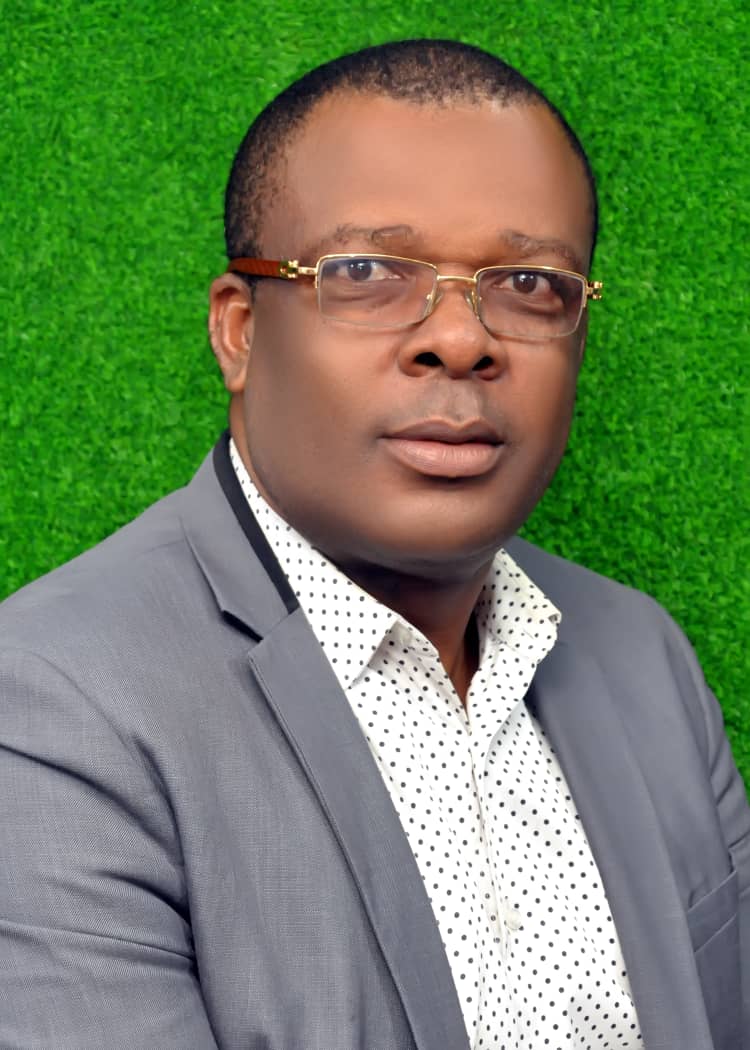
Dr Mbamalu is a distinguished Communication Scholar, Editor and Publisher

Dr. Marcel Mbamalu is a distinguished communication scholar, journalist, and entrepreneur with three decades of experience in the media industry. He holds a Ph.D. in Mass Communication from the University of Nigeria, Nsukka, and serves as the publisher of Prime Business Africa, a renowned multimedia news platform catering to Nigeria and Africa's socio-economic needs.
Dr. Mbamalu's journalism career spans over two decades, during which he honed his skills at The Guardian Newspaper, rising to the position of senior editor. Notably, between 2018 and 2023, he collaborated with the World Health Organization (WHO) in Northeast Nigeria, training senior journalists on conflict reporting and health journalism.
Dr. Mbamalu's expertise has earned him international recognition. He was the sole African representative at the 2023 Jefferson Fellowship program, participating in a study tour of the United States and Asia (Japan and Hong Kong) on inclusion, income gaps, and migration issues.
In 2020, he was part of a global media team that covered the United States presidential election.
Dr. Mbamalu has attended prestigious media trainings, including the Bloomberg Financial Journalism Training and the Reuters/AfDB Training on "Effective Coverage of Infrastructural Development in Africa."
As a columnist for The Punch Newspaper, with insightful articles published in other prominent Nigerian dailies, including ThisDay, Leadership, The Sun, and The Guardian, Dr. Mbamalu regularly provides in-depth analysis on socio-political and economic issues.