 Amanze Chinonye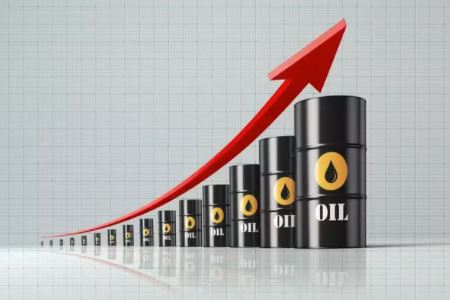
Nigeria has again failed to meet its crude oil production quota approved by the Organization of the Petroleum Exporting Countries, extending a prolonged trend that is raising fresh concerns over government revenue, foreign exchange earnings, and the country’s broader economic recovery efforts.
Latest figures released by the Nigerian Upstream Petroleum Regulatory Commission showed that the country produced an average of about 1.49 million barrels of crude oil per day in April 2026, slightly below the 1.5 million barrels per day quota allocated to Nigeria by OPEC.
According to the regulator’s National Liquid Hydrocarbon Production Report released on Tuesday, total oil production, including condensates, stood at about 1.66 million barrels per day during the month.
Join our WhatsApp ChannelREAD ALSO :
Oil Production Data Disparity May Affect Nigeria’s Quest For Higher OPEC Quota – Expert
The latest figures mean Nigeria has now remained below its OPEC crude oil production allocation for nine consecutive months since July 2025, despite repeated assurances by the Federal Government and industry operators that measures to curb oil theft and pipeline vandalism were yielding results.
The continued shortfall also leaves the country below the 1.84 million barrels per day oil production benchmark adopted in the 2026 budget, undermining government projections tied to revenue generation, foreign exchange inflows, and fiscal stability.
The Federal Government has consistently targeted crude oil production of about two million barrels per day as part of broader efforts to strengthen public finances, support budget implementation, and stabilise the naira.
However, the latest NUPRC data suggests Nigeria remains significantly below both its budget assumptions and broader production ambitions.
READ MORE :
Oil Theft, Vandalism Plague Nigeria’s Oil Production, OPEC Reports Decline To 1.23mbpd
The report showed that combined crude oil and condensate production peaked at about 1.85 million barrels per day during April, while the lowest daily output stood at approximately 1.46 million barrels per day.
Although April production figures reflected a modest improvement compared to previous months, analysts say output levels remain insufficient to close Nigeria’s persistent production gap.
Nigeria’s crude oil production stood at about 1.38 million barrels per day in March 2026, compared to 1.31 million barrels per day in February. February’s figures had represented a sharp decline from January, when production slightly rebounded to about 1.46 million barrels per day after weakening in December 2025.
Industry experts attribute the sustained underperformance to crude oil theft, pipeline vandalism, ageing infrastructure, underinvestment in the upstream sector, and recurring operational disruptions affecting major export facilities in the Niger Delta.
Key export infrastructure, including the Trans-Niger Pipeline and the Nembe Creek Trunk Line, has repeatedly suffered attacks, illegal tapping, leaks, and operational shutdowns, contributing to prolonged production losses and export disruptions.
Although government-backed pipeline surveillance contracts and security operations have contributed to marginal improvements in output in recent months, analysts say the gains remain fragile because the structural problems undermining the oil sector have yet to be fully addressed.
The production shortfall is expected to further pressure government revenues at a time authorities are relying heavily on crude oil earnings to finance infrastructure projects, support economic reforms, and fund the 2026 budget.
With crude oil still accounting for the bulk of Nigeria’s foreign exchange earnings, analysts warn that persistent underproduction could reduce dollar inflows, intensify pressure on the naira, widen fiscal deficits, and increase the government’s dependence on borrowing.
Economic experts also caution that prolonged output weakness could dampen investor confidence, worsen inflationary pressures, and slow Nigeria’s broader economic recovery amid rising living costs, currency volatility, and mounting debt obligations.

Amanze Chinonye is a Staff Correspondent at Prime Business Africa, a rising star in the literary world, weaving captivating stories that transport readers to the vibrant landscapes of Nigeria and the rest of Africa. With a unique voice that blends with the newspaper's tradition and style, Chinonye's writing is a masterful exploration of the human condition, delving into themes of identity, culture, and social justice. Through her words, Chinonye paints vivid portraits of everyday African life, from the bustling markets of Nigeria's Lagos to the quiet villages of South Africa's countryside . With a keen eye for detail and a deep understanding of the complexities of Nigerian society, Chinonye's writing is both a testament to the country's rich cultural heritage and a powerful call to action for a brighter future. As a writer, Chinonye is a true storyteller, using her dexterity to educate, inspire, and uplift readers around the world.