Godwin Shaibu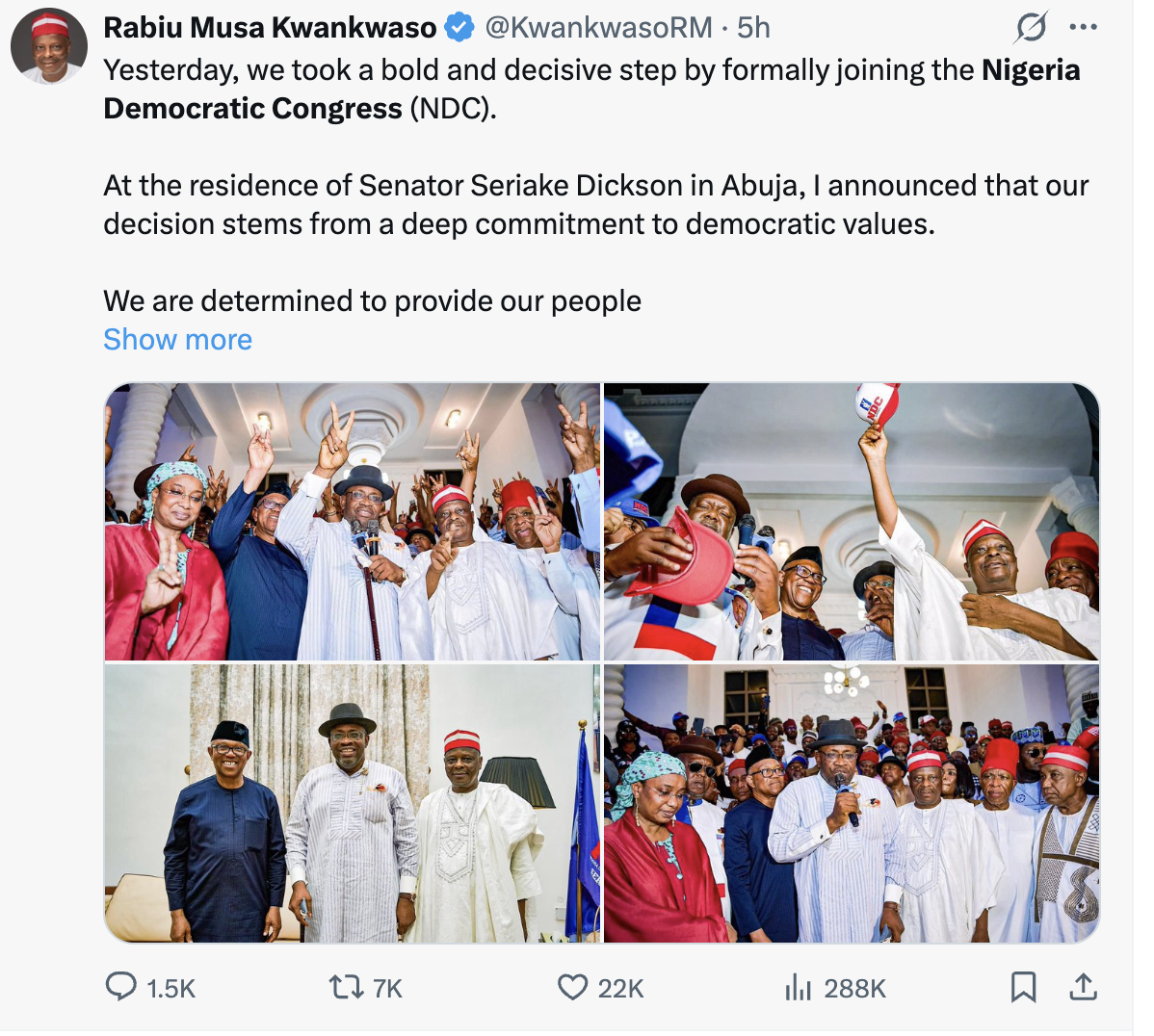
The Nigeria Democratic Congress (NDC) has rapidly moved from political obscurity into the centre of national conversation following the formal alignment of major opposition figures Peter Obi and Rabiu Musa Kwankwaso with the party ahead of the 2027 general elections. In a country where political coalitions often determine electoral outcomes, the emergence of a new platform backed by nationally recognised figures has naturally generated widespread interest among Nigerians.
Yet, despite the growing attention surrounding the party, many Nigerians still know very little about its origins, structure, ideology, leadership, and long-term ambitions. Understanding the NDC has become increasingly important because the party may significantly influence the shape of opposition politics in the coming years.
Join our WhatsApp ChannelHere are 10 important things Nigerians should know about the Nigeria Democratic Congress.
READ ALSO: Updated:Full List of Tinubu-Appointed Permanent Secretaries in Nigeria as President Deploys Four to Key Offices
1. The NDC Is a Newly Registered Political Party in Nigeria
The Nigeria Democratic Congress is one of the newest political parties officially recognised by the Independent National Electoral Commission (INEC). The party emerged during a period of growing dissatisfaction among many Nigerians with the country’s established political order, particularly the long-standing dominance of the All Progressives Congress (APC) and the Peoples Democratic Party (PDP).
Although the NDC is relatively new compared to older political parties, its leadership has positioned it as a national platform designed to accommodate reform-minded politicians, young voters, professionals, and groups seeking an alternative political structure ahead of 2027. Its registration also reflects the continuing expansion of Nigeria’s multi-party democracy, where newer parties increasingly attempt to challenge traditional political establishments.
2. The Party’s Rise Became National News After Peter Obi and Kwankwaso Joined
The NDC attracted nationwide attention after Peter Obi and Rabiu Musa Kwankwaso formally announced their decision to join the party during a political gathering in Abuja. Their entry immediately elevated the profile of the party because both politicians already possess significant political structures and loyal support bases across different regions of the country.
Peter Obi remains one of Nigeria’s most influential opposition politicians following his strong performance in the 2023 presidential election, where he gained substantial support among youths, urban voters, professionals, and first-time voters. Kwankwaso, on the other hand, commands enormous political influence in Kano State and parts of northern Nigeria through the Kwankwasiyya movement, one of the country’s most organised grassroots political networks.
The arrival of both men transformed the NDC from a relatively unknown platform into one of the most discussed political parties in Nigeria.
3. Former Bayelsa Governor Seriake Dickson Is Closely Linked to the Party
Another major figure associated with the NDC is former Bayelsa State governor and senator, Seriake Dickson. Reports indicate that Dickson has played a prominent role in helping to organise and stabilise the party’s structure nationally.
His involvement is politically important because Dickson is regarded as an experienced politician with deep connections across the Niger Delta and the broader Nigerian political establishment. Over the years, he has maintained visibility in national conversations around constitutional reforms, democratic governance, and opposition politics.
His presence within the NDC provides the party with institutional experience and political credibility at a time when newer political organisations often struggle to build nationwide legitimacy.
4. The NDC Is Positioning Itself as an Alternative to Nigeria’s Traditional Political Parties
One of the central messages consistently promoted by the NDC is the idea of offering Nigerians an alternative political direction outside the traditional APC-PDP rivalry that has dominated national politics for decades.
The party has publicly emphasised themes such as democratic accountability, internal party democracy, youth participation, inclusion, institutional reform, and national unity. This messaging appears carefully designed to appeal to Nigerians who feel frustrated with existing political structures and are searching for a different political platform.
Unlike many smaller parties that remain regionally confined, the NDC is attempting to present itself as a truly national political movement capable of attracting support from different ethnic, religious, and regional groups.
5. The Party Is Expanding Its Structures Across Nigeria
Since gaining national attention, the NDC has begun building political structures across multiple states in Nigeria. Reports show that the party has conducted congresses and mobilisation exercises at ward, local government, and state levels as part of efforts to strengthen its grassroots presence ahead of future elections.
This stage of political organisation is crucial because Nigerian elections are heavily dependent on local structures, polling unit agents, grassroots mobilisation, and state-level coordination. Political popularity alone is rarely enough to win national elections without strong organisational systems on the ground.
The NDC’s efforts to rapidly establish structures nationwide suggest that the party intends to evolve beyond social media popularity into a functioning national political organisation.
READ ALSO: Obi, Kwankwaso Trigger Opposition Shake-Up with Strategic Defection to NDC
6. The Party Is Making Strong Use of Digital Political Mobilisation
One area where the NDC appears to be distinguishing itself is in digital political organisation. The party recently introduced a digital membership registration system aimed at allowing Nigerians within and outside the country to register online.
This move reflects changing political realities in Nigeria, where younger voters increasingly engage with politics through digital platforms rather than traditional party systems. Digital registration systems also help parties build more accurate membership databases and improve communication with supporters.
For a party now attracting substantial youth attention through supporters of Peter Obi and other reform-oriented politicians, digital political mobilisation could become one of its major strengths.
7. Kano State Could Play a Major Role in the Party’s Future
Political analysts widely believe that Kano State may become one of the NDC’s most important electoral strongholds because of Rabiu Musa Kwankwaso’s influence in the region.
Kano remains one of Nigeria’s largest voting states and has historically played a major role in determining presidential election outcomes. Kwankwaso’s political network, particularly the Kwankwasiyya movement, commands strong grassroots loyalty in the state and across parts of northern Nigeria.
This is especially significant because one of the major criticisms directed at Peter Obi during the 2023 elections was his limited electoral penetration in large parts of northern Nigeria. The alliance between Obi and Kwankwaso potentially gives the NDC a broader national spread than many previous opposition coalitions.
8. The NDC’s Growth Is Happening During Opposition Instability in Nigeria
The rapid rise of the NDC is also occurring at a time when several opposition parties in Nigeria are dealing with internal crises, leadership disputes, litigation, and coalition disagreements.
In recent months, opposition politics has been characterised by tensions over party leadership, presidential ambitions, coalition negotiations, and legal disputes involving different political camps. These internal problems have created opportunities for newer political platforms like the NDC to attract dissatisfied politicians and supporters seeking a more stable structure ahead of 2027.
The party’s emergence therefore reflects not only its own organisational efforts, but also wider instability within Nigeria’s opposition landscape.
9. The Biggest Issue Facing the Party Is Leadership Ambition
Despite its growing popularity, the NDC still faces a major political challenge that could determine its future stability. Both Peter Obi and Rabiu Musa Kwankwaso are nationally recognised politicians with presidential ambitions and loyal support bases.
Managing such political interests within one platform will require careful negotiations, compromise, and strong internal structures. Nigerian political history shows that many opposition coalitions collapse because of disagreements over presidential tickets, zoning arrangements, and power sharing.
How the NDC eventually handles leadership ambitions within the party may become one of the defining factors that determine whether it evolves into a stable national opposition movement or experiences internal divisions before the next election cycle.
10. The NDC May Shape Nigeria’s Political Future Ahead of 2027
Regardless of political affiliation, the rise of the Nigeria Democratic Congress is already influencing national political conversations. The party’s emergence reflects growing public demand for alternative political platforms and demonstrates how rapidly Nigerian politics can shift when influential politicians align around a common structure.
For supporters, the NDC represents a fresh opportunity to build a broader opposition coalition capable of challenging the country’s traditional power blocs. For critics, however, the party still needs to demonstrate long-term ideological clarity, policy depth, and internal discipline.
What remains clear is that the NDC is no longer a fringe political organisation operating on the margins of national politics. It has become a significant player in Nigeria’s evolving political environment, and its decisions over the coming months could shape the direction of opposition politics heading into the 2027 general elections.