 Amanze Chinonye
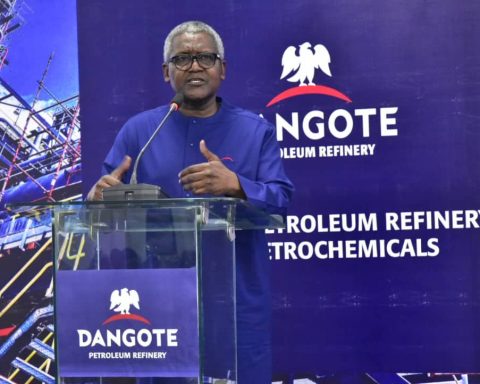
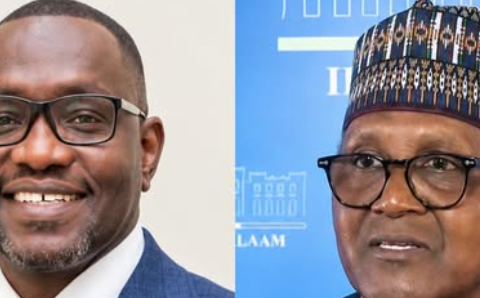
The Chief Executive Officer of Dangote Refinery, David Bird, has highlighted serious challenges in crude supply that are affecting Nigeria’s largest refinery, even as it operates at peak capacity.
Speaking during an interview on Arise News on Wednesday, Bird revealed that the refinery should ideally receive 13 to 15 cargoes of crude monthly under the Federal Government’s crude-for-naira scheme, but is currently being allocated only five. He described this gap as a major bottleneck in meeting domestic fuel needs.
“Crude-for-naira is not there to benefit Dangote Refinery. That is a fundamental misunderstanding. The programme is to provide resilience to foreign exchange,” Bird said, clarifying that the policy was designed to stabilise Nigeria’s currency rather than offer the refinery financial perks.
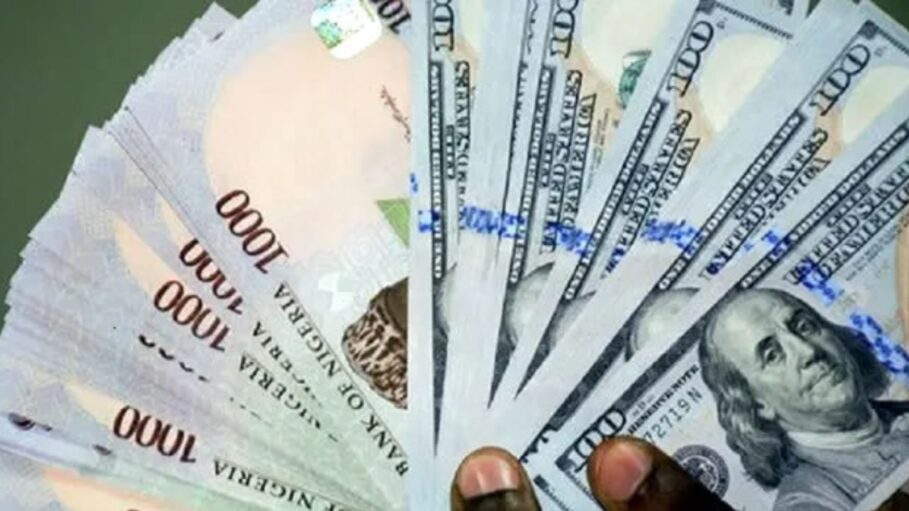
Join our WhatsApp ChannelThe crude-for-naira policy, formally endorsed by the Federal Executive Council and facilitated by the Central Bank of Nigeria, allows domestic crude transactions to be settled in naira while still reflecting full international benchmark pricing.
Despite this framework, Bird noted that the refinery continues to face challenges related to crude supply quality and allocation. Limited domestic availability has forced the refinery to source preferred Nigerian crude grades from the international market at substantial premiums.
“What we see under that agreement, we should be getting about 13 to 15 cargoes a month… Currently, we’re only getting five. That underperformance means Nigeria is effectively losing value to international traders,” he explained.
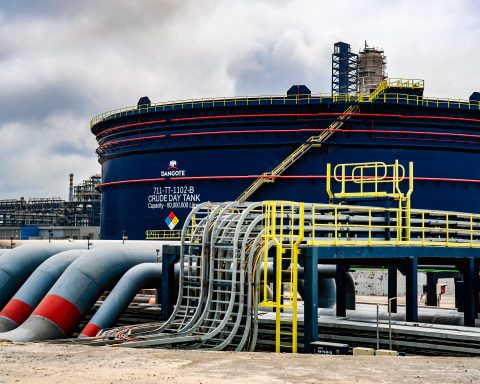
Operating at full capacity of 650,000 barrels per day, the refinery currently meets Nigeria’s domestic fuel demand while also supplying refined products to regional markets. Bird emphasized that the facility operates entirely as an independent merchant refinery, with no special access to crude or pricing advantages, leaving it exposed to fluctuations in the global oil market.
“From a price perspective, we are fully exposed to the international market when it comes to both crude supply and product pricing,” he said, noting that geopolitical tensions, particularly in the Middle East, have amplified costs across the refinery’s operations, including freight, insurance, and logistics.
READ ALSO : Dangote Refinery CEO Warns Global Oil Shortage Could Be Worse Than $120 Crude
Nigerian Crude Sold to Dangote Refinery via Foreign Middlemen at $18 Premium – Ugochinyere
Bird also highlighted a growing disconnect between crude oil costs and refined product prices, driven by scarcity in global markets. He stressed that the refinery’s pricing approach aims to maintain commercial stability without relying on subsidies.
“We try to maintain stability within a commercially acceptable range because there is no subsidy or discount applied to our cost inputs,” he added.
Looking ahead, Bird urged greater transparency in crude allocation and called for long-term strategic planning, including building national reserves and strengthening supply chains to mitigate future disruptions.
He also revealed plans for a public offering of the refinery, describing it as an inclusive “people’s IPO” intended to attract participation from Nigerians, the diaspora, and other Africans.
“Alhaji Aliko Dangote’s ambition is that this is the people’s IPO. We want everyone to be proud Nigerians, Africans, and the diaspora alike,” he said.
Bird concluded by noting that refining is inherently cyclical, shaped by global market trends.
“What goes up always comes down. Anyone trying to predict fuel prices is playing a fool’s game, but the cycle is guaranteed,” he said.
The remarks underscore ongoing debates about Nigeria’s crude allocation framework and highlight the refinery’s critical role in strengthening domestic fuel supply while navigating international market pressures.

Amanze Chinonye is a Staff Correspondent at Prime Business Africa, a rising star in the literary world, weaving captivating stories that transport readers to the vibrant landscapes of Nigeria and the rest of Africa. With a unique voice that blends with the newspaper's tradition and style, Chinonye's writing is a masterful exploration of the human condition, delving into themes of identity, culture, and social justice. Through her words, Chinonye paints vivid portraits of everyday African life, from the bustling markets of Nigeria's Lagos to the quiet villages of South Africa's countryside . With a keen eye for detail and a deep understanding of the complexities of Nigerian society, Chinonye's writing is both a testament to the country's rich cultural heritage and a powerful call to action for a brighter future. As a writer, Chinonye is a true storyteller, using her dexterity to educate, inspire, and uplift readers around the world.