 Amanze Chinonye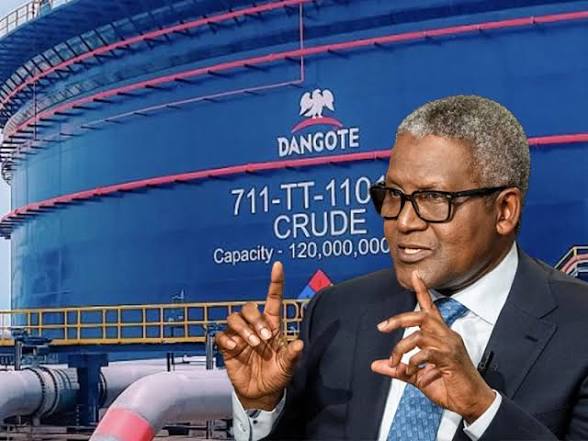
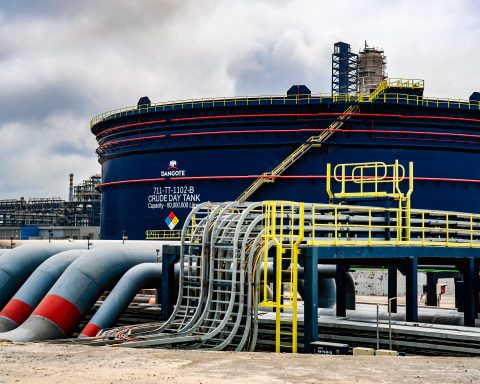
The Dangote Petroleum Refinery has expanded its regional footprint with the export of 456,000 tonnes of refined petroleum products through 12 cargoes to five African countries, as a fuel supply crunch linked to geopolitical tensions in the Middle East tightens across the continent.
The cargoes, lifted by international traders on a Free on Board (FOB) basis, were shipped to Côte d’Ivoire, Cameroon, Tanzania, Ghana and Togo, marking a major milestone since the refinery attained its full production capacity of 650,000 barrels per day.
According to the Punch, A senior refinery official, who spoke on condition of anonymity, said the development reflects growing confidence in Nigeria’s refining capacity and signals a shift in Africa’s fuel supply dynamics.
Join our WhatsApp ChannelAccording to the official, the shipments comprising mainly Premium Motor Spirit (petrol) and diesel represent the refinery’s first major export wave since reaching full capacity.
The total volume, equivalent to about 608 million litres, underscores the scale of the operation and its potential impact on fuel availability across multiple African markets.
“This accomplishment underscores the refinery’s capability to not only meet but exceed Nigeria’s domestic fuel demand,” the official said, adding that the facility is increasingly supplying high-quality Euro 5 standard gasoline and diesel to markets historically dependent on lower-grade imports.
READ ALSO : Fuel Crisis Deepens as African Nations Eye Dangote Refinery Amid Global Supply Shock
Nigerian Crude Sold to Dangote Refinery via Foreign Middlemen at $18 Premium – Ugochinyere
The surge in exports comes amid rising demand across Africa, where several countries are grappling with fuel shortages and escalating import costs following global supply disruptions tied to the ongoing Middle East crisis.
Industry data shows that a significant share of refined fuel imports into sub-Saharan Africa has traditionally come from the Middle East, leaving many countries vulnerable to external shocks.
Recent reports indicate that countries including South Africa, Kenya and Ghana have approached the refinery for supply arrangements, as governments scramble to secure alternative sources of refined petroleum products.
Energy consultancy data suggests total demand for petroleum products in sub-Saharan Africa stood at about 114 million metric tonnes in 2024, with most countries still reliant on imports due to limited domestic refining capacity.
The Dangote refinery’s increasing output is now positioning Nigeria as a key supplier within the continent, with traders facilitating deliveries to markets facing supply constraints.
Analysts say the development signals a gradual reordering of Africa’s fuel supply chain, as intra-African trade gains momentum and reliance on long-haul imports from Europe and the Middle East begins to decline.
The refinery’s proximity to regional markets is also expected to reduce logistics costs, shorten delivery timelines and ease pricing pressures in several countries.
Despite concerns that rising exports could tighten domestic supply, the refinery official maintained that adequate provisions had been made to meet local demand.
“We factored domestic supply into our strategy from the outset,” the official said. “Demand across Africa will continue to rise, and we are positioning to meet both domestic and regional needs.”
The export milestone comes as the refinery continues to scale operations following its phased ramp-up, with about 75 per cent of output reportedly reserved for the Nigerian market while the remainder is allocated for exports.
The development is expected to boost Nigeria’s foreign exchange earnings and strengthen its strategic influence in Africa’s energy market, while reinforcing its transition from a long-standing importer of refined petroleum products to an emerging export hub.

Amanze Chinonye is a Staff Correspondent at Prime Business Africa, a rising star in the literary world, weaving captivating stories that transport readers to the vibrant landscapes of Nigeria and the rest of Africa. With a unique voice that blends with the newspaper's tradition and style, Chinonye's writing is a masterful exploration of the human condition, delving into themes of identity, culture, and social justice. Through her words, Chinonye paints vivid portraits of everyday African life, from the bustling markets of Nigeria's Lagos to the quiet villages of South Africa's countryside . With a keen eye for detail and a deep understanding of the complexities of Nigerian society, Chinonye's writing is both a testament to the country's rich cultural heritage and a powerful call to action for a brighter future. As a writer, Chinonye is a true storyteller, using her dexterity to educate, inspire, and uplift readers around the world.