 Victor Ezeja
Centre for the Promotion of Private Enterprise (CPPE) has said the Raw Materials Research and Development Council (RMRDC) Bill currently before the National Assembly has the prospect of creating adverse consequences for Nigerian exporters and manufacturers.
Key provisions in the proposed bill include: that no primary products exports should take place unless there is a minimum of 30 per cent local value addition; and that manufacturers will not be allowed to import raw materials that are available in sufficient quantity into the country.
Join our WhatsApp ChannelThe bill proposes a penalty for exporters in the country who export primary products.
Reacting, CPPE in a statement signed by its CEO, Dr Muda Yusuf, noted that the idea of promoting local value addition is good for the economy as it enhances the chances of better earnings from exports.
The centre, however, stated that the policy should create a balance between the interests of exporters of primary products and the processors.
READ ALSO: Imported Poverty: How Nigeria’s Love For Foreign Goods Is Killing Naira
It emphasised the need for authorities to undertake a study on domestic raw materials availability before enacting a law banning raw materials for manufacturers.
“What is needed is a win-win proposition, not a zero-sum game,” CPPE stated.
The economic think tank warned that the policy would put thousands of jobs in the primary products export supply chain at risk.
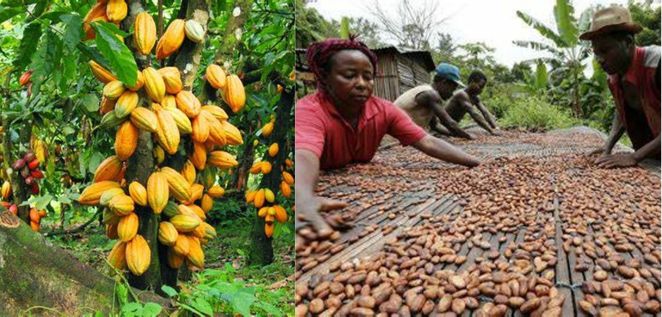
It listed major non-oil exports from the country, which include: cocoa beans and cocoa butter, cashew nuts, Gum Arabic, Ginger, sesame seeds, shea butter, and pointed out that even crude oil export is still a major component of Nigeria’s export as the country until recently, had zero domestic refining capacity.
READ ALSO: Five Countries Nigeria Imported Most Goods From In Q4, 2024
The centre raised questions about the proposed bill:
“What metrics would be used to determine the minimum 30% value addition.
“Who will determine and give approval for the export to proceed.
“What study has been done to determine the local processing capacity for each category of primary products currently being exported.
“What metrics would be used to determine raw materials that manufacturers would be allowed to import into the country.
“What is the effective time frame for implementation?
“Is it within the mandate of the RMRDC to promote the ban on exports or imports?”
CPPE contended that the proposed policy failed to take into consideration the critical challenges of manufacturing, processing and value addition in the Nigerian economy.
The centre said most agro-processors in the country have shut down, not mainly because of the raw materials availability, but the challenges of productivity and competitiveness.
It cited some of the factors that impact production costs, such as energy, high interest rates, logistics (high cost of transportation due to high fuel price), bureaucratic bottlenecks (regulatory issues), high exchange rate, and multiple taxation. “These are bigger issues that need to be addressed to promote value addition,” CPPE stated.
The centre warned that if passed, the bill would create new corruption gateways in the bureaucracy, as businesses will now be burdened with another chain of approvals.
READ ALSO: Nigeria’s Trade Deficit Hits N9.4trn, As Manufactured Goods Imports Surge To N9.9trn In 9 Months
It further pointed out that the issue of export or import ban is not the responsibility of the Raw Materials Research and Development Council or the Ministry of Science and Technology, but is a fiscal policy matter handled by the Ministry of Finance in collaboration with the Ministry of National Planning and the Ministry of Industry, Trade and Investment, with the involvement of the Nigeria Export Promotion Council (NEPC).
The group also highlighted that import and export regulations are policy issues that are not often legislated upon, as they are reviewed from time to time by the fiscal policy authorities in the light of prevailing economic conditions.
“It is not a matter for the National Assembly to legislate upon. Trade policies are also meant to be flexible, which is why they are not often a subject of legislation.”
It therefore called on the national assembly to discontinue deliberations on the bill and encourage RMRDC to focus on its core mandate of raw materials research to offer the most cost-effective raw materials option for manufacturers. “The council’s involvement in trade policy matters is an aberration,” it added.
CPPE concluded by asking the RMRDC to withdraw the bill, adding that it has a very weak proposition.

Victor Ezeja is a passionate journalist with seven years of experience writing on economy, politics and energy. He holds a Master's degree in Mass Communication.