 Victor Ezeja
The recent crash in global oil prices and Nigeria’s low crude production levels have raised serious concerns about the feasibility of implementing the 2025 budget.
The Nigerian government relies heavily on oil revenues to fund its budget, and a sustained downturn in prices or production could lead to significant fiscal challenges.
Join our WhatsApp ChannelOil Price Volatility and Budget Assumptions
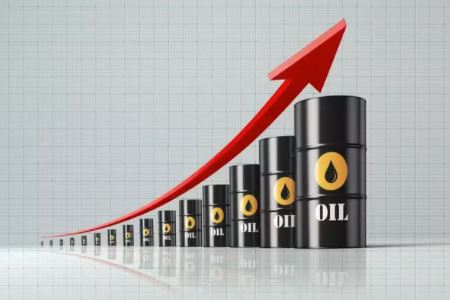
The 2025 budget was benchmarked on an oil price of $75 per barrel, but prices have recently fallen below that range due to global economic slowdowns, increased supply from non-OPEC producers, and weaker demand.
Crude is currently trading about $10 below the benchmark price in the budget. As of Monday evening, Brent Crude was trading at $66.55 per barrel and West Texas Intermediate (WTI) was $63.58 per barrel. The slide in oil prices was blamed on U.S. President Donald Trump’s ongoing trade war, which affects demand for crude oil negatively.
Experts observed that if oil prices remain low, government revenue projections could fall short, forcing spending cuts or increased borrowing.
Low Oil Production Exacerbates Revenue Shortfalls
Nigeria has struggled to meet its OPEC production quota (currently around 1.5 million barrels per day, well below its capacity of 2 million bpd).
The country’s crude oil output dropped by 9 per cent to about 1.4 million barrels daily in March compared with January, according to data released by the Nigerian Upstream Petroleum Regulatory Commission (NUPRC).
The oil output so far in Nigeria falls short of the 2.06 million barrels per day estimated in the 2025 budget. To realise the projections in the budget, the government is expected to produce 751.9 million bpd and realise $56.392 billion.
READ ALSO: 2025 Budget: Can Nigeria Achieve N41trn Revenue Target?
The low production has been attributed to a couple of issues, like oil theft, pipeline vandalism, underinvestment, and operational inefficiencies, among others.
Lower production means fewer barrels to sell, compounding the revenue loss from falling prices.
Threat to Budget Implementation
A significant revenue shortfall could cause a delay in critical infrastructure projects, widen the budget deficit, and increase borrowing costs.
Commenting on the declining oil prices last week, Chief Executive Officer, Nigerian Midstream and Downstream Petroleum Regulatory Authority (NMDPRA), Farouk Ahmed, said: “If we lose the price of crude by $10, you can see the negative impact to our economy, to our national reserves and the strength of our naira.”
Goldman Sachs Group Inc. economist Andrew Matheny said the lower oil prices could lead to further naira depreciation if forex earnings from oil exports decline. “The natural policy response to lower oil prices is a depreciation of the naira, as this boosts oil revenues in naira terms,” Matheny stated in an interview with Bloomberg.
Long-term Risks
If oil prices stay low and production does not recover, there are concerns that Nigeria could face: a deeper fiscal crisis, especially if debt servicing costs rise; reduced investor confidence, leading to capital flight; pressure on foreign reserves, making imports more expensive.
Chief Economist and Partner at SPM Professionals, Dr Paul Alaje, recently called on the Nigerian government to review the 2025 budget, warning that the country will not be able to survive it if the price of crude oil drops to $40 per barrel.
“Talking about the revenue target, it’s obvious that it will be difficult to meet our revenue target as we’ve projected in the budget, which is a very difficult option, or we go a borrowing. When we borrow this time, it certainly has implications,” Alaje stated.
READ ALSO: Trump Calls On OPEC To Cut Oil Prices Amid Market Downturn
Financial expert, Kalu Aja, who noted that 56 per cent of the budget revenue is expected from the export of crude oil and gas, while the budget deficit of N13 trillion is humongous, stated that “A responsible management of resources will be to cut down spending to create a fiscal buffer.
Possible Government Responses
Debt Financing: The government can resort to increasing domestic and foreign borrowing, though this raises sustainability concerns. Alaje warned that further borrowing could erode what President Bola Tinubu’s administration has achieved in terms of reducing the debt-to-GDP ratio through the removal of subsidies and devaluation of currency.
Diversification Push: Accelerate non-oil revenue generation (tax reforms, VAT collection, etc.). Alaje reiterated that what could save the economy is scaling up production, especially manufacturing, in other sectors apart from oil. “Our manufacturing component of the GDP must increase to 40 per cent,” he advised.
He also said the administration’s economic management team can also look at other policy factors to boost the productive base of the economy, especially on what needs to be done to increase power supply to businesses.
Finance Minister Wale Edun recently said the country was going back to the drawing board to “see what changes have been made in the assumptions that underlaid the production of that budget and the reality over the first quarter.”

Victor Ezeja is a passionate journalist with seven years of experience writing on economy, politics and energy. He holds a Master's degree in Mass Communication.