 MARCEL MBAMALU
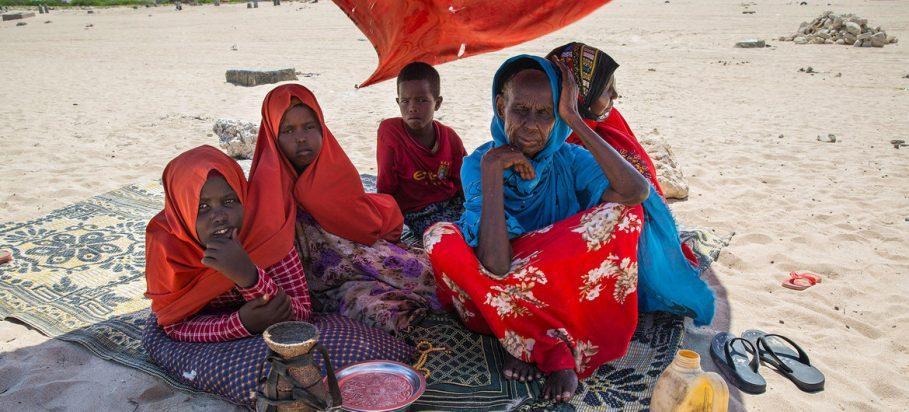
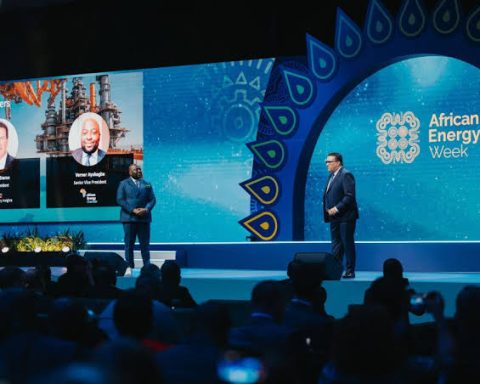
An expert panel session at the ongoing Bloomberg New Economy Forum on Thursday insisted that, despite having the lowest contribution to global greenhouse gas emissions, Africa remains the most vulnerable to climate change. They, therefore, demanded a new set of criteria for African countries to access funds from Development Financial Institutions (DFIs) and others.
The session, which focused on “Equality and Climate: Clean Growth Models For Emerging Economies,” said African countries could address the challenge by developing clear climate plans, creating access to financing, focusing on outcomes, monitoring and evaluation as well as leveraging high-impact partnerships with credible development organisations.
The speakers comprised Yvonne Aki-Sawyerr, Mayor of Freetown in Sierra Leone; Uzziel Ndagijimana, Minister of Finance and Economic Planning, Rwanda; Ahmed M. Saeed, Vice-President, East Asia, Southeast Asia and the Pacific, Asian Development Bank and Josephine Wapakabulo, Founder and Managing Director, TIG Africa.
Join our WhatsApp ChannelThe session argued that climate change is a real threat to human health, food, water security and socio-economic development in Africa, as its human and economic toll has been further aggravated by the COVID-19 pandemic.
The speakers advised that the urgency in the funding to realize green development should match the urgency of the issues at hand for Africa to realize her vision of sustainable development.
They agreed that Africa faces exponential collateral damage, posing systemic risks to its economies, infrastructure investments, water and food systems, public health, agriculture, and livelihoods. These, according to the panel, are threatening to undo the continent’s modest development gains and many nations face the risk of slipping into higher levels of extreme poverty.
On climate plans, the panel agreed that countries would need a costed plan which showcases their priorities on green development. This, according to the speakers, needs to include a clear pipeline of projects governments intend to prioritize.
While some countries have done this well, the majority of the African countries struggle to achieve this as they lack capacity and the skillset to put together “investor-ready” projects, alongside detailed feasibility studies.
For access to financing and funding, the panel noted that the existing criteria to assess if African countries qualify for funding is heavily geared to models derived for developed economies. “There is a need to have a different model of measurement, which makes it easier for African countries to access the funding available,” the session submitted.
The speakers also advised that funding must be fit for purpose and work in a way that recognises the structural uniqueness of emerging economies, ensuring market vehicles are designed to work within the current systems.
For high-impact partnerships, the session argued that leveraging knowledge and relationships with credible organisations, such as development and finance institutions working across the continent would be necessary to address the climate change dilenma.
They onserved thay there is need for the rich insight gathered from DFIs to be shared with a wider ecosystem like the private sector, philanthropies and other players that work toward development in country. This would shorten the curve needed to kickstart and actualize green project.
The session, however, warned that, for all the suggested guidelines to work effecrively, African nations must focus on outcomes, monitoring and evaluation.
They identified a need to find a system which successfully measures impact and progress in a way that makes a case for further investment by other sectors like the private sector and financial institutions.
Prime Business Africa (PBA) reports that , while COP26 may not have fully addressed the unique pressures facing emerging economies, opportunities still exist to access finance to further the development ambitions of Emerging Markets (EMs) in a way that is sustainable for the planet.

Dr. Marcel Mbamalu is a distinguished communication scholar, journalist, and entrepreneur with three decades of experience in the media industry. He holds a Ph.D. in Mass Communication from the University of Nigeria, Nsukka, and serves as the publisher of Prime Business Africa, a renowned multimedia news platform catering to Nigeria and Africa's socio-economic needs.
Dr. Mbamalu's journalism career spans over two decades, during which he honed his skills at The Guardian Newspaper, rising to the position of senior editor. Notably, between 2018 and 2023, he collaborated with the World Health Organization (WHO) in Northeast Nigeria, training senior journalists on conflict reporting and health journalism.
Dr. Mbamalu's expertise has earned him international recognition. He was the sole African representative at the 2023 Jefferson Fellowship program, participating in a study tour of the United States and Asia (Japan and Hong Kong) on inclusion, income gaps, and migration issues.
In 2020, he was part of a global media team that covered the United States presidential election.
Dr. Mbamalu has attended prestigious media trainings, including the Bloomberg Financial Journalism Training and the Reuters/AfDB Training on "Effective Coverage of Infrastructural Development in Africa."
As a columnist for The Punch Newspaper, with insightful articles published in other prominent Nigerian dailies, including ThisDay, Leadership, The Sun, and The Guardian, Dr. Mbamalu regularly provides in-depth analysis on socio-political and economic issues.