 MARCEL MBAMALU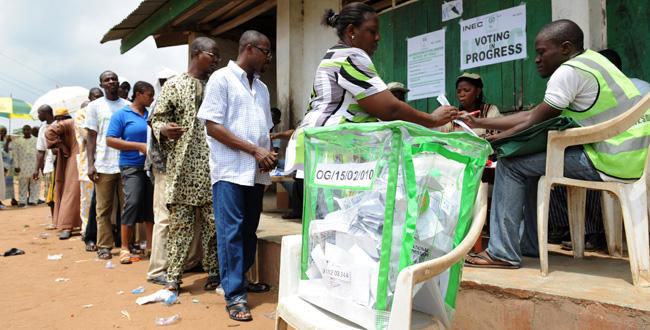
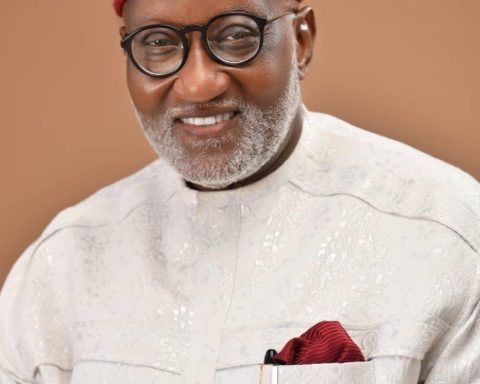
EKITI – The price of democracy was N15,000 last Saturday. Governor Biodun Oyebanji bought 319,224 of them.
INEC called the poll peaceful. BVAS mostly worked. The ruling APC swept all 16 LGAs. But behind the landslide is an uglier tally: voters paid N10,000 to N15,000 to show marked ballots. Party agents handed out numbers like raffle tickets. EFCC hovered. Police threatened arrests. None came.
Join our WhatsApp ChannelThis was INEC chairman Prof Joash Ojo Amupitan’s second governorship test. He promised cleaner elections. Ekiti gave him cleaner tech and dirtier politics.
READ ALSO: 2027 Elections: INEC Is Bleeding Voter Trust, and Time Is Running Out
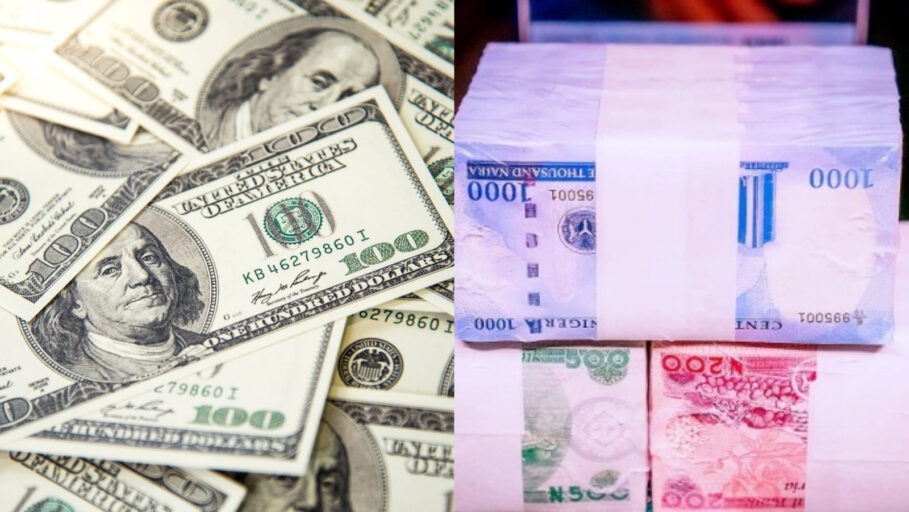
So here’s the math from Ekiti 2026: 319,224 votes at N15,000 each. That’s N4.78 billion for a mandate. The real question isn’t who won. It’s what democracy costs when the ballot has a price tag.
The Ekiti State governorship election concluded with winners and losers, but it also reopened long-standing questions about Nigeria’s electoral credibility, voter confidence and the overall health of its democracy. What appears as a routine off-cycle election instead functions as a cumulative test of institutional strength, public trust and the effectiveness of recent electoral reforms.
The poll featured 14 candidates in the off-cycle race, with Governor Biodun Oyebanji of the All Progressives Congress seeking a second term as his first term was due to end in October. Other contestants included Oluwole Oluyede of the Peoples Democratic Party, Oluwadare Bejide of the African Democratic Congress and others.
Ekiti State had 1,059,360 registered voters, rising from 989,224 in 2022 and 909,585 in 2018. However, only 1,028,929 voters who collected their Permanent Voter Cards were eligible to participate across 2,445 polling units in 177 wards in 16 local government areas. These figures suggest expansion in registration, but they also sit alongside a more persistent pattern of political disengagement that has defined recent elections.
At the end of collation, Mr Biodun Oyebanji was declared winner after securing a decisive majority across the 16 local government areas. According to Form EC8E, he polled 319,224 votes, defeating Wole Oluyede of the PDP, who scored 40,543 votes, while Oluwadare Bejide of the ADC came third with 12,872 votes. The scale of the margin reinforces a recurring pattern in off-cycle elections where incumbency advantage remains structurally significant.
First Test After Anambra, Old Problems
This election took place under the current leadership of the Independent National Electoral Commission following the assumption of office by Prof Joash Ojo Amupitan in October 2025, who pledged to strengthen transparency, deepen BVAS deployment, improve logistics and enhance voter confidence. The Ekiti, after Anambra poll therefore became an early test of those commitments, particularly in a context already shaped by declining trust in elections and given that HW wad relatively new during the Anambra governorship election.
Aside from Anambra, Ekiti governorship election was arguably the first governorship poll conducted under Mr Amupitan after the FCT Area Council election, which was also marked by significant electoral concerns and debates over voter participation and process integrity. In that FCT election, out of about 1.9 million registered voters, only about 314,000 votes were cast, representing roughly 16 to 17 per cent turnout, underscoring growing voter apathy in Nigeria’s electoral process. APC also won control of five out of the six area councils, further consolidating its dominance. The pattern between both elections strengthens a recurring narrative of low turnout alongside predictable outcomes in favour of dominant parties.
In the weeks leading to the Ekiti election, I published an analysis highlighting recurring structural weaknesses in Nigeria’s electoral process, including voter apathy, weaknesses in electoral enforcement and declining public trust in elections. The concluded Ekiti poll once again brought those concerns into sharper focus, not as isolated issues, but as recurring features of the electoral environment.
Numbers That Bleed Trust
Beyond the figures and the outcome lies a paradox that increasingly defines Nigeria’s democracy. The election took place against the backdrop of insecurity concerns, economic pressure and growing public distrust in institutions, yet the ruling party still recorded a decisive victory. That outcome raises a deeper democratic tension about whether the ballot still reflects collective choice in a meaningful sense, or whether transactional dynamics have begun to shape electoral expression more strongly.
Vote Buying or Voter Inducement?
Aside from voter apathy and electoral material glitches recorded in both the FCT election and the Ekiti election, the most recurrent issue in the current poll was vote buying. Some reports and videos suggested voters were paid between N10,000 and N15,000.
An election credibility advocacy group, the Centre for Democracy and Development, raised concerns over alleged vote buying, inconsistencies in sensitive election materials and malfunctioning voter accreditation devices during the election. That concern was not isolated.
The Movement for Credible Elections called for investigation into allegations of vote buying, pre-thumbprinted ballot papers and suspected distribution of uncollected Permanent Voter Cards.
Party agents were seen asking voters to display marked ballot papers as proof of voting preference. Rather than direct cash distribution at polling units, some agents reportedly issued numbers to voters after they voted, suggesting more coordinated methods of inducement.
The Nigeria Police Force warned against vote buying and other electoral offences during the election, stating that offenders would be arrested and prosecuted. It listed vote buying, vote selling, ballot snatching and intimidation as punishable acts. Observers from the Centre for Journalism Innovation and Development also reported incidents of vote buying and other irregularities in parts of the state.
The EU-SDGN Election Observation Hub commended BVAS performance during the poll but flagged significant concerns about electoral malpractice, underscoring the dual reality of technological improvement and behavioural persistence.
Operatives of the Economic and Financial Crimes Commission were also reported at the polling unit of Governor Oyebanji. Although the reason for their presence was not confirmed, it was widely linked to concerns around possible vote buying by political actors. The Accord Party candidate, Opeyemi Falegan, also alleged vote buying by the opposition.
The Nigeria Police Force publicly warned against vote buying and other electoral offences minutes after the election began on Saturday, stating that offenders would be prosecuted. It listed vote selling, ballot snatching, violence and intimidation among punishable offences. However, there has been no confirmation of arrests despite multiple reports of vote buying and selling. This gap has fuelled public scepticism about enforcement.
The Law Is Not the Problem
These allegations persist despite the fact that President Bola Ahmed Tinubu formally signed the amended Electoral Act in February 2026, barely 24 hours after the National Assembly passed it following heated debates over Clause 60, which dealt with electronic versus manual transmission of results. The National Assembly concluded its deliberations and passed the bill on 17 February 2026, and Mr Tinubu assented to it at the State House in Abuja on 18 February 2026. The swift turnaround underscored the urgency placed on electoral reform ahead of the next cycle.
The amendment reinforced provisions against vote buying and selling, expanding penalties and clarifying definitions to include indirect inducements such as food, gifts, or disguised welfare packages. For instance, trading voter cards now attracts fines of up to N5 million and a two-year prison term.
Yet, despite arguments that these penalties were not strong enough, the reality is that subsequent elections continue to be marred by widespread vote buying, with little or no visible enforcement action taken. In practice, the law has continued to favour only the ruling class.
INEC’s Other Duty
Reports also emerged of party agents assisting or directing voters in several polling units during the Ekiti governorship election. Even assuming this was not linked to vote buying or inducement, it still raised concerns about voter awareness and the ability of some citizens to independently navigate the voting process. It exposed a gap in electoral preparedness that goes beyond election day logistics, yet INEC carries a constitutional duty not only to conduct elections but to promote knowledge of democratic processes through sustained voter education. Where voters still require guidance at polling units, it reflects a weakness that INEC must urgently address.
The Civic Rot
At the same time, it has become increasingly evident that Nigeria’s electoral challenge is not limited to INEC or government institutions alone. In several instances, some citizens actively participated in selling their votes, undermining the integrity of the process. This reality suggests that the crisis of elections is also rooted in civic responsibility. When poverty meets a ballot with a price tag, the social contract frays.
Bottom Line:
Ekiti 2026 did not just produce a winner. It produced a receipt. 319,224 votes at N15,000 each is N4.78 billion spent to renew a mandate. BVAS worked. The law exists. The police warned. The EFCC watched. Still, democracy was priced, purchased, and delivered.
Until the cost of buying a vote outweighs the cost of losing an election, the ballot will remain a market. And the price of Ekiti will be the price of Nigeria.

Dr. Marcel Mbamalu is a distinguished communication scholar, journalist, and entrepreneur with three decades of experience in the media industry. He holds a Ph.D. in Mass Communication from the University of Nigeria, Nsukka, and serves as the publisher of Prime Business Africa, a renowned multimedia news platform catering to Nigeria and Africa's socio-economic needs.
Dr. Mbamalu's journalism career spans over two decades, during which he honed his skills at The Guardian Newspaper, rising to the position of senior editor. Notably, between 2018 and 2023, he collaborated with the World Health Organization (WHO) in Northeast Nigeria, training senior journalists on conflict reporting and health journalism.
Dr. Mbamalu's expertise has earned him international recognition. He was the sole African representative at the 2023 Jefferson Fellowship program, participating in a study tour of the United States and Asia (Japan and Hong Kong) on inclusion, income gaps, and migration issues.
In 2020, he was part of a global media team that covered the United States presidential election.
Dr. Mbamalu has attended prestigious media trainings, including the Bloomberg Financial Journalism Training and the Reuters/AfDB Training on "Effective Coverage of Infrastructural Development in Africa."
As a columnist for The Punch Newspaper, with insightful articles published in other prominent Nigerian dailies, including ThisDay, Leadership, The Sun, and The Guardian, Dr. Mbamalu regularly provides in-depth analysis on socio-political and economic issues.