Amanze Chinonye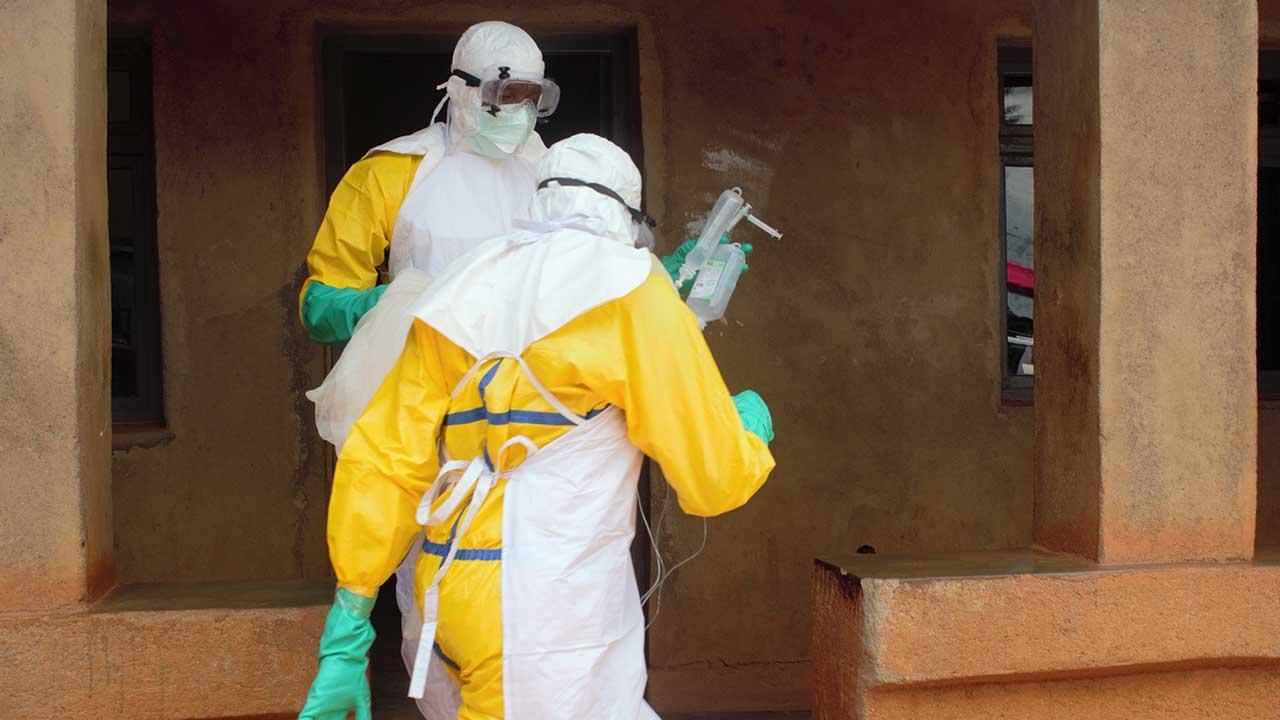
Uganda has temporarily closed its border with the Democratic Republic of Congo (DRC) in response to a rapidly escalating Ebola outbreak in eastern Congo, where health authorities report nearly 1,000 suspected cases and rising fatalities amid growing fears of cross-border transmission.
The decision, announced by Uganda’s National Task Force on Ebola Response, comes as regional health agencies intensify containment efforts against the outbreak, which has already shown signs of cross-border spread into Uganda, triggering emergency public health measures across both countries.
READ ALSO :
Join our WhatsApp ChannelCongo Declares Ebola Outbreak After 15 Deaths in Kasai Province
According to the World Health Organization (WHO) and regional health data, the outbreak driven by the rare Bundibugyo strain of Ebola Virus is concentrated in eastern DRC’s conflict-affected provinces, including Ituri.
Recent figures indicate nearly 1,000 suspected cases across the DRC and Uganda combined, with more than 220 suspected deaths and over 100 laboratory-confirmed infections in some reports, though investigations are ongoing as health authorities continue to refine case classifications.
Uganda has confirmed multiple infections linked to cross-border transmission from eastern Congo, including cases involving individuals who entered the country seeking medical treatment.
At least one death has been recorded in Uganda, prompting authorities to strengthen surveillance, isolation protocols, and emergency response capacity in border districts and health facilities.
READ MORE :
New Dengue Vaccine And Possibility Of mRNA Vaccine For Ebola
Under the new restrictions, movement across the Uganda–DRC border is now severely limited. However, exemptions remain for authorised Ebola response personnel, humanitarian and emergency workers, cargo and food supply operators, and security agencies.
All permitted crossings are subject to strict screening measures, with suspected cases required to undergo monitoring and isolation protocols.
The World Health Organization has declared the outbreak a Public Health Emergency of International Concern (PHEIC), warning that the situation is being driven by insecurity, population displacement, weak health infrastructure, and high cross-border mobility.
While border closures may slow transmission, the WHO has cautioned that they can also push movement into informal routes, potentially complicating surveillance and control efforts.
Health authorities are now prioritising coordinated cross-border response, including contact tracing, rapid case detection, and expanded treatment capacity.
Officials warn that sustained containment will depend largely on effective cooperation between both countries and strengthened health systems along the porous border region.

Amanze Chinonye is a Staff Correspondent at Prime Business Africa, a rising star in the literary world, weaving captivating stories that transport readers to the vibrant landscapes of Nigeria and the rest of Africa. With a unique voice that blends with the newspaper's tradition and style, Chinonye's writing is a masterful exploration of the human condition, delving into themes of identity, culture, and social justice. Through her words, Chinonye paints vivid portraits of everyday African life, from the bustling markets of Nigeria's Lagos to the quiet villages of South Africa's countryside . With a keen eye for detail and a deep understanding of the complexities of Nigerian society, Chinonye's writing is both a testament to the country's rich cultural heritage and a powerful call to action for a brighter future. As a writer, Chinonye is a true storyteller, using her dexterity to educate, inspire, and uplift readers around the world.