 Amanze Chinonye
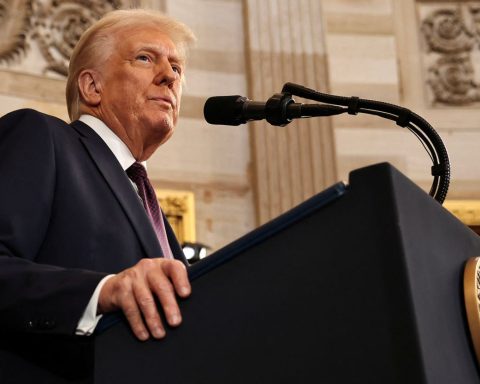
United States President Donald Trump and Chinese President Xi Jinping have agreed that Iran must never acquire nuclear weapons, while also pledging to deepen economic cooperation between both countries following high-level talks in Beijing.
According to a White House statement issued after the meeting, both leaders discussed measures aimed at strengthening bilateral economic ties, including expanding market access for American businesses operating in China and increasing Chinese investment in U.S. industries.
The White House also disclosed that executives from several major American corporations participated in part of the discussions, underscoring the economic significance of the summit.
Join our WhatsApp ChannelREAD ALSO :
Xi, Trump Push For Stable China-U.S. Relations As High-Stakes Beijing Talks Begin
The talks focused heavily on global energy security, particularly tensions surrounding the Strait of Hormuz, a critical global oil shipping route affected by the ongoing Middle East crisis.
“The two sides agreed that the Strait of Hormuz must remain open to support the free flow of energy,” the White House stated.
President Xi also reportedly expressed China’s opposition to the militarisation of the waterway and any attempt to impose tolls on vessels using the strategic route.
According to the White House, Xi further expressed interest in purchasing more American oil in order to reduce China’s future dependence on energy shipments passing through the Strait.
The two leaders also highlighted the need to continue efforts aimed at ending the flow of fentanyl precursor chemicals into the United States, while discussions additionally covered increasing Chinese purchases of American agricultural products.
The White House added that both countries agreed Iran “can never have a nuclear weapon,” amid continuing tensions in the Middle East and growing international concerns over regional security.
Following the summit, Trump released a lengthy statement on his Truth Social account in which he defended the state of the American economy under his administration and responded to remarks attributed to Xi suggesting the United States had previously appeared to be in decline.
Trump argued that Xi’s comments referred to the administration of former President Joe Biden, which he blamed for economic and social challenges in the country.
“When President Xi very elegantly referred to the United States as perhaps being a declining nation, he was referring to the tremendous damage we suffered during the four years of Sleepy Joe Biden and the Biden Administration,” Trump wrote.
READ MORE :
China Invites Donald Trump for State Visit Amid Global Tensions
The U.S. president further claimed that the country had witnessed a major resurgence during what he described as the “16 spectacular months” of his administration, citing stock market gains, foreign investment, military strength and job creation.
Trump also stated that Xi congratulated him on what he described as several “tremendous successes” achieved within a short period.
He concluded by expressing optimism about future ties between Washington and Beijing, saying he hoped relations between both countries would become “stronger and better than ever before.”
While the White House summary did not publicly reference Taiwan, international media reports indicated that Xi warned against actions that could escalate tensions over the self-governed island claimed by Beijing.
The summit comes amid continuing geopolitical tensions between the world’s two largest economies over trade, technology, Taiwan and regional security issues, even as both governments seek greater cooperation on economic and global stability matters.

Amanze Chinonye is a Staff Correspondent at Prime Business Africa, a rising star in the literary world, weaving captivating stories that transport readers to the vibrant landscapes of Nigeria and the rest of Africa. With a unique voice that blends with the newspaper's tradition and style, Chinonye's writing is a masterful exploration of the human condition, delving into themes of identity, culture, and social justice. Through her words, Chinonye paints vivid portraits of everyday African life, from the bustling markets of Nigeria's Lagos to the quiet villages of South Africa's countryside . With a keen eye for detail and a deep understanding of the complexities of Nigerian society, Chinonye's writing is both a testament to the country's rich cultural heritage and a powerful call to action for a brighter future. As a writer, Chinonye is a true storyteller, using her dexterity to educate, inspire, and uplift readers around the world.