Queen Nwabueze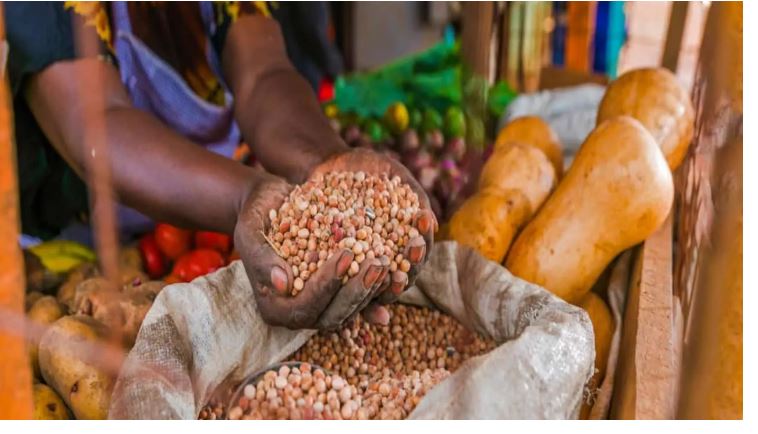
The government of UK has announced £37.65 million (US$37.40m) in humanitarian funding to deliver life-saving assistance of food, water and sanitation across Mali, Burkina Faso, Chad, Nigeria and Niger.
Join our WhatsApp ChannelAccording to the Foreign, Commonwealth and Development Office, the money will help fund two projects for the next year focused on the most vulnerable, including malnourished women and children totalling to around 1 million.
No doubt, growing instability and violent extremism across the Sahel region and the war on Ukraine have exacerbated existing issues with food insecurity and malnutrition.
The region also faces further vulnerabilities due to climate change and extreme weather shocks, putting unimaginable stress on communities, meaning urgent intervention by the international community is now a necessity.
Reports say, as things stand, there will be close to 20 million people across the region in need of humanitarian aid by the end of the year.
Minister for Africa, Latin America and the Caribbean, Vicky Ford at the Foreign, Commonwealth & Development Office said, “Millions of people across the Sahel and West Africa are unimaginably suffering with hunger and malnutrition.
“That’s why the UK will step up with an urgent £38 million (US$37m) of humanitarian funding, reaching those most vulnerable and saving lives across the region.”
As part of the funding, £19.9 million (US$19.7m) will support The Sahel Humanitarian Assistance and Protection Programme (SHAPP), a programme which has been responding to the most acute needs, including those of displaced and malnourished women and children, and enables safer access for humanitarian aid workers to reach them.
The funding ensures delivery partners including the International Committee of the Red Cross and the INGO-run Sahel Regional Fund can continue their heroic, life-saving work in the region.
It also supports the work of the United Nations Humanitarian Air Service (UNHAS) and the International NGO Safety Organisation (INSO).
Their work between 2019-2022 under the Sahel Humanitarian Emergency Response Programme (SHERP) supported 2.7 million people with food assistance, provided treatment to nearly 900,000 severely malnourished children and ensured over 1.5 million mothers could detect malnutrition among their children, enabling early intervention.
In addition, £15 million (US$14.9m) of emergency humanitarian funding has been made available for North-East Nigeria over the next few months, when food is most scarce and humanitarian needs are highest.
Violence, displacement, poverty and climate shocks are just some of the many reasons why 8.4 million people need life-saving humanitarian assistance there.
This emergency funding supports the UK’s work alongside the Nigerian government to build security in the face of growing instability in the north of the country.
In North-East Nigeria, the UK is supporting the work of our delivery partners – the World Food Programme and UNICEF – whose aid workers put themselves at great risk in order to reach those suffering most.
This food assistance funding is part of the UK’s wider commitment to prioritise life-saving humanitarian aid to communities around the world who are most vulnerable due to the ongoing combination of crises.
“The number of people facing starvation are at their worst for a decade. Whilst this UK funding is a necessity, it has to be part of a bigger international effort.
“We’re calling on international partners to enhance our collective support and scale-up intervention to halt this humanitarian catastrophe,” said Vicky.