Amanze Chinonye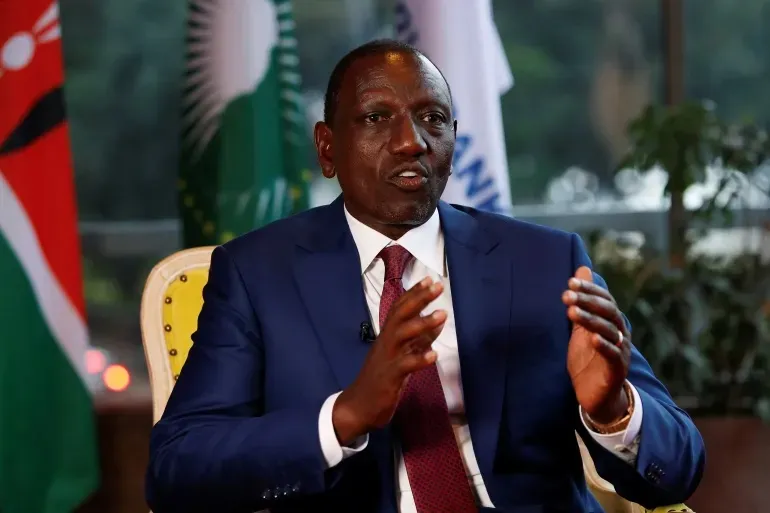
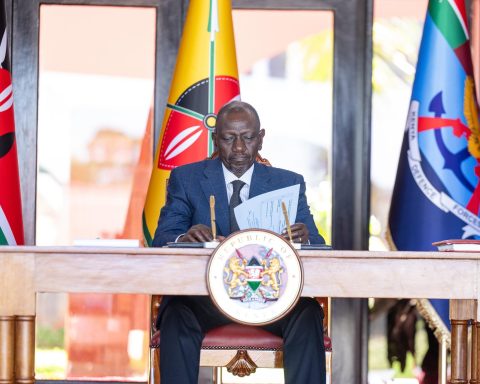
Kenyan President William Ruto on Wednesday ordered a reduction in the customs benchmark for consolidated cargo and sharply lower rail freight charges after protests by small-scale traders over increased import costs, Prime Business Africa reports.
Join our WhatsApp Channel
Ruto said the benchmark for general containerised consolidated cargo would be reduced to 2 million Kenyan shillings ($15,400), reversing a recent increase to 3.2 million shillings that triggered demonstrations by traders in Nairobi.
READ ALSO :
The Kenya Revenue Authority (KRA) raised the minimum benchmark from 2.5 million shillings to 3.2 million shillings in August, a 28% increase. The authority said the benchmark was a risk-management reference under a simplified customs clearance arrangement and not a fixed tax payable on every container.
Traders said the higher threshold would increase the cost of clearing goods and threaten businesses that rely on consolidated shipments to reduce import and logistics costs.
Police fired tear gas to disperse traders protesting the increase in Nairobi last week, while hundreds of businesses in parts of the capital closed, Reuters reported.
At a meeting with micro, small and medium-sized enterprise traders at State House, Ruto also directed KRA to draw up a list of high-value goods that would not qualify for clearance under the general consolidated cargo arrangement and would instead be assessed separately.
The government said the exclusion list would take into account the value and nature of goods, applicable tax rates, excisable products and other customs considerations.
Kenya Railways was also ordered to cut the cost of transporting cargo from the Inland Container Depot to the Bomaline De-consolidation Centre to 10,000 shillings from 58,000 shillings, with immediate effect.
Ruto further directed the rehabilitation and expansion of the Bomaline facility near Nairobi Central Railway Station to improve the handling, unpacking and verification of consolidated cargo.
READ MORE :
Ruto Unveils Kenya’s 2060 Growth Blueprint, Targets Asian-Style Economic Transformation
The government will also facilitate designated de-consolidation centres in Nairobi and Mombasa to help separate shipments belonging to individual traders and reduce cargo handling and clearance costs.
Existing rates for ready-made garments, footwear and fabrics will remain unchanged, while recently negotiated rates for air cargo will also continue to apply, the government said.
KRA will conduct fresh vetting and registration of cargo consolidators, who will be required to submit comprehensive lists of the traders and importers whose goods they handle. The process is expected to be completed by Oct. 15.
A multi-stakeholder committee chaired by the Cabinet Secretary for Investments, Trade and Industry will oversee implementation of the measures and report quarterly to the president.
The measures represent a concession to traders after days of protests over the higher customs benchmark, while maintaining separate assessments for higher-value imports and tighter oversight of the consolidated cargo sector.

Amanze Chinonye is a Staff Correspondent at Prime Business Africa, a rising star in the literary world, weaving captivating stories that transport readers to the vibrant landscapes of Nigeria and the rest of Africa. With a unique voice that blends with the newspaper's tradition and style, Chinonye's writing is a masterful exploration of the human condition, delving into themes of identity, culture, and social justice. Through her words, Chinonye paints vivid portraits of everyday African life, from the bustling markets of Nigeria's Lagos to the quiet villages of South Africa's countryside . With a keen eye for detail and a deep understanding of the complexities of Nigerian society, Chinonye's writing is both a testament to the country's rich cultural heritage and a powerful call to action for a brighter future. As a writer, Chinonye is a true storyteller, using her dexterity to educate, inspire, and uplift readers around the world.