Nigeria’s legacy of woes transects a broad historical and political sphere. Since her independence in 1960, various governments have represented the good, the bad and the ugly attributes of leadership. Ask Nigerians and they will readily recall that Nigeria’s legacy of woes was amply reflected in the Abacha regime, Buhari’s second coming and now in Ahmed Bola Tinubu’s administration. As far as clichés go, the first time was happenstance, the second time a coincidence and the third time seems like enemy action. Nigerians have all the while been and remain at the receiving end of such bad leadership and the resultant woes.
Long ago Chinua Achebe identified the injurious impact of bad leadership. To him, and to most Nigerians, bad leadership remains a national bane. But it is sustained bad leadership that tends to bequeath sustainable downbeat legacies that become tragically endemic and malignant. Put into context, Nigeria is an exemplar of an African nation that has all the resources and attributes of a great nation, but has also been invested with a legacy of woes via prolonged bad leadership.
Join our WhatsApp ChannelAs Wangari Maathi surmised in her book, The Challenge of Africa, “one of the major tragedies of postcolonial Africa is that the African people have trusted their leaders, but only a few of those leaders have honoured that trust. What has held Africa back, and continues to do so, has its origins in a lack of principled, ethical leadership.” Ditto Nigeria! Whereas poor leadership is not peculiar to Nigeria, the negative impact arising therefrom is huge and debilitating. As opposites, the nexus as well as dichotomy between trust and betrayal can be acutely disastrous. When the distrust gap between Nigeria’s leaders and their followers becomes a huge chasm, the result is sheer trepidation and anger, as is now the case.
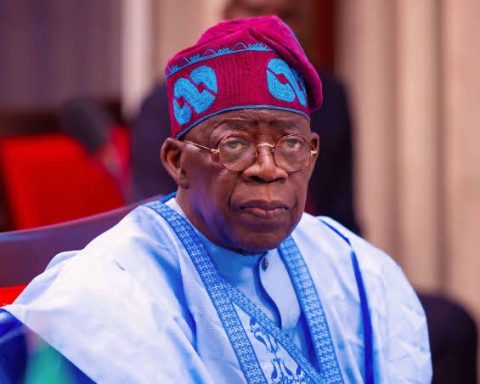
Every Nigerian leader made some promises to Nigerians. Very few redeemed their pledges. Generals Gowon and Babangida reneged on handover dates. General Abacha reneged on the Interim National Government arrangement. President Buhari reneged on his “change” promise and holding of free and credible 2023 elections. And now, President Bola Tinubu is already reneging on his “renewed hope” mandate. And no one is asking the crucial questions.
READ ALSO: Nigeria’s Not Too Big To Fail
These are days of silence in Nigeria. Those who ought to speak up are eerily silent. Our national circumstance is further compounded by the deeply troubling fact that some of the so-called ‘owners of Nigeria’ are suddenly servile and catatonic. By being taciturn and tolerant of outstandingly bad governance policies and modalities, they affirm their complicity in bequeathing Nigeria’s posterity a bum legacy. They also acquiesce, even if vicariously, to the profligacy and unfettered malfeasance that has become a national ‘ways and means’ past-time; without checks and balances or consequences. This elitist conspiracy of silence has two plausible rationales: resignation as it’s not my problem or let those who grabbed power by illicit means self-destruct. Sadly, as national interest is mortgaged, Nigerians are being eviscerated.
READ ALSO: Democracy @ 25: Lack Of Patriotism, Corruption Plague Nigeria – Ex-Lawmaker Akinlaja
Nigeria is at war with itself and her future. Collective national stress has given rise to high attrition by natural causes and by suicide. The social media is awash with weapon-wielding herdsmen feeding their cattle on crops in private domestic farms; yet there is no public outrage over the attendant food shortages. Ironically, poor Nigerians don’t owe herds of cattle. That is the remit of the northern elite; just the same way some southern elite own banks that mindlessly rob poor Nigerians blind with unscrupulous bank charges. Our greatest woe, perhaps, is that we are a major oil producer, have four publicly-owned refineries, and yet import petroleum products and experience continuous scarcity, while some have gotten billionaire-fat from oil theft and subsidies. Reportedly we stopped paying subsidies, yet NNPC Ltd, has not been remitting oil revenue optimally into the federation account. Equally, disconcerting, is the revelation that this administration borrowed in one year, the equivalent of what the Buhari administration borrowed in its entire eight-year tenure.
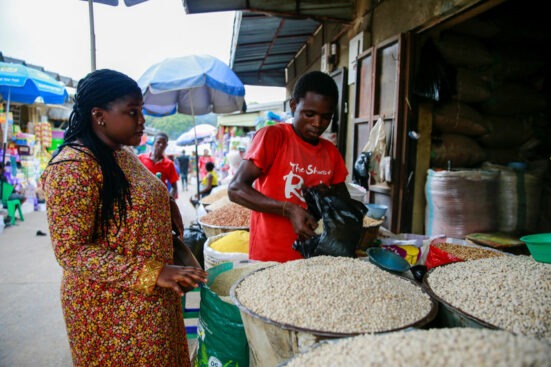
Indigent Nigerians are increasingly voiceless, hungry, impoverished and immersed in multi-dimensional poverty. Our leaders, for their part, are increasingly greedy, gratuitous and callous. There is hardly any salve or salvation in view. Overall, there seems to be a glaring dearth of conventional wisdom and good conscience, as the nation drifts toward perdition. Meanwhile her kakistocratic minders engage in buffoonery, gluttony and every form of irascible conduct orchestrated by acute nonchalance, insensate ambitions and impunity.
As our national economy tanks and becomes more parlous and we segue from being debt-ridden into an unmitigated debt peonage, the perspectives of our national key performance indicators (KPIs) are grossly distorted. We have dipped from Africa’s largest economy to the fourth place, as we struggle with staggering level of poverty. Perhaps the biggest woe confronting Nigeria is that the present leadership lack principled, ethical leadership attributes and as such, don’t listen; or listen only to sycophants. This might explain why external and domestic advisers have left those in officialdom to their whims and caprices. Ironically, the government’s media apparatchiks insist that Tinubu’s administration gets only criticisms and no tangible suggestions on good governance.
Well, here we go. First, the ruling government should admit that it has made mammoth policy mistakes. Second, the administration should seek collective national input into how to rescue Nigeria. Third, it should convene a non-partisan national brainstorming strategy session, aimed at redirecting security sector reform and governance. Fourth, the administration should reshuffle the present cabinet; trim it down to a quota-based 37 ministers that will be comprised of a ‘team of rivals’ bereft of the present groupthink.
Fifth, the administration should set up a nonpartisan panel to recommend the holistic reform and restructuring of the INEC to make it truly independent; review the use and role of security agencies during elections, and propose how to streamline the conduct of local government elections to bring it within the statutory purview of the INEC. Sixth, in deference to the constitutional separation of powers, the administration should allow the legislature, judiciary and Central Bank of Nigeria to operate freely, without any interference or prodding from the Executive Branch. Seventh, administration should place a moratorium on all federal government borrowings –both foreign and domestic. Eight, it should revisit the 2014 Confab report.
Finally, in the national interest, and given the absolute lack of credibility surrounding the outcome of 2023 presidential elections, President Bola Tinubu should announce immediately that he will under no circumstances seek re-election in 2027. He should adopt President Lyndon B. Johnson’s 31 March 1968 mantra: “I shall not seek; and I will not accept, the nomination of my party for another term as your President.” To paraphrase President Johnson; “There is a division in the Nigerian house now.” These symbolic measures will honour the trust Nigerians presumably bestowed on President Tinubu. They might also prove to be sufficient confidence-building measures capable of arresting Nigeria’s current drift and allowing the much-needed national healing, recovery and cohesion to begin. That is also the path to tackle and overcome the litany of woes bedeviling Nigeria. They will surely help to de-escalate the present national crisis and tension.
Obaze is MD/CEO, Selonnes Consult – a policy, governance and management consulting firm in Awka.