Nigeria’s oil production saw a decline for the second consecutive month, hitting 1.231 million barrels per day in March, according to the latest report from the Organisation of Petroleum Exporting Countries (OPEC).
The country’s oil output took a hit as it produced less crude compared to the previous month, OPEC revealed.
Join our WhatsApp ChannelIn a direct communication with Nigeria, OPEC obtained data indicating a drop in crude oil production from 1.322 million barrels per day in February to 1.231 million barrels per day in March, marking a plunge of 91,000 barrels per day.
While Nigeria had managed to produce 1.427 million barrels per day in January, sustaining this level proved challenging in subsequent months. The downward trend in oil production continued through February and March, as reported by OPEC.
However, despite the decline, OPEC data showed that Nigeria’s average crude oil production in the first quarter of 2024 was still higher than the average production in the fourth quarter of 2023. This suggests some resilience in Nigeria’s oil sector despite ongoing challenges by OPEC.
READ ALSO: How Nigeria’s Crude Oil Production Slips To 1.419mbpd – OPEC
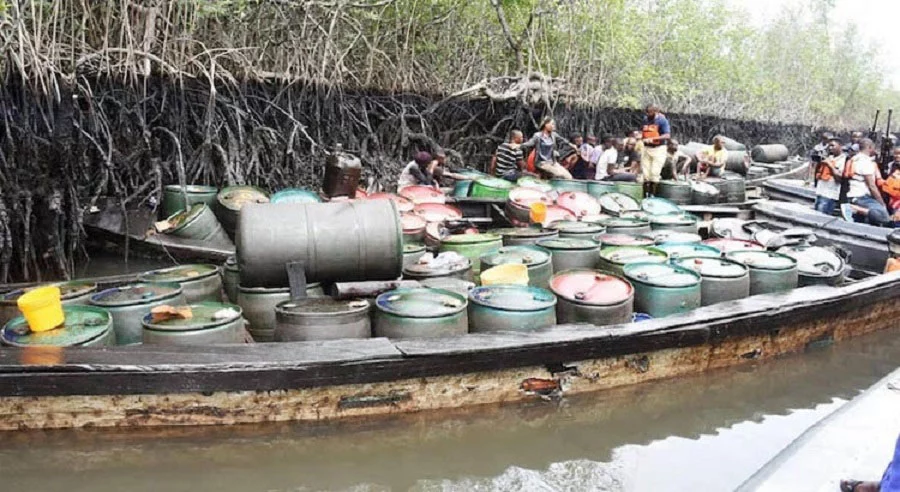
Oil theft and pipeline vandalism have been major contributors to Nigeria’s struggles to maintain its oil production levels. The Nigerian National Petroleum Company Limited recently reported 155 incidents of oil theft within a week, along with the discovery of illegal pipeline connections and refineries in the Niger Delta region.
Speaking on the matter, a representative of the company stated, “Between March 30 and April 5, 2024, a total of 155 incidents were recorded across several locations in the Niger Delta region from various incident sources.” The incidents included illegal connections, pipeline vandalism, and illegal refineries, among others.
The impact of oil theft extends beyond mere incidents, affecting the environment and the economy at large. Clusters of illegal refineries have been discovered in states like Rivers and Abia, contributing to environmental degradation and oil spills that harm aquatic life.
The Nigerian government has recognized the severity of the situation, acknowledging that over N4.3 trillion worth of crude oil was stolen in 7,143 pipeline vandalism cases over five years. This revelation came during the Nigeria International Pipeline Technology and Security Conference, where stakeholders discussed strategies to address the issue.
Ogbonnaya Orji, the Executive Secretary of the Nigeria Extractive Industries Transparency Initiative, emphasized the urgency of tackling oil theft, describing it as a national emergency with far-reaching consequences for economic growth and business prospects.
Despite ongoing efforts to combat oil theft, the problem persists, prompting some international oil companies to divest from onshore operations to deep offshore fields or exit the country altogether. The Nigerian government remains committed to addressing the root causes of oil theft and vandalism to safeguard its oil industry and the nation’s economy.
As Nigeria grapples with these challenges, the OPEC report serves as a reminder of the importance of maintaining stability and security in the global oil market.

Emmanuel Ochayi is a journalist. He is a graduate of the University of Lagos, School of first choice and the nations pride. Emmanuel is keen on exploring writing angles in different areas, including Business, climate change, politics, Education, and others.
- Emmanuel Ochayi
- Emmanuel Ochayi