Arize Nwobu
Nigeria’s Inflation, an economic situation where there is a general rise in prices of goods and services, directly impacts cost of living. It harms the economy and well-being of consumers, especially the lower-income consumers who spend a higher proportion of their income overall and on necessities. It reduces their purchasing power and discourages savings and investment. Money saved today would become less valuable tomorrow.
Inflation also hinders the inflow of foreign investments, and in extreme cases can render a currency useless and trigger mass protest such that happened in Spain early this year. Reportedly, more than 45,000 protesters gathered in Madrid and demanded high wages to help cope with inflation.
Join our WhatsApp ChannelInflation could be creeping, whereby prices rise slowly, or walking- with moderate rise in prices. It could also be running, whereby prices rise rapidly, or hyper with prices rising at double-digit. An economy with hyperinflation would be in real trouble. The currency would be useless as was the case in Germany in the 1920s and Zimbabwe in the 2000s.
In the 1923, Germany suffered hyperinflation as a result of increasing government debt, a rapid increase in money supply in the economy which was occasioned by the government printing of bank notes that were not backed by gold to pay reparation debt and striking workers.
Nigeria’s inflation entails that the more money the government printed, the more the money became worthless as a result of which prices ran out of control. Also the exchange rate between the dollar and the Mark was one trillion Marks to one Dollar, a development that was described as a ‘’financial tornado.’’ But Germany recovered after the old currency, the Mark was scrapped and a new one, The Renten was introduced which restored confidence.
Also Zimbabwe suffered hyperinflation which was said to be the worst in the world history because of increased money supply by the government in response to rising national debt, in addition to other economic shocks including a decline in output and exports, corruption and a fundamentally weak economy. To control the raging inflation, The Reserve Bank of Zimbabwe took an extraordinary action. It introduced gold coins for sale to the people in order to boost public trust in the domestic currency.
Central banks world-wide have a phobia for inflation and use different monetary tools to such as Cash Reserve Ratio, bank rate, Credit ceiling, Open Market Operations (OMO) to control it. Experts have noted that in 2022, Nigeria’s inflation rates in the USA and around the world rose to their highest levels since the 1980s because of the repercussion of the Covid-19 pandemic and Russia’s invasion of Ukraine and the resultant shock to energy and food prices.
Inflation in Nigeria has risen consistently from 15.60 per cent in January 2022 to 19.64 per cent in July 2022. It rose to 20.52 per cent in August 2022, spiked to 20.77 per cent in September and further to 21.09 per cent in October 2022. The reasons for the consistent rise are “a disruption in the supply of food products, an increase in import due to persistent currency depreciation and a general increase in the cost of production.”
But the Central Bank of Nigeria (CBN) is not relenting in the effort to rein the rising inflation using the Monetary Policy Rate (MPR). CBN raised the benchmark lending rate to 15.50 per cent in August which was said to be the highest level since 2006 when the rate was introduced. And recently, the MPR was further raised to 16.5 per cent.
Some analysts have noted that the hikes in MPR in response to Nigeria’s inflation have not effectively controlled the rising costs, but CBN Governor, Godwin Emefiele said that the Bank would continue to raise the MPR until inflation rate reduces. Emefiele’s stance is similar to what Paul Volcker did as the Chairman of the US Fed (1979-1987). Normally Fed funds rate was often between the band of 2 per cent and 5 per cent.
But as inflation rate rose at 9 per cent and 11 per cent, Volcker raised the Fed rate to 11.20 per cent and further to a peak of 20 per cent. The development plunged the economy into a recession but Volcker maintained his stance even as the inflation rate hit 14 per cent. Dramatically, the inflation rate started falling in 1981. It fell to 6 per cent and subsequently to 4 per cent. And Volcker was celebrated as ‘’the man who quashed inflation.’’
A similar thing also happened in 2017 when CBN retained the MPR consistently at 14 per cent. Inflation rate which had reached 19 per cent in January 2017 started dropping. It dropped to 17 per cent in February and to 15.37 per cent in December and further to 13.34 per cent in March 2018. Hopefully, CBN’s present stance may also achieve the desired result and reduce the inflation rate.
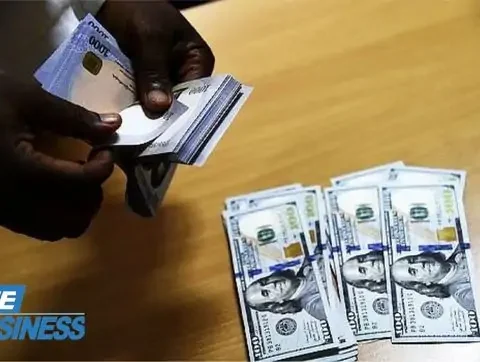
Besides hiking the MPR, Emefiele had also noted that CBN would take also take a cue from advanced economies and reduce the circulation of N500 and N1000 notes and pump in more of lower denominations into circulation to curb inflation.
Nwobu, a Chartered Stockbroker, lives in Lagos.