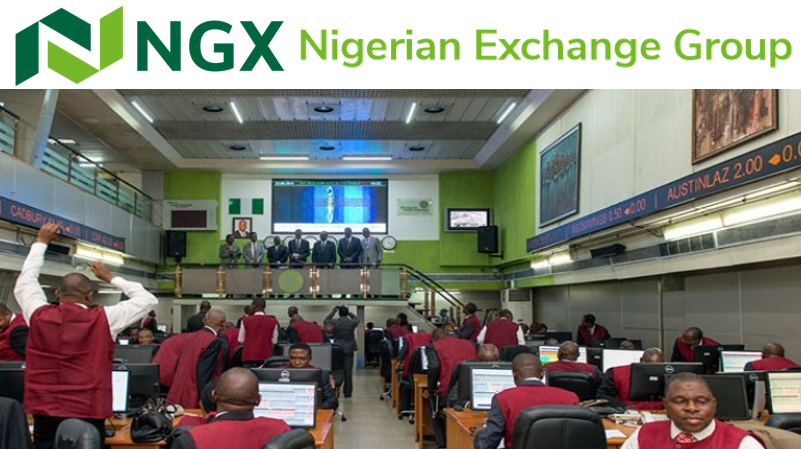
Nigeria’s equity market showed resilience on Tuesday as it added N45 billion, despite some profit-taking activities.
The Nigerian Exchange Limited (NGX) All-Share Index (ASI) and Market Capitalisation both rose slightly, closing at 96,873.74 points and N55.646 trillion respectively.
Join our WhatsApp ChannelThis marked an increase from the previous day’s figures of 96,793.95 points and N55.601 trillion.
Investor Interest Boosts Equity Market
Investor interest in companies like IMG, Eterna, C&I Leasing, and eTranzact drove the market’s positive performance.
Despite a challenging environment, these stocks performed well, helping the equity market close in the green.
“Investors are finding value in these stocks, which is evident from the market’s positive close,” said Adewale Ogunleye, an equity analyst at Lagos Capital Market. “The market has shown resilience, even with profit-taking on some counters.”
Key Performers in the Equity Market
Among the top performers was IMG, which saw its share price rise by N2.90 or 10%, closing at N31.90. Similarly, C&I Leasing gained 37 kobo, or 10%, closing at N4.07.
Eterna and eTranzact also saw significant gains, with Eterna rising from N29.30 to N32.20, and eTranzact advancing from N5.60 to N6.15.
On the other hand, profit-taking activities affected stocks like RT Briscoe and Abbey Mortgage Bank, but this did not dampen the overall positive sentiment.
Stanbic IBTC Proposes Interim Dividend
In a significant development, Stanbic IBTC Holdings announced an interim dividend of N2 per ordinary share of 50 kobo each, amounting to N25.913 billion for the half-year period ending June 30, 2024.
This proposal reflects the company’s robust financial performance, with gross earnings increasing by 77.44% to N378.548 billion compared to the same period in 2023.
READ ALSO: Nigeria’s Equity Market Rallies, Conoil, Oando Lead Gains In September’s First Trading Day
“Stanbic IBTC’s strong performance and the proposed dividend will likely attract more investors to the equity market,” commented Maryam Yusuf, a financial analyst.
Positive Outlook for Equity Market
The equity market’s year-to-date (YtD) return increased to 29.56%, a positive sign for investors.
Stocks like Access Holdings, Oando, Prestige Assurance, UBA, and Transcorp were actively traded, indicating sustained interest in the market.
“The market continues to offer opportunities for investors, especially with companies like Stanbic IBTC proposing substantial dividends,” said Yusuf. “We expect the market to remain buoyant in the coming days, especially as dividend payments are rolled out.”
Despite some challenges, Nigeria’s equity market has shown strength and resilience, buoyed by investor interest and positive corporate announcements.
With a proposed interim dividend from Stanbic IBTC and continued gains in key stocks, the market remains an attractive option for investors.
As the market continues to evolve, stakeholders are optimistic about sustained growth in the equity market.

Emmanuel Ochayi is a journalist. He is a graduate of the University of Lagos, School of first choice and the nations pride. Emmanuel is keen on exploring writing angles in different areas, including Business, climate change, politics, Education, and others.
- Emmanuel Ochayi
- Emmanuel Ochayi