Uduegbunam Chukwujama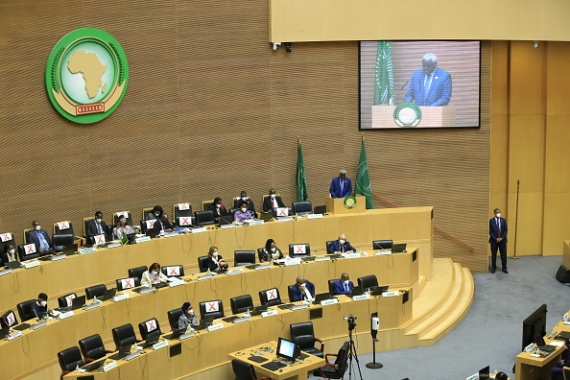
President Muhammadu Buhari in Brussels, Belgium called on European leaders as partners in promoting democracy and good governance to support measures by the African Union to curb unconstitutional leadership changes on the continent.
In his contribution to the Roundtable discussion on Peace, Security and Governance at the ongoing 6th EU-AU Summit, President Buhari equally stressed the need to nip the root causes of extremism, conflicts and tensions in Africa at inception.
The military general had overthrown the second republic government of President Shehu Shagari on December 31, 1983, citing corruption as reasons.
Join our WhatsApp ChannelHe was, however, removed by General Ibrahim Badamasi Babangida in 1985 in what was termed a ‘palace coup,’ keeping Nigeria under military leadership until 1999 when Abdulsalami Abubakar handed political power to the democratically elected government of President Olusegun Obasanjo.
Obasanjo, then a civilian, was jailed by General Abacha and was freed by Abubakar in 1998 to contest an election, he later won landslide.
Obasanjo, as military Head of State, had handed over power to President Shehu Shagari in 1979 after 13 long years of military dictatorship.
The forceful removal and arrest of President Shagari and his Vice Alex Ekwueme in 1983, after four brief years, brought back and kept military rule in Nigeria for another 16 years.
“Africa has continued to witness different waves of violent extremism, community- based conflicts and inter-ethnic tensions, notably in rural areas,” President Buhari argued at the EU-AU Summit in Brussels.
”For many decades, our continent has been deprived of political stability and socio-economic development due to terrorism and violent extremism.
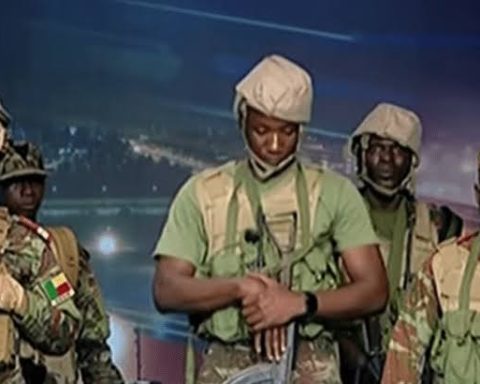
“More worrisome is the current state of democracy on the continent, which has become a great source of concern to many of us, with increasing cases of unconstitutional change of governments across the continent, particularly in West Africa. This is in addition to the challenges posed by COVID-19 pandemic.
“The African Union has often responded to these challenges through its different structures, such as the African Peace and Security Architecture and the African Governance Architecture.
“Through enhanced collaboration with our development partners, especially the European Union, we can identify areas of cooperation for quick and substantive results.
“As leaders and policy makers, it is important for our partnership to place priority on tackling the root causes of conflicts in Africa, as well as taking measures in safeguarding peace and security, if we are to achieve the African Union Agenda 2063.
“We also call for stronger support from the European Union in the condemnation and imposition of weighty sanctions on countries that engage in unconstitutional change of governments, as well as manipulation of constitutions in favor of extension of term limits,” he said.
The Nigerian leader added that it was imperative to ensure that election processes in Africa have outcomes that truly reflect the wishes of the electorate, as to go contrary to these is courting instability.
According to President Buhari, “we have a responsibility to reduce conflicts that stem from lack of good governance, unaccountability, corruption and social exclusion.
“Free, fair, credible and transparent elections remain crucial elements in ensuring peace and security, and promoting constitutional order, democracy and inclusive governance on the continent.
“It is therefore imperative for our partnership to also focus on strengthening election processes in Africa and prevent interference to influence the process and outcomes of elections.”
President Buhari also called for the concretization and transformation of promises of cooperation made by the European leaders to actions.
“I wish to underscore the need to convert our pledges on political cooperation in the area of peace, security and conflict prevention into concrete initiatives such as joint field missions, shared understanding and analysis on crisis situations, as well as joint early action and swift implementation of agreed positions.
“The movement and operation of terrorists and violent extremist groups along the Sahel could better be addressed through an improved Continental Early Warning Mechanism. Consequently, we believe there is a clear need to strengthen our cooperation on security with the European Union, particularly through improved intelligence sharing and acquisition of military equipment and hardware.
“We invite the EU to upscale its support for the G5 Sahel and the Multinational Joint Taskforce in the Lake Chad Region as we strive to further degrade the Boko-Haram insurgents and their Islamic State in the West Africa Province counterparts. Africa also looks up to Europe for enhanced support in the area of combating Illicit financial flows and terrorism funding that aid the activities of terrorists and violent extremist groups.”
He called for all hands to be on deck to ensure that Africa’s Blue Economy Agenda for development is realized.
Buhari said: ”We must emphasize the importance of expanding regional and international cooperation on ocean governance, on the fight against illegal, unreported and unregulated fishing as well as on maritime security, including piracy, illicit trafficking and other maritime crimes and threats as reflected in the 2050 Africa Integrated Maritime Strategy.”