 Prosper Okoye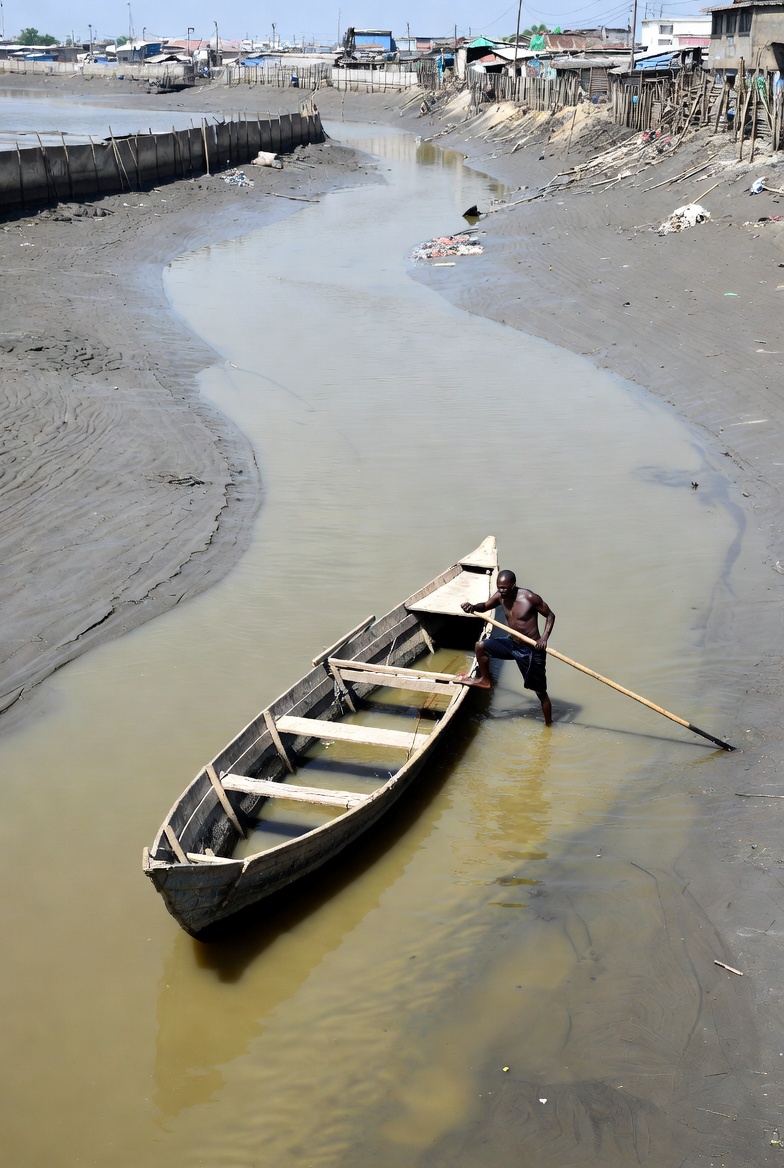
On the muddy edge of Lagos Lagoon, boat operator Sadiq Adebayo has learnt to read the water like a map. Some channels that were wide enough for his wooden boat five years ago are now blocked by sandfills and private fences, forcing him to take longer, more dangerous routes to move passengers and goods.
“It keeps changing,” he said. “One day the water is open. The next day someone has reclaimed it.”
On Monday, the Nigerian government said it would try to bring order to that shifting landscape.
The Federal Ministry of Housing and Urban Development, the National Inland Waterways Authority and the Office of the Surveyor-General of the Federation announced a single, unified system for approving shoreline reclamation and controlling the country’s inland waterways — a move aimed at ending years of overlapping permits, disputed boundaries and encroachment on navigation routes.
Under the new system, anyone seeking to reclaim land along Nigeria’s waterways must begin with a formal letter to the housing ministry. Government surveyors and waterways officials will then carry out a joint inspection with the applicant before any approval is considered. No allocation can be granted without survey data validated by all three agencies.
For people like Adebayo, the changes are about more than paperwork. When channels are illegally filled in, he loses income and risks accidents navigating through narrower passages. “If they protect the water routes, it helps us work,” he said.
The inter-ministerial committee behind the framework said all existing shoreline approvals — including old and dormant ones — will now be reviewed under the new rules. Any past approvals that did not come with proof of required government payments have been cancelled.
In high-value areas such as Banana Island in Lagos, the committee said no new reclamation or extension will be allowed beyond boundaries jointly set by the three agencies, a response to years of disputes over private developments pushing into public waterways.
To prevent applications from sitting in offices for months, the committee also fixed a 14-day deadline for every stage of the approval process. Provisional offers will now expire if applicants do not meet their conditions, and officials who delay or bypass procedures face sanctions.
Junior Pope: ‘Two Bodies Found, Three Missing’- NIWA
Boat Operators Urged To Comply With Rules Of Engagement
YANGO Takes Part In West African Internet Governance Forum To Promote Digital Sector Development
Housing Minister Ahmed Dangiwa, along with the heads of NIWA and the Surveyor-General’s office, created the committee after complaints that uncoordinated approvals were threatening navigation, public land and national spatial planning.
For those who live and work on Nigeria’s waters, the test will be whether the new rules hold.
“If they really enforce it,” Adebayo said, watching a barge ease through a narrow channel, “then the water can belong to everyone again.”

Prosper Okoye is a Correspondent and Research Writer at Prime Business Africa, a Nigerian journalist with experience in development reporting, public affairs, and policy-focused storytelling across Africa