Prime Business Africa
The foreign currency traders exchanged the official United States dollar (USD) at N1,374.91 kobo per $1 in the Nigerian foreign exchange market (NFEM), also known as the official window, on Monday.
According to the Central Bank of Nigeria (CBN), the dollar traded upward by N0.54 kobo when compared to the N1,375.45 kobo per $1 reported in the official window on Friday.
Join our WhatsApp ChannelHowever, the foreign exchange (FX) rate for the United States currency closed at N1,377 per dollar in the official window, after trading as low as N1,373 per USD and as high as N1,377.
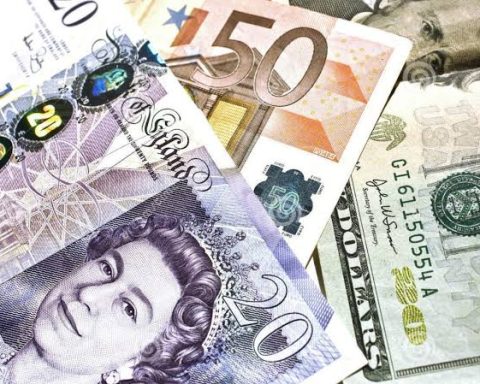
Also, the pound increased in value against the naira after trading at N1,855.05 per £1 in the official window, compared to the N1,849.04 per £1 recorded the day before.
The naira depreciated by 0.32 percent against the pound, while the foreign exchange rate for the British currency increased by N6.01 kobo in the official window.
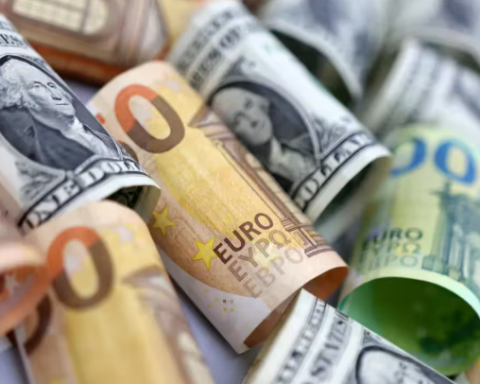
In addition, the official window’s foreign exchange rate for the euro increased by N3.63 kobo, while the naira depreciated slightly against the European currency by 0.22 percent.
According to the CBN, the euro traded upward to N1,600.09 per €1 during trading in the official window, rising above the N1,596.46 kobo per €1 reported the previous day.
For press releases, tip-offs, and corporate information, call 08149575257 (hotline), email: [email protected] and [email protected]

Prime Business Africa is a business, economy and policy news platform founded in 2021 by veteran journalist and media scholar, Dr Marcel Mbamalu, after he left The Guardian as Editor.
Dr Mbamalu, who serves as Founder and Publisher, set up Prime Business Africa to deliver sharp, data-driven reporting on Nigeria’s markets, trade, investment, and governance trends for decision-makers, entrepreneurs, and policy leaders.
He also writes The Bottom Line, a backpage column for Punch Newspaper every Thursday.
Under his leadership, Prime Business Africa combines deep newsroom experience with a focus on accountability journalism, aiming to bridge information gaps between Africa’s private sector and the global economy.