 Amanze Chinonye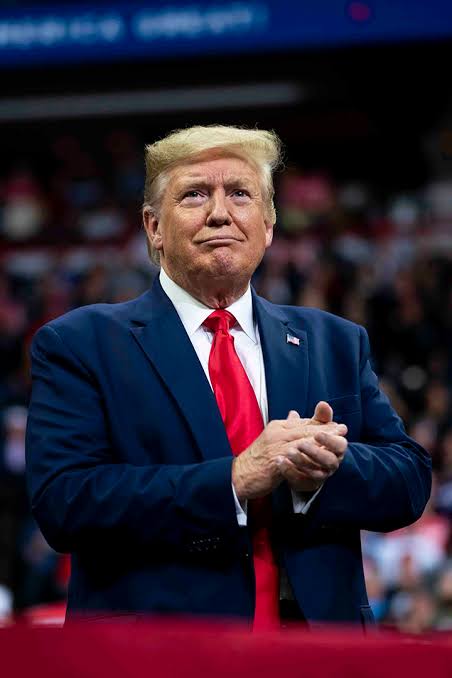
The U.S.-Iran conflict escalated sharply over the weekend as President Donald Trump threatened to obliterate Iran’s power plants if Tehran did not fully reopen the Strait of Hormuz within 48 hours.
Iran responded with its own warning that any attack on its energy infrastructure would trigger strikes on U.S. and allied facilities across the Gulf, raising fears of a broader regional crisis and further disruption to global energy markets.
Trump’s ultimatum marked a significant escalation in the war, now in its fourth week, just a day after he spoke of “winding down” U.S. military operations.
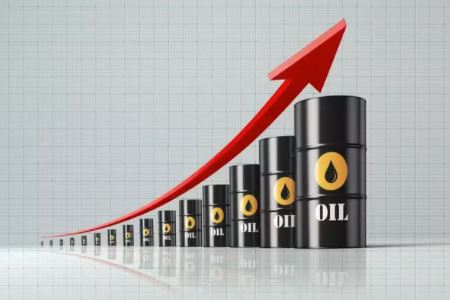
Join our WhatsApp ChannelThe strait is a vital global energy artery, carrying roughly 20 % of the world’s oil and liquefied natural gas supplies. Its partial closure has already pushed European gas prices up as much as 35 % and driven oil to its highest levels in nearly four years.
READ ALSO : Strait of Hormuz on the Brink: US Israel Iran Conflict, a Threat to Global Oil and Stability
Mehr Issues Dire Warning
Following Trump’s threat, Iran’s Mehr News Agency published a map highlighting major power plants along the Persian Gulf, including facilities in the United Arab Emirates, Saudi Arabia, Qatar, and Kuwait.
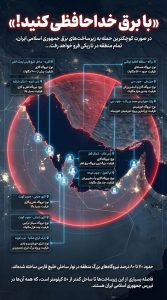
The report emphasized that 70 % to 80 % of major power plants are built along the Persian Gulf coastline and are within range of Iranian missiles, warning that even limited attacks could have catastrophic regional effects.
“Say goodbye to electricity. With the smallest attack on Iran’s electrical infrastructure, the entire region will fall into darkness,” the agency stated.
Iran’s power grid is closely tied to its energy sector, and strikes on major plants could cripple supply to refineries, export terminals, and military command centers.
Key facilities include the Damavand plant near Tehran, the Kerman plant in the southeast, and Ramin in Khuzestan province, all of which generate far more power than Iran’s sole nuclear plant at Bushehr.
Regional and Global Implications
Analysts warn that targeting electricity grids or power plants in Iran or neighboring Gulf nations could trigger widespread economic and humanitarian fallout. Disruptions could ripple through the region, affecting millions of households and businesses while further destabilizing global energy markets.
Iran’s military framed Trump’s threat as justification for retaliation. A senior military spokesman said any strike on Iranian energy infrastructure would prompt counter-strikes on all fuel, energy, information technology, and desalination facilities used by the United States and Israel in the region.
Recent Iranian missile strikes have expanded the risk beyond the Middle East, including a strike near Israel’s Dimona nuclear facility. Tehran also launched long-range missiles capable of reaching European capitals, signaling its ability to project power far beyond the Gulf.
The escalation underscores how energy infrastructure has become central to the U.S.–Iran confrontation, with both sides signaling their willingness to target critical utilities if the conflict intensifies.
The standoff threatens to inflame regional tensions, disrupt global energy supplies, and heighten political pressure on leaders involved in the war.

Amanze Chinonye is a Staff Correspondent at Prime Business Africa, a rising star in the literary world, weaving captivating stories that transport readers to the vibrant landscapes of Nigeria and the rest of Africa. With a unique voice that blends with the newspaper's tradition and style, Chinonye's writing is a masterful exploration of the human condition, delving into themes of identity, culture, and social justice. Through her words, Chinonye paints vivid portraits of everyday African life, from the bustling markets of Nigeria's Lagos to the quiet villages of South Africa's countryside . With a keen eye for detail and a deep understanding of the complexities of Nigerian society, Chinonye's writing is both a testament to the country's rich cultural heritage and a powerful call to action for a brighter future. As a writer, Chinonye is a true storyteller, using her dexterity to educate, inspire, and uplift readers around the world.