 Victor Ezeja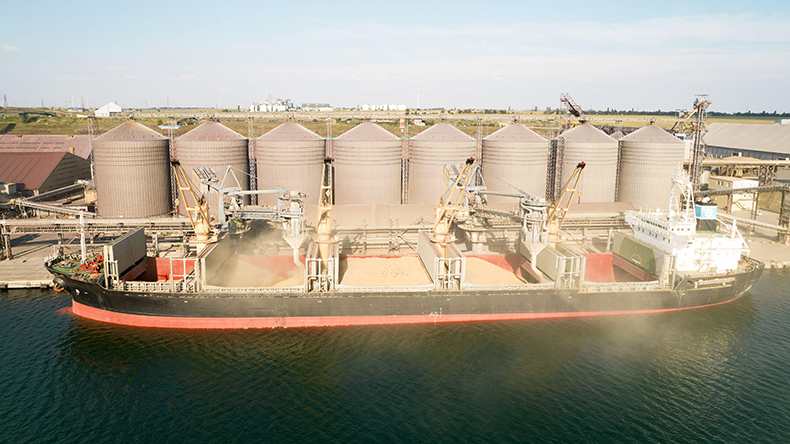
The ongoing crisis between Russia and Ukraine has continued to pose a significant negative impact on the global economy with supply chain disruptions on countries that depend on imports from the two nations.
This time, African countries including Nigeria may have to grapple with a fresh surge in food prices said the United States Agency for International Development (USAID). The agency’s deputy administrator for policy and programs, Isobel Coleman, who spoke at a virtual press conference on Thursday, August 3, said food prices may likely increase in African countries that depend on the import of grains from Ukraine following Russia’s withdrawal from the Black Sea Grain Initiative, thereby halting the shipment of food and other agricultural commodities from Black Sea ports.
Join our WhatsApp ChannelThe Black Sea Grain Initiative which was established in July 2022, five months after Russia invaded Ukraine, was to allow the export of food and fertiliser (including ammonia) in commercial quantities from three key Ukrainian ports in the Black Sea, which are Odesa, Chornomorsk, Yuzhny/Pivdennyi.
READ ALSO: ‘How Russia-Ukraine Conflict Worsen Food, Gas Supply Crisis In Nigeria’
The conflict which started in February 2022, led to a complete halt in the export of grains from Ukraine and Russia, the major exporter through the Black Sea, thereby worsening food prices.
To address the issue, discussions hosted by Turkey which controls the maritime routes from the Black Sea, and supported by the United Nations, began in April. The meetings resulted in the signing of an agreement in Istanbul on 22 July. It was to last for a period of 120 days. The July agreement created an opportunity to safely export grain from certain ports in the Black Sea in an attempt to address the 2022 food crisis. A joint coordination and inspection center was set up in Turkey, with the UN serving as the secretariat.
The original agreement which was set to expire on 19 November 2022, was later extended three times and expired on July 17, 2023, as Russia refused to agree for a further extension unless its demands were met.
Kremlin Spokesperson Dmitry Peskov, complained that Russia has not had a fair deal in the agreement since it was set. He accused U.S. and Ukraine’s other international partners of not being fair to Russia by making it impossible for the country to export some agricultural products.
“When the part of the Black Sea deal related to Russia is implemented, Russia will immediately return to the implementation of the deal,” Peskov said.
Coleman said that the Black Sea Grain Initiative deal had already helped to bring down global food prices.
She noted with concern that Russia’s decision to withdraw from the deal would no doubt, have a serious impact on food prices and developing countries that were import-dependent, and had conventionally relied on grain imports from Ukraine, would be most affected.
“One of the world’s largest breadbaskets is Ukraine. By doing this, Russia is increasing food prices globally. We’ve already seen how global food prices came down over time after the Black Sea Grain Initiative came into place. Since Russia has pulled out of the agreement, food prices have again been on the rise,” said Coleman.
“This affects every country around the world, but it affects, most acutely, large import-dependent developing countries that have to spend much of their precious foreign exchange resources to purchase food to feed their population.”
She advised the affected African countries to brace up and begin to look for alternative supplies.
According to the UN Food and Agriculture Organisation (FAO), Ukraine is among the world’s leading grain exporters, providing more than 45 million tonnes annually to the global market. Some 20 million tonnes of grain had been held up in the Ukrainian port city of Odesa, revealed a BBC July 2022 report.
Reportedly, almost all of Ukraine’s wheat, corn, and sunflower oil were exported through its Black Sea ports prior to the conflict.
According to Statista, a popular statistical data platform, different regions in Africa have varying rates of inflation but all experienced increase in food inflation between January 2020 and September 2022.
An International Monetary Fund (IMF) report in September 2022, revealed that staple food prices in sub-Saharan Africa surged by an average 23.9 percent from 2020 to 2022, which is considered the highest since the 2008 global financial crisis.
According to Trading Economics, Zimbabwe is the country in Africa with the highest food inflation rate of 103 per cent as of June 2023, followed by Egypt with 65.9 per cent, Sierra Leone- 57.9 percent, Ghana – 54.2 percent, Burundi – 43 percent, Malawi – 37.2 per cent, Rwanda – 35.6 per cent, Ethiopia – 28 per cent and Nigeria -25.2 per cent among others.
With the halt in the export of grains to African countries, the food inflation rates in import-dependent nations are expected to rise if viable alternative sources are not achieved.

Victor Ezeja is a passionate journalist with seven years of experience writing on economy, politics and energy. He holds a Master's degree in Mass Communication.