 Victor Ezeja
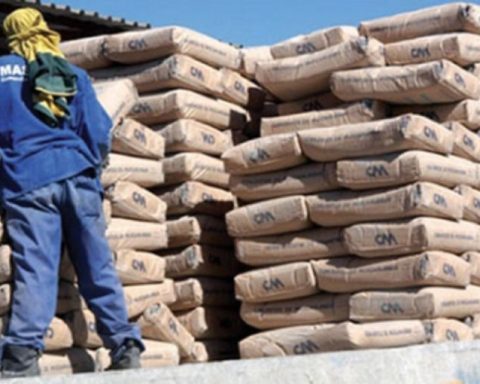
One of the leading cement, producers in Nigeria, BUA Cement, has increased the salaries of its staff by 50 per cent in response to the current economic hardship in the country caused by the high cost of things.
This was confirmed in an internal memo released on Sunday in Lagos, signed by BUA’s Head of Human Resources, Mr. Mohammed Wali.
Join our WhatsApp ChannelREAD ALSO:
- Why Cement Price Keeps Rising – Producers
- Cement Manufacturers Agree To Slash Prices To ₦7,000, ₦8,000 Per Bag
- Rising Exchange Rates, Cement Prices, Building Materials, Others Spark Real Estate Crisis: Developers, Homeowners, Investors Lament
According to the memo, the salary increase which is for both permanent and non-permanent staff effective from February 1, 2024, is to help cushion the effect of the current economic hardship in the country for the staff.
“The Human Resources and Finance departments are processing the increase to ensure that it is captured in the February 2024 payroll,” the memo stated.
“It is hoped that with this magnanimous gesture, we will be more committed to our duties and put in our very best to justify the confidence reposed in us.”
The increase in staff salaries comes as the price of a 50kg bag of BUA Cement rose by 150 per cent in four weeks.
The Price of 50kg BUA cement was N5,200 in the second week of January. By the third week, it increased to N5,700, only to move to N6,500 by the end of the same week. The price later rose to N7,200 the following week and settled for N9,500 by the end of the fourth week of January. It hovered between N10,000 and N10,500 in the fifth week of January and sold for N12,000 and N12,500 by the end of the first week of February, only to oscillate between N13,500 and N14,700 as of 18 February 2024.
BUA had in September, announced a plan to reduce the price of cement from N5,500 to N3,500 per bag, with the new rate scheduled to take effect from October 2nd, 2023. According to the company, the decision was made “to spur development in the building materials and infrastructure sectors.”
With BUA’s position in the industry, it was believed that the plan would put pressure on other brands to force a slash in price in the expected competition that would ensure. However, the expected date for that to take effect had passed, raising concerns about the feasibility of the plan as prices have continued to rise at a geometric rate.
It is believed that BUA Cement as a company is really leveraging the windfall from this crazy price hike to increase staff salaries.
It remains unclear why the cement price has been running haywire. The same for other building materials, rods, among others.
Commenting on the development, an expert and lecturer at Economics Department, Niger Delta University, Dr Ebikabowei Aduku, said the increase in salaries of BUA Cement staff in the light of harsh economic realities in the country is a good one but on the flip side, the hike in price of cement would have more negative impact on the economy generally.
In an interview with Prime Business Africa via telephone on Sunday, Dr Aduku said this is the first time Nigeria has experienced this kind of hike in cement prices, noting that it is a huge negative shock on both the economy and real estate sector in the country.
“The hike in price and with this shock means that the cost of real estate development has increased. For me, the cost has almost doubled. What it means is that there will be less real estate development because of the high cost of cement and other materials.”
Chief executive officer of the Centre for the Promotion of Private Enterprise (CPPE), Dr. Muda Yusuf, explained that the reason for high cement price is the general macroeconomic environment, particularly the inflationary trend in the country.
According to the latest data released by the National Bureau of Statistics (NBS), the headline inflation rate hit 29.9 per cent in January from 28.9 per cent in December 2023.
Dr Yusuf said inflation cuts across all sectors of the economy and those in production, are experiencing higher costs because of rising costs of inputs such as costs of transportation and energy.
“Exchange rate is affecting practically all the sectors. Because like many other manufacturing industries, they also have their own imported components in their production ecosystem,” Yusuf stated
“And any imported item now, or imported inputs, the costs are going up again. So that is what it is. So that means that the cost of construction will go up, our ability to meet housing needs and bridge the housing deficit will also be negatively affected because of the high cost of cement and other construction materials,” the economic expert added.
He said the way out is to address challenges of inflation, foreign exchange crisis, and high energy costs among others.