 Dr Gabriel Uguru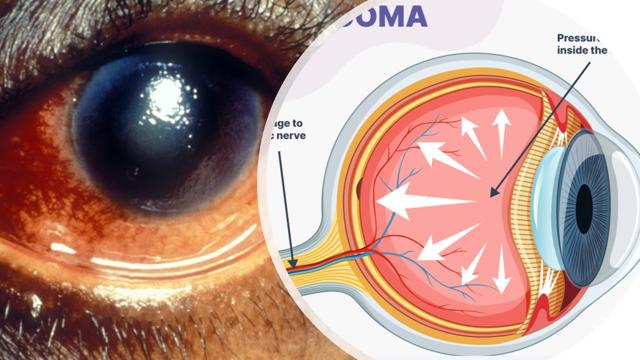
When looking at an object directly in front of you, it is normal to also see other objects outside of the point of fixation with the corner of your eyes. This “corner eye” vision or indirect vision is called peripheral vision. Loss of peripheral vision is called tunnel vision. The name is derived from the fact that objects appear like one is looking through a tunnel. This anomaly means that the edges of the outer or peripheral vision is blurry while the central vision is clear so that looking at objects leaves the sufferer with a constricted circular tunnel-like field of vision. The effect can be corrected by surgery to reduce the swelling in the optic nerve or to reattach a detached retina. However, glaucoma-associated loss of peripheral vision is permanent.
Primary open-angle glaucoma (POAG) is the most common form of glaucoma, and for simplicity, we shall hereafter use the general term glaucoma to refer to the condition. It is a neurodegenerative disease of the optic nerve that leads to loss of peripheral vision and progressively to blindness. It affects about 44 million people worldwide – a figure projected to double by 2040.
Join our WhatsApp ChannelREAD ALSO: Childhood cancer care in Africa hit hard by pandemic
In particular, glaucoma disproportionately affects people of African descent who are 15 times more likely to go blind than those of European descent. In most cases, the condition develops in people of African ancestry at an early age of 35 years, which is about 5 to 10 years earlier than it does in people of European descent.
Risk factors associated with glaucoma include old age, genetics (ie family history of glaucoma), and increased intraocular pressure (ie ocular hypertension), whereby the front of the eye inefficiently drains fluid leading to a pressure buildup inside the eye. Surgery can temporarily alleviate the excess fluid buildup in the eye but does not halt the progression to complete blindness. Some people with glaucoma condition do not even experience any elevated pressure buildup in the eye, and when they do, surgery does not have any appreciable benefit.
Knowledge of genetic risk factors for a disease is key to early treatment and prevention of the disease. Glaucoma has a genetic causal mechanism, therefore, a complete understanding of its genetics will provide insights into developing therapeutic interventions to ameliorate, if not, checkmate the condition. Unsurprisingly, like everything else outside of the Western bloc is taken to be either unimportant or of less urgent, genetic studies of glaucoma have been done mostly in people of European descent. This is despite the fact that the largest group of people affected by the condition is of African descent, followed by Latinos, and lastly Europeans.
In a new study published in the 18 January 2024 edition of the journal, Cell, a team of scientists from the USA, Nigeria, Ghana, South Africa, and Singapore, conducted the largest genetic study ever done on the risk factors of glaucoma in people of African descent, with a goal of identifying new genetic variants likely to have a role in the disease. The study involved 11,275 people of African origin, 6003 of them had glaucoma and 5,272 non glaucoma subjects served as controls.
The researchers identified 46 glaucoma risk sites in the genomes of those with glaucoma who participated in the study. Further analyses of these identified risk factors narrowed the field to three genetic variants, which are likely to cause glaucoma. Two of these variants were unknown before this study. When these two unknown variants were checked across already available racial genetic databases for glaucoma, their likelihood of having any pronounced effect was limited to those of African descent.
The information gleaned from the database search together with subsequent analyses, was used to calculate disease risk based on the genes in a process called polygenic risk score. In other words, a fingerprint of glaucoma risk factor was developed to predict who might be most at risk of the disease. This new scoring system was superior at identifying the 20% participants in the study who are most likely to develop glaucoma compared to a risk score derived from a much larger data sets gathered from people of European descent! Therefore, the prediction of glaucoma risk for people of African descent can be significantly improved by using data generated from such population rather than data from a cross-ancestry population.
Knowledge of the causal mechanisms of any disease leads to generation of predictive tools for early screening of the disease. Thus, with the identification of these genetic variants or markers, scientists can now develop methods of screening people to determine those most at risk and then deploy therapeutic interventions as early as possible to prevent premature vision loss. This means that the percentage of people affected by this blinding familial disease will be drastically reduced as the disease is caught early and treated before it progresses to the point of loss of sight.