 Amanze Chinonye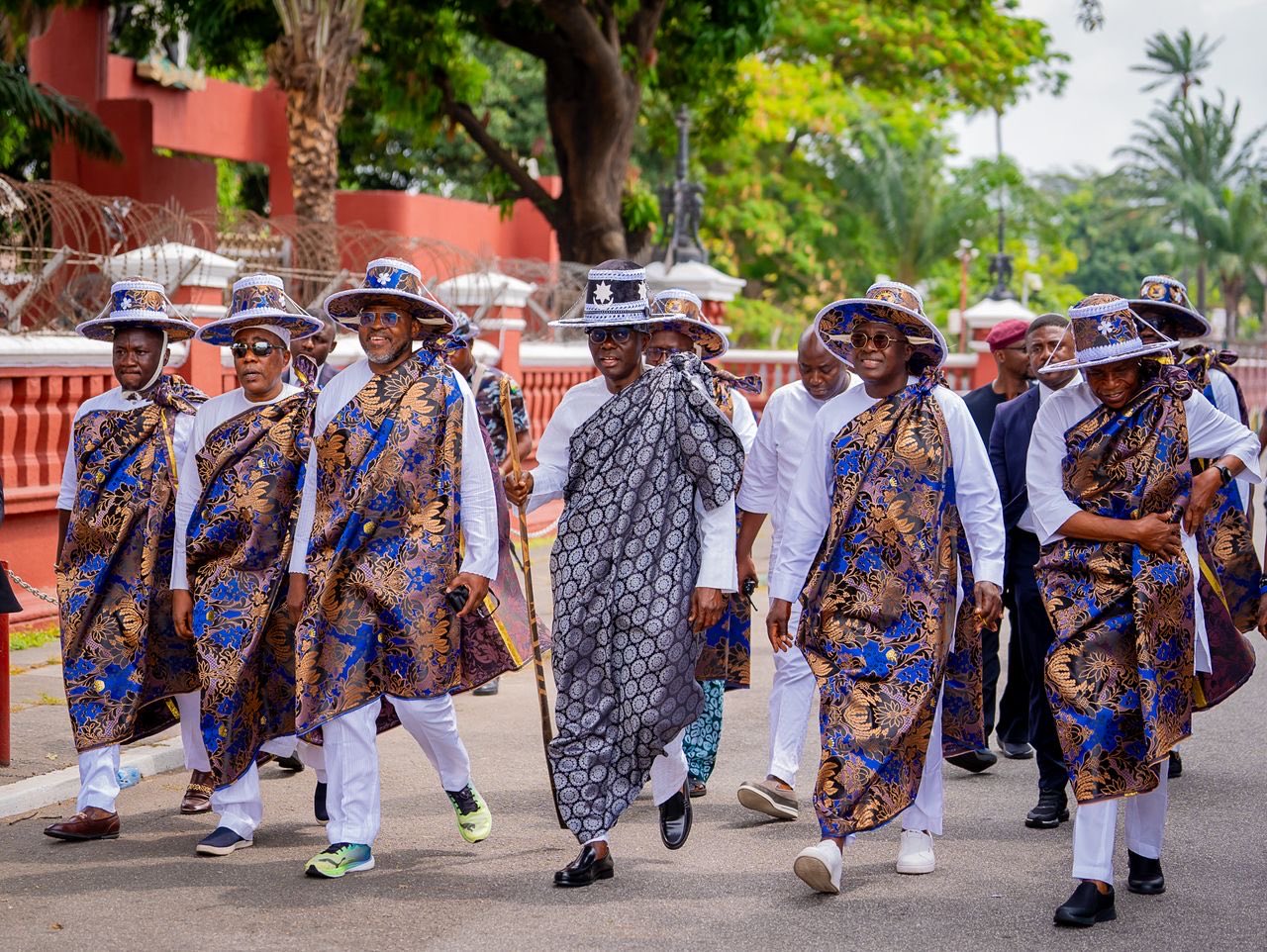
Earlier today, Lagos Island pulsated with culture, history, and rhythm as the Eyo Festival, one of Nigeria’s most enduring cultural traditions, returned to Tafawa Balewa Square (TBS), Marina, after an eight-year hiatus.
Thousands of residents, tourists, dignitaries, and white-clad masquerades converged to witness a festival that intertwines history, spirituality, and civic pride.
The streets of the historic city centre were congested with spectators and transformed into a living stage where centuries-old Yoruba traditions were brought vividly to life.
Join our WhatsApp ChannelThe festival, popularly known as the Adamu Orisha Play, this year honoured four icons whose legacies have profoundly shaped Lagos: Brigadier General Mobolaji Johnson, Alhaji Lateef Jakande, Sir Michael Otedola, and Chief Habibat Mogaji, mother of President Bola Ahmed Tinubu and former Iyaloja-General of Nigeria.
READ ALSO : Sanwo-Olu Expresses Excitement as Lagos Prepares for Eyo Festival Honouring Four Eminent Nigerians
Masquerades: Symbolism in White
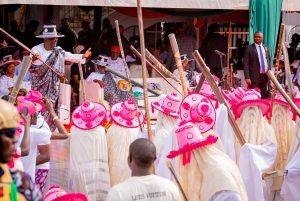
At first glance, the Eyo masquerades appear uniform, draped in flowing white agbada and aropale, carrying ceremonial staffs called Opambata. Yet, closer inspection reveals a rich hierarchy communicated through the colours of their akete hats, each representing rank, duty, and spiritual symbolism:
- Adimu Eyo: Distinguished by a black hat, the Adimu is the most senior and spiritually significant masquerade, appearing only once during the festival. His presence commands deep reverence, representing the spiritual pinnacle of the tradition.
- Laba Eyo: Wearing red hats, this group acts as enforcers of the procession, maintaining order and ensuring that rituals are properly observed.
- Oniko Eyo: Identified by yellow hats, symbolising the raffia palm, a plant of cultural and economic significance in Yoruba communities.
- Ologede Eyo: Green headgear represents the banana tree, symbolising growth, nourishment, and continuity.
- Agere Eyo: With striking purple hats, this group towers above the crowd, adding dramatic flair and delighting spectators.
The festival is governed by strict behavioural codes. Spectators were expected to remove shoes, hats, and glasses as a sign of respect. Smoking or using umbrellas near the masquerades was strictly prohibited, with violations sometimes resulting in corporal admonishment, reflecting the spiritual sanctity of the Eyos.
Honouring Lagos Icons and Legacy
The 2025 Eyo Festival is more than a celebration; it is a tribute to leadership, service, and cultural identity. By honouring Brigadier General Mobolaji Johnson, Alhaji Lateef Jakande, Sir Michael Otedola, and Chief Habibat Mogaji, the festival recognises individuals whose legacies have contributed significantly to governance, commerce, and social cohesion in Lagos.
Governor Babajide Sanwo-Olu, speaking at the event, emphasised the festival’s role in preserving cultural heritage while projecting Lagos on the global stage, describing the honourees as “living archives of Yoruba heritage and symbols of unity and resilience.”
President Tinubu, who attended with First Lady Senator Oluremi Tinubu, reflected on the enduring influence of these figures, calling the festival “a powerful expression of Nigeria’s rich culture and identity” and praising the Lagos State government and traditional institutions for sustaining the heritage over the years.
READ ALSO : Eyo Festival: Lagos’ Timeless Celebration of Ancestry, Culture, History
Culture, Tourism, and Civic Pride
Earlier, Governor Sanwo-Olu inaugurated the Eyo Monument at the John Randle Centre for Yoruba Culture and History, Onikan, a 40-foot landmark designed to promote cultural tourism, education, and heritage-based economic activity. The monument complements the procession, ensuring that Lagos’ history is celebrated and immortalised for generations to come.
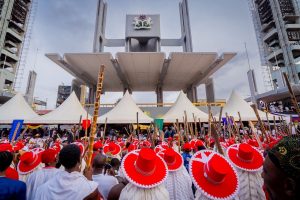
The festival’s processions and performances also highlight Lagos’ potential as a global cultural tourism destination. Colourful displays of traditional music, dance, arts, and crafts captured the essence of Yoruba heritage, while the festive atmosphere showcased Lagos’ hospitality, diverse cuisine, and vibrant social life.
Spirit of Lagos: Continuity and Identity
For those present, the festival was more than a visual spectacle; it was an immersive experience. Elders recounted memories of past festivals, parents guided children in observing cultural protocols, and tourists documented the parade, capturing a moment where history, ritual, and community converge.
The festival stands as a living symbol of Lagos’ resilience, creativity, and cultural continuity, bridging past, present, and future. Today, Lagos celebrated not just its distinguished citizens but also its identity and enduring spirit, reminding the world of its rich heritage.
Defining Moments of the 2025 Eyo Festival
- Return after eight years, reaffirming Lagos’ commitment to cultural preservation.
- Honouring four iconic Lagos figures whose contributions shaped governance, commerce, and society.
- Strict cultural protocols, including removal of shoes and prohibitions against smoking or umbrellas near masquerades.
- Hierarchy and symbolism communicated through the colours of masquerades’ akete hats.
- Promotion of cultural tourism through processions, performances, and the Eyo Monument at the John Randle Centre.
As the white-clad Eyos completed their procession and disappeared into Lagos’ history, the echoes of drums, chants, and ceremonial rhythms lingered a resounding affirmation of Lagos’ heritage, pride, and cultural vibrancy.
The Eyo Festival 2025 reminded all who witnessed it that the city’s traditions are alive, celebrated, and enduring, even in a rapidly modernising metropolis.

Amanze Chinonye is a Staff Correspondent at Prime Business Africa, a rising star in the literary world, weaving captivating stories that transport readers to the vibrant landscapes of Nigeria and the rest of Africa. With a unique voice that blends with the newspaper's tradition and style, Chinonye's writing is a masterful exploration of the human condition, delving into themes of identity, culture, and social justice. Through her words, Chinonye paints vivid portraits of everyday African life, from the bustling markets of Nigeria's Lagos to the quiet villages of South Africa's countryside . With a keen eye for detail and a deep understanding of the complexities of Nigerian society, Chinonye's writing is both a testament to the country's rich cultural heritage and a powerful call to action for a brighter future. As a writer, Chinonye is a true storyteller, using her dexterity to educate, inspire, and uplift readers around the world.