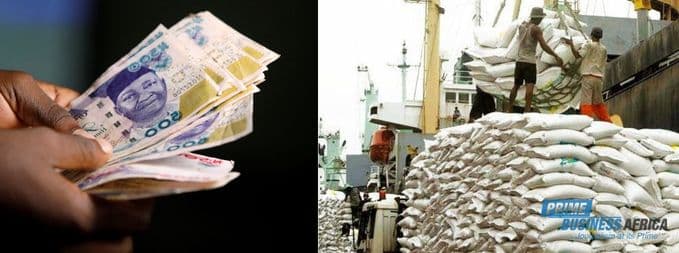
There are concerns that the monetary policies being adopted by the authorities have not been effective in tackling high inflation and high money supply in the economy, hence the need to adopt more creative strategies to achieve that.
Chief Economist and partner at SPM Professionals, Dr Paul Alaje, has highlighted three measures the Nigerian government must take to combat inflation in the country.
Join our WhatsApp ChannelDr Alaje questioned the effectiveness of monetary policies adopted by the Central Bank of Nigeria (CBN) such as increasing the Monetary Policy Rate (MPR) – the benchmark interest rate, Cash Reserve Ratio (CRR), and Liquidity Ratio asserting that they have not been effective tools to combat both hyperinflation and money supply in the economy.
Prime Business Africa reports that the Central Bank of Nigeria (CBN) has raised the MPR for five consecutive times in its quest to reduce the money supply and bring down money in the economy.
During the last MPC meeting in September 2024, the CBN raised the MPR to 27.25 per cent.
However, according to the latest data from the CBN, money supply rose by 5.6 per cent in two months from N101.4 trillion in June to N107.1 trillion in August 2024.
The apex bank’s data revealed that the rise in quasi-money and demand deposits were the major driver of the money supply growth as they surged by 77 per cent and 43 per cent respectively.
According to Alaje, monetary authorities have since 2017 been devaluing the naira as a strategy but it has always ended with it a negative result in the economy. “In an economy with a fragile financial system, high import, and weak infrastructure, the population will have no option but to want to hold more cash,” he emphasised.
He cited some countries that had similar experience such as Brazil, Argentina, Zimbabwe, Venezuela, and Turkey, adding that “Nigeria won’t be an exception,” effective monetary and fiscal measures are not taken.
Way forward
Dr Alaje suggested three major ways Nigeria can wriggle itself out of the current web of economic crisis.
One of the measures, according to him, is to work on boosting the foreign reserve. He urged the authorities to “promote a policy that will boost the reserve not devaluation.” He cited NBS data which stated that over 80 per cent of finished goods in Nigeria are imported, and called for deliberate effort towards building a viable manufacturing sector, instead of continuing to toe the direction of devaluing the naira.
The economic expert also called on the government to cut down unnecessary government recurrent spending, and embrace activities that lead to high productivity.
He further emphasised that the authorities need to retool the economy from “consumption and import dependence to manufacturing, Agro-Processing and export dependence.”
He warned that continuing with the use of only monetary tools such as increasing MPR, CRR and liquidity ratio to tackle inflation and high money supply is ‘akin to “chasing shadows.”
“The more time we take to do this, the more it will hurt us. We can keep chasing shadows with the monetary tools until we realise that fiscal and trade authorities have significant roles to play,” he stated.

Victor Ezeja is a passionate journalist with seven years of experience writing on economy, politics and energy. He holds a Master's degree in Mass Communication.