 MARCEL MBAMALU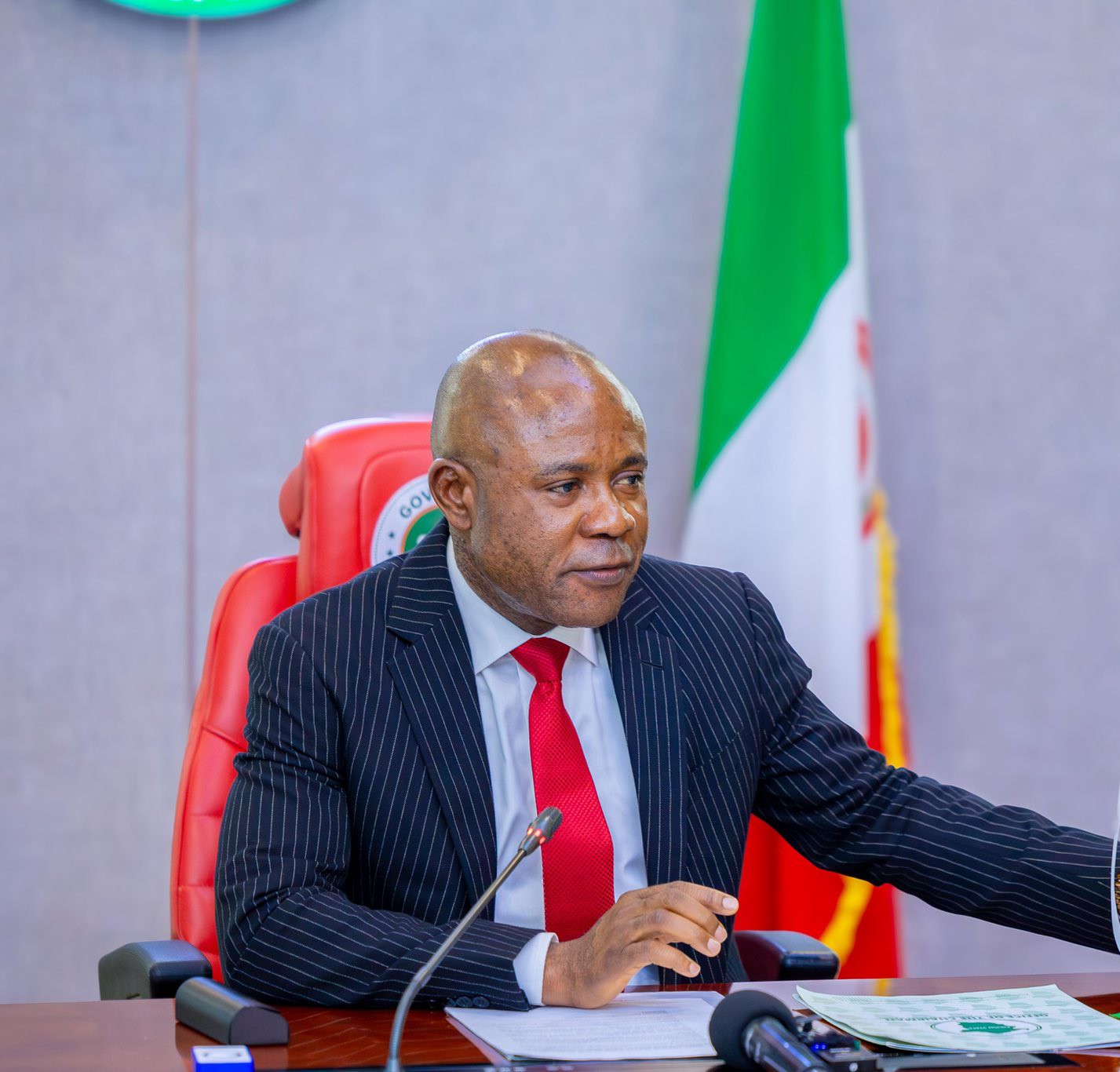
The Enugu State Government’s announcement of a planned July flag-off for a 660 megawatt coal-fired power plant has ignited a fierce debate among elites over the project’s cost, financing, and technical feasibility.
The project, championed by Gov. Peter Mbah, was unveiled as a “bold step toward solving the region’s electricity challenges” that would “rewrite Nigeria’s power story.” According to the state, the plant will harness Enugu’s coal deposits to boost industrialization, attract investment, create thousands of jobs, and position the state as a major energy hub.
The discussion began after Jude Anyigbo, a member of the ‘Anambra First’ WhatsApp platform, advised his colleagues to study the Enugu “experiment” closely for lessons. That prompt opened the floor to a series of technical and political critiques from contributors on the platform.
Join our WhatsApp ChannelBut the contributions that followed focused on economics and risk, not state rivalry.
“Utter balderdash,” say critics
C. Don Adinuba, former Anambra State Commissioner for Information, called the plan “utter balderdash,” pointing to what he called a pattern of unrealistic power announcements from Enugu.
“It is far worse than the asinine announcement last July that Band A customers in Enugu State would start paying N160 per kilowatt hour, as opposed to N209 Kwh,” he said. He noted that the state published a December 2025 report reaffirming the N160/kWh rate, which he said no one has paid.
READ ALSO: Enugu Electricity Regulator Insists On ₦160/kWh For Band A
Adinuba argued that building a 660MW plant in under three years is implausible outside emergency cases, citing the 1999 Enron attempt blocked by then-President Obasanjo and the 2021 22MW Abuja emergency diesel plant led by Bart Nnaji.
“The cheapest power technology in Nigeria is gas, and it costs $1.3m per 1MW. You can find out the cost of a coal-fired plant online. Multiply it by 660. Convert it to naira. Who will pay for it? Not even in Lagos do you have industries that can pay for it in today’s economy,” he said.
The $3.6 billion question
Joe Attueyi put a figure to the skepticism. Using industry benchmarks of $3,000–$6,000 per kilowatt for new coal plants, he estimated the 600MW plant would cost $1.8bn to $3.6bn.
“Where is the $2-3 billion dollars of investment coming from?” he asked. “Global development banks are not investing in coal for political correctness. International energy companies are not investing in coal. Venture capital firms are not investing in coal.”
He noted that only state players like China still build coal plants, and primarily domestically. Attueyi also pointed to the federal government’s 2017 suspension of power purchase agreements, saying no investor can commit without partial risk guarantees.
“If Shell, ExxonMobil and IOCs suspended their investments worth billions of naira because of the suspension of PPAs, how can Enugu State feel confident to rush into this minefield?” he said.
Process gaps and risk guarantees
Energy professional Onochie Anyaoku, a former executive director at Nigeria’s national energy company NNPC, warned that such projects cannot move on political statements alone.
“These things do not happen by wishful thinking or merely because they have been announced,” he said. “A project of such magnitude must pass through a rigorous process — from conception and feasibility studies to FEED, fuel supply and off-take bankable agreements, EPC contracting, financing closure and ultimately FID — before it can be executed cost-effectively and sustainably.”
Adinuba reinforced the point on financing risk, arguing that Nigeria’s power deficit cannot be closed without guarantees.
“Nigeria needs about 100,000MW to stabilize as a higher-medium economy. Yet, its installed capacity is a mere 13,000MW. To worsen matters, the transmission network can take not more than 5,000MW on account of old age and poor maintenance,” he said.
“But no one will invest in generation without a partial risk guarantee, to say nothing about the sovereign guarantee. Without such a guarantee, forget any increase in power generation. It just can’t happen.”
He cited the Edo Azura Power Plant as proof, saying it would not have been built without a PRG. “Has any thermal plant been built since the suspension of the PPAs by the President Buhari administration?” he asked.
Chibuzo Maduka agreed, stating: “Without a PPA or a guaranteed takeoff, no investor would commit money into power generation. Otherwise you allow the GENCO to ringfence and do distributed generation like Abia State.”
He added that even with PPAs, value depends on transmission, distribution and real purchasing power. “If now, it will further lead to another round of subsidy and waste.”
Second-hand plant proposal gains traction
Chris Ikem Okeke offered an alternative route: importing decommissioned Chinese coal plants.
“Used, dismantled coal power plants from China are actively sold as second-hand, pre-owned industrial assets… These units are repurposed, transported, and reassembled in emerging economies to meet fast-rising energy needs at roughly half the cost and time of new builds,” he said, arguing it could cut costs and delivery time to under two years.
Adinuba pushed back, demanding specifics. “Please, my brother, provide practical examples of where such decommissioned coal plants are used and the costs… Who will finance it? Who will pay for it as off takers or end users?”
He also raised grid constraints, noting the national grid “collapses anytime a 5,000MW load is put in it because of its poor maintenance, old age and fragility.”
Broader infrastructure push cited
Not all contributors were dismissive. Henry Ebubeogu said the Mbah administration had “firmed up arrangement for the 135.4km state wide standard gauge rail network” linking Enugu to Anambra, Ebonyi and Abia, with N10bn allocated in the 2026 budget for preliminaries.
James Eze, responding to Adinuba’s analysis, said: “Thanks for this brilliant piece. It explains calmly, everything I need to know about the intricacies of building a coal-powered plant. Why then is Enugu playing with coal fire? It’s perplexing to me.”
The credibility gap
The debate reflects a wider credibility problem in Nigeria’s power sector. Adinuba recalled how Rivers, Akwa Ibom and other oil-rich states built plants that were later abandoned due to complexity and financing issues. He also referenced MoUs signed under former Anambra Gov. Willie Obiano for airports and housing estates that never materialized.
“It is now the turn of the Enugu State government to get conned under the guise of building a massive 660MW coal-fired plant,” he said. “The chances of Enugu State succeeding with this phantom power project is zilch!”
Enugu State has not released details on the project’s financiers, technology partner, tariff structure, or off-take agreements ahead of the July flag-off.
For now, the plan has succeeded in one thing: forcing a hard conversation about what it really takes to build power in Nigeria.

Dr. Marcel Mbamalu is a distinguished communication scholar, journalist, and entrepreneur with three decades of experience in the media industry. He holds a Ph.D. in Mass Communication from the University of Nigeria, Nsukka, and serves as the publisher of Prime Business Africa, a renowned multimedia news platform catering to Nigeria and Africa's socio-economic needs.
Dr. Mbamalu's journalism career spans over two decades, during which he honed his skills at The Guardian Newspaper, rising to the position of senior editor. Notably, between 2018 and 2023, he collaborated with the World Health Organization (WHO) in Northeast Nigeria, training senior journalists on conflict reporting and health journalism.
Dr. Mbamalu's expertise has earned him international recognition. He was the sole African representative at the 2023 Jefferson Fellowship program, participating in a study tour of the United States and Asia (Japan and Hong Kong) on inclusion, income gaps, and migration issues.
In 2020, he was part of a global media team that covered the United States presidential election.
Dr. Mbamalu has attended prestigious media trainings, including the Bloomberg Financial Journalism Training and the Reuters/AfDB Training on "Effective Coverage of Infrastructural Development in Africa."
As a columnist for The Punch Newspaper, with insightful articles published in other prominent Nigerian dailies, including ThisDay, Leadership, The Sun, and The Guardian, Dr. Mbamalu regularly provides in-depth analysis on socio-political and economic issues.