Prime Business Africa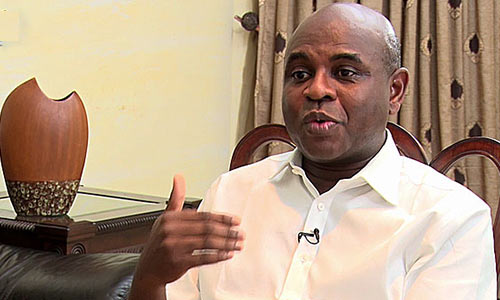
Africa Isn’t Rising Yet’: Former Nigerian Central Bank Official Calls Out ‘GDP Delusion’ and Missing Worldview
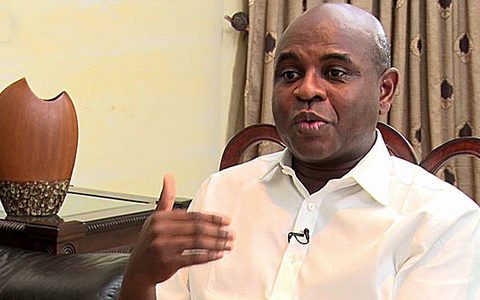
In a blunt assessment that has already sparked debate across think‑tanks and newsrooms, Kingsley Moghalu – founder of the IGET Academy and former deputy governor of the Central Bank of Nigeria – argues that the popular narrative of a “rising Africa” is a myth built on flawed metrics and a missing philosophical foundation.
Join our WhatsApp ChannelSpeaking at a London policy forum on Tuesday, Moghalu warned that the continent’s real challenges lie not in headline‑grabbing GDP numbers but in the everyday quality of life for ordinary citizens and in the absence of a unifying worldview to guide development.
Moghalu opened his remarks by challenging the conventional yardstick used to measure Africa’s progress. “There is a problem with assessments of Africa’s progress, and flawed assessments have led many to believe and proclaim that Africa is ‘rising’,” he said. He identified two core issues: “the measurement is focused on macroeconomic GDP growth – the ‘GDP delusion’ – and the substance of development is being ignored.”
He explained that African governments and analysts often “parrot these numbers to demonstrate progress,” a practice some experts have dubbed “growth without development.” “GDP growth rates don’t measure real human development – the general availability of potable drinking water, comprehensive healthcare systems, education and skills, life expectancy,” Moghalu asserted. “These are the more relevant parameters in my view, before we can move on to growth, and then to structural transformation.”
Turning to the substantive reality, Moghalu highlighted stark inequalities. “By 2030, 80 % of people living in poverty in the world will be in Africa,” he warned. “Meanwhile, the collective wealth of seven African billionaires is more than the wealth of 50 % of the African population.” He stressed that this observation is not a condemnation of successful entrepreneurs, but a call to focus on the quality of life of average citizens rather than the fortunes of a few.
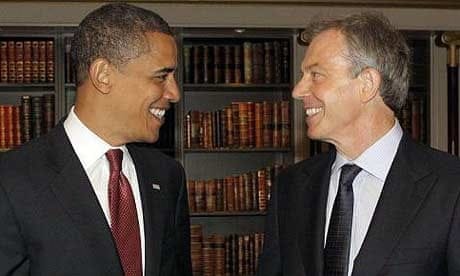
READ ALSO: Tony Blair, Barrack Obama, Boris Johnson, Others Turn Speaking Tours into Six‑Figure Windfalls
The former central banker argued that Africa’s failure to achieve structural transformation is a key reason the continent is not truly rising. “Africa simply isn’t ‘rising’ in real terms because it has not yet achieved structural transformation away from raw commodities and natural‑resource‑based economies,” he said. “It cannot do so without basic physical and social infrastructure such as electricity and human capital – labor that is skilled with productive knowledge.” He pointed to the rise of Asia as an example of how economic complexity, driven by the manufacture of high‑value products, underpins national wealth.
Moghalu also identified a philosophical vacuum as a second, deeper obstacle. “African countries have failed to develop a worldview – an understanding of themselves in the universe, based on why the world is the way it is, where we come from, where we are going, how we are going to get there, the values and strategy that underpin that journey, and the systems of knowledge on which our journey is anchored,” he explained. He added that such a worldview should “suffuse the whole society and be taught, learned and adopted even by its children.”
He contrasted this with the accountability seen in other regions. “Where is that African leader that has been tried or convicted of a crime or civil offense while in office? Like Benjamin Netanyahu, like the Presidents of South Korea and even the great and mighty United States?” he asked, noting the rare exception of former South African President Jacob Zuma, whose resignation followed a constitutional court ruling on misuse of public funds.
Moghalu’s critique echoes arguments he made in his 2014 book _Emerging Africa_. He recalled that the UK Financial Times described the work as “the last word on the Africa Rising obsession.” “A decade later, I have not been proven wrong,” he said.
When asked whether Africa can ever rise, Moghalu replied, “Of course we can. But not until we address these foundational issues of philosophical orientation, governance – the organizing principle – and economic productivity.” He warned that African leaders often “talk a good game, some have slick PR, but they suffer from too many contradictions – what they DO is often not what they SAY, and their habits and thought patterns eat their own proclaimed dreams for breakfast.”
READ ALSO: Trump’s Foreign Aid Cuts: A Wake-up Call For Real Development Of Africa – Moghalu
The forum concluded with a call for a shift in focus: from headline GDP figures to measurable improvements in water, health, education, and life expectancy, and from superficial rhetoric to a coherent, continent‑wide worldview that can drive sustainable development.
Prime Business Africa reports that the debate over Africa’s true trajectory is set to continue as policymakers, scholars, and citizens grapple with the gap between perception and reality.