Ghana To Conclude Rate Hikes As Falling Inflation Sparks Hope

Ghana to keep rates at 30%
September 25, 2023
Ghana To Conclude Rate Hikes as Falling Inflation Sparks Hope

The Bank of Ghana is expected to wrap up its series of interest rate hikes today, September 25th, as a substantial drop in inflation offers respite to the nation’s economy.

For three consecutive days, Accra, the capital of Ghana, witnessed impassioned demonstrations as hundreds of protesters gathered to voice their frustrations over the nation’s escalating economic hardships.

Join our WhatsApp Channel

The protests, organized by Democracy Hub, have been marked by soaring living costs and a scarcity of job opportunities, causing significant concern among the populace.

According to a Reuters Poll, 12 financial analysts were quizzed in the preceding week, yielding diverse predictions for the outcome of the Bank of Ghana’s upcoming meeting.

While the majority, encompassing 10 of the analysts, anticipate that the central bank will maintain its current interest rates, two outliers have put forth contrasting proposals.

One analyst has advocated for an additional 150 basis point hike, while another has boldly suggested a rate reduction of 200 basis points.

READ ALSO: Ghana’s Economic Crisis Sparks Protests, Government Faces Pressure

Over the past two years, the Bank of Ghana has aggressively raised interest rates by an astounding 1,650 basis points in a spirited effort to combat soaring inflation.

The most significant contributor to this unexpected shift in the central bank’s stance is the recent plunge in Ghana’s headline inflation rate, which descended to 40.1% in August, marking a 10-month low and alleviating pressure on the institution to persistently augment borrowing costs.

Samuel Kobina Annim, the Government Statistician, unveiled the latest inflation figures, disclosing that the annual inflation rate had receded from 43.1% in July to its current 40.1%. The primary driver of this downturn in inflation, according to Annim, was the deceleration in food prices.

In particular, food inflation subsided from 55% in July to 51.9%, while non-food price growth dipped from 33.8% to 30.9%. Additionally, month-on-month data revealed a minute decrease of 0.2% in prices.

Commenting on the situation, Mike Kruiniger, a seasoned country risk analyst at BMI, remarked, “Ghana’s disinflation process returned in August, with price growth moderating. This will allow the Bank of Ghana to conclude its monetary tightening cycle at the September meeting.”


emmmmmm
+ posts

Emmanuel Ochayi is a journalist. He is a graduate of the University of Lagos, School of first choice and the nations pride. Emmanuel is keen on exploring writing angles in different areas, including Business, climate change, politics, Education, and others.

Emmanuel Ochayi

Emmanuel Ochayi is a journalist. He is a graduate of the University of Lagos, School of first choice and the nations pride. Emmanuel is keen on exploring writing angles in different areas, including Business, climate change, politics, Education, and others.

A Note To Ajuri Ngelale
Previous Story

A Note To Ajuri Ngelale

AfDB Announces $1.44 Billion Investment In Nigeria's Infrastructure
Next Story

AfDB President Proposes Five-Point Plan For Fairer Global Financial Architecture

Featured Stories

Latest from Africa

Kenya 2027: What One Tweet Reveals About Ruto’s Poll Victory

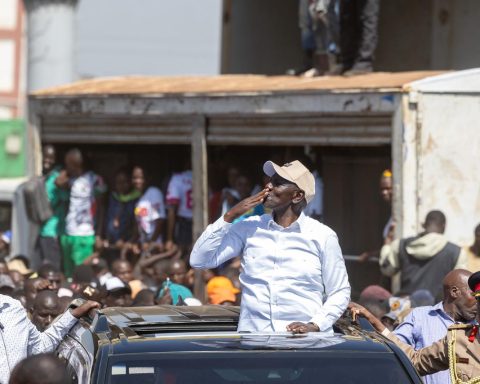
In the sunlit streets of Kondele, Kisumu, President William Ruto addressed a swelling crowd, captured in a single tweet that has since become a digital window into Kenya’s political mood. Prime Business Africa investigations showed that the post was of  him standing

Burkina Faso Junta Dissolves Political Parties

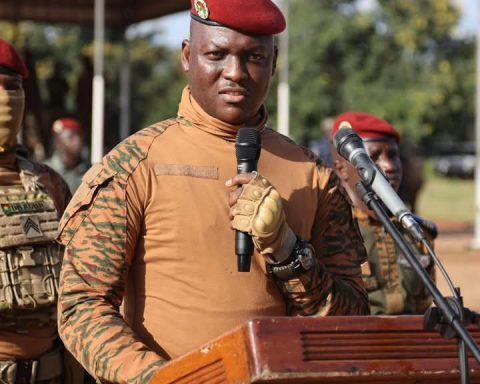
Burkina Faso’s transitional government has dissolved all political parties, repealed the laws that governed their operation, and transferred their assets to the state, the presidency announced on Thursday. The move comes more than three years after a September 2022 coup brought junta

How Civilian Discontent Is Fueling Africa’s Military Coups

The Association of Foreign Relations Professionals of Nigeria (AFRPN) has called on African governments to address the underlying causes of military coups. Speaking at a press conference in Abuja ahead of the association’s 8th Annual Lecture and Conference, AFRPN President Ambassador Gani

Bobi Wine: When Uganda’s Politics Turned Personal

Inside Bobi Wine’s home, the front door is no longer a barrier but a line of confrontation. Soldiers have occupied the space where he lives with his wife and children, questioning, filming and searching, leaving traces of fear and defiance in every
A Note To Ajuri Ngelale
Previous Story

A Note To Ajuri Ngelale

AfDB Announces $1.44 Billion Investment In Nigeria's Infrastructure
Next Story

AfDB President Proposes Five-Point Plan For Fairer Global Financial Architecture

Don't Miss

IMF Sympathises With Victims Of Kenya Anti-tax Protest

IMF Warns Of $12bn Loss To Cyberattacks In Financial Institutions In 20 Years

The International Monetary Fund (IMF) has issued a warning about
Archbishop Of Canterbury, Welby, Resigns, Over Failure To Address Abuse Allegations

Archbishop Of Canterbury, Welby, Resigns Over Failure To Address Abuse Allegations

In a surprising turn for the Church of England, Archbishop