Queen Nwabueze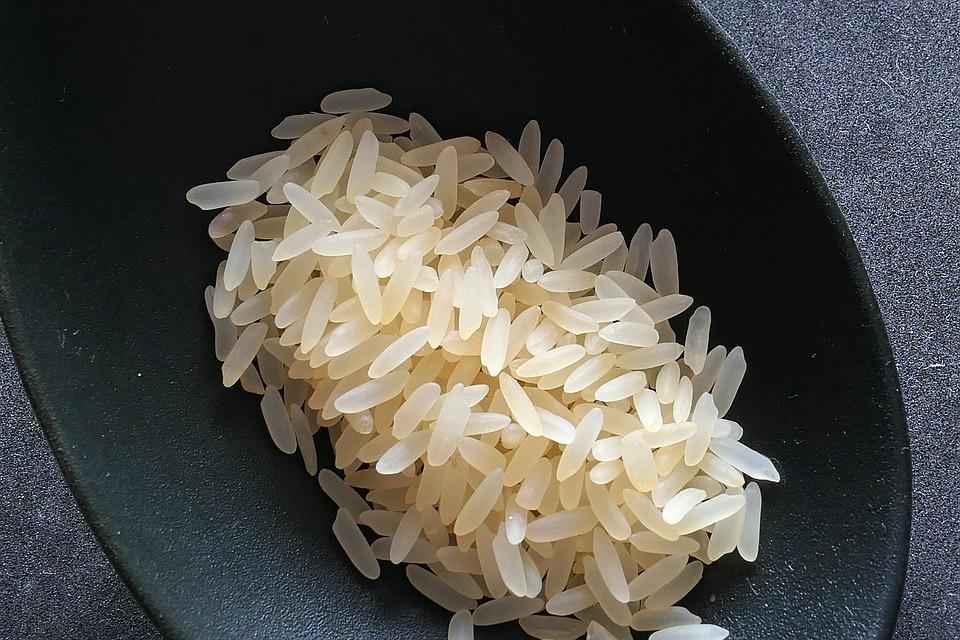
After the Indian government curbed exports of wheat and sugar, latest report has it that rice could be next in line to help the country ensure enough domestic supply and stave off a price hike, the country said.
Reports say, a committee led by the Prime Minister’s Office is doing a product-by-product analysis of essential commodities including non-Basmati rice and swift measures are expected if there are any signs of a price rise.
Join our WhatsApp ChannelAccording to the report: “Inflation is being tackled at the highest level. The price monitoring committee is meeting on every product and deciding the course of action,” an official privy to the details told the newspaper.
Another official said, export restrictions on five products are being considered, of which wheat and sugar have already been covered.
Sources said restrictions on rice could be similar to those on sugar whose exports have been capped at 10 million tonnes (mt).
Similarly, Russia is considering a proposal to temporarily ban rice exports from July 1.
A draft document prepared by the Russian Agriculture Ministry, which still needs government approval, recommends a ban from July 1 to Dec. 31.
Prime Business Africa recalls that Moscow has already restricted exports of sunflower oil to maintain stability in the domestic market.
It has also imposed a temporary ban on exports of sugar and sugarcane worldwide and grain exports to the Eurasian Economic Union.
Just in case, you are still wondering why this matters. India is not just the second-largest producer of rice in the world (after China,), it’s also world’s biggest rice exporter – accounting for 40 per cent of the global trade.
Experts have warned that a curb on rice exports could further upset the global community already irked over the wheat and sugar export ban as well as the Russia-Ukraine crisis.
Bloomberg noted: “India’s curbs on wheat and sugar exports sent shock waves through global markets as it marked an escalation in food protectionism that’s seen countries choke off flows of locally-grown supplies to the world. A similar move on rice by the No. 1 exporter at a time when crops like wheat and corn are soaring would threaten to plunge millions more into hunger and boost inflation risks.”
“Unlike wheat and corn, which have seen prices skyrocket as the war in Ukraine disrupts supplies from a major breadbasket, rice prices have remained subdued due to ample production and existing stockpiles,” the report said.
“The government has already imposed restrictions on wheat exports; it’s a matter of time when restrictions on rice exports might be considered,” said Radhika Piplani, an economist at Yes Bank Ltd.
But two officials involved in the decision-making told Hindu Business Line, the Centre has no plans to ban rice (non-Basmati) exports or announce any curbs on its shipments.
The first official said India had exported 21.1 million tonnes (mt) of rice (including Basmati) last fiscal and, despite that, the country had sufficient stocks. “Rice is a round-the-year crop and is mostly grown in irrigated areas. We have had another good year of a record crop,” he said.
Former All-India Rice Exporters’ Association president, Vijay Setia also said that rumours of ban on non-Basmati exports are now affecting the credibility of Indian exporters.
“I am meeting a lot of rice importers at a trade fair. Everyone has a concern that they are getting feedback from Indian suppliers that the Government is going to ban non-Basmati exports, which is totally incorrect. Importers will look for reliable supplier countries if the Centre does not make any policy clarification,” he said.
It will be recalled that India on 13 May banned wheat exports after prices rose and a record-breaking heatwave damaged crops amid increasing food security risks for India and its neighbours.
The government was aiming at controlling the wheat and atta prices that have increased sharply owing to a rise in demand for exports and likely lower output in the current year.
The commerce department said in a notification that export of all wheat, including high-protein durum and normal soft bread varieties, have been moved from “free” to “prohibited” category with effect from 13 May.
The decision came in for criticism from the agriculture ministers of the G7.
“If everyone starts to impose export restrictions or to close markets, that would worsen the crisis,” German agriculture minister Cem Ozdemir said at a press conference in Stuttgart as per AFP.
But India remained undeterred, telling the UN on 19 May that “the measure would help the country manage its food security while still supporting vulnerable countries.”
On 26 May, India, the world’s biggest producer of sugar and the second-largest exporter after Brazil, placed restrictions on the export of sugar for the first time in six years.
Unlike wheat, the ban on exporting sugar isn’t comprehensive. From 1 June, traders can sell sugar overseas after seeking permission from the government.
“Export of sugar (raw, refined and white sugar) is placed under restricted category from June 1, 2022 onwards,” the Directorate General of Foreign Trade (DGFT) said in a notification.