 MARCEL MBAMALU
It is now about two weeks since officers of the Nigeria Security and Civil Defence Corps (NSCDC) arrested scores of people suspected of illegal mining around the M.I. Wushishi and Lukoto areas of Niger State.
The arrests followed concerns over illegal mining activities in the area, including allegations that miners were destroying farmlands and residential properties.
There was also a lack of accountability in the initial handling of the incident.
The number of people taken into custody was itself unclear in the early reports. Initial reports put the number of deaths at 33, while the NSCDC confirmed that detainees had died but did not initially state how many. The figure was later confirmed at 37, while Niger State Governor Mohammed Bago said 67 people had been detained before the deaths occurred.
READ AlSO: Lithium: New Oil, Same Curse?
The NSCDC initially described the deaths as a suspected disease outbreak. The command said some of the detainees were found dead in the early hours of 17 September and that their bodies had been deposited at the General Hospital, Minna, for medical examination. Yet, nearly three weeks after the incident, the actual cause of death has not been published.
That should have been the beginning of a careful search for answers. Instead, the circumstances surrounding the deaths quickly became more difficult to explain.
According to reports, survivors later described overcrowded cells, poor ventilation, intense heat and detainees pleading for water, others pointed a substance with a strong smell was sprayed around the cell before people began experiencing distress, while another described detainees struggling to breathe and some becoming violently agitated.
There were also accounts of people being packed into confined spaces far beyond what such rooms could reasonably accommodate.
Although these accounts remain allegations and survivor testimony, so do the allegations that those people were engaged in illegal mining. The men and women arrested were suspects. They had not been convicted of illegal mining or any other offence. Yet, within roughly two days of their arrest, some had lost their lives while in government custody.
Aside from the most obvious question of how they would then be able to defend themselves, the bigger question behind the incident is how a country seeking to build an energy future that is cleaner, more sustainable and more inclusive can achieve that when it is even careless about human life associated with such energy.
If the state cannot protect the rights and lives of people at the very point where the mineral economy begins, what does a “just” energy transition mean for those expected to bear its costs?
The phrase “just energy transition” sounds straightforward from the other end of the supply chain. But the transition has a human story long before the battery reaches the consumer.
That is why justice must follow the mineral from the ground to the finished product. The UN framework emphasises human rights, decent work, safety, environmental protection, community participation, benefit sharing, transparency and accountability, while the International Labour Organisation (ILO) warns that critical-mineral expansion can deepen labour risks where regulation is weak.
Nigeria already has laws intended to ensure that mineral wealth improves the lives of the communities where it is found. The Nigerian Minerals and Mining Act provides for Community Development Agreements, environmental protection, compensation, rehabilitation and other obligations designed to make mining serve more than the interests of those extracting the minerals. But what does that promise look like on the ground?
Can the government match the minerals coming out of Minna with development for the people living around them? The question matters because the problem predates the current arrests.
In December 2023, an investigation found children abandoning school for gold mining in communities around Minna, with poverty and the need to survive driving some into the pits.
In February 2025, ILO documented a similar reality in Kuchiko-Camp, where residents moved from farming into gold mining in search of income. The village head said that after almost 30 years of having a school, only eight residents had completed college and there was no university graduate. “Our gold has not built roads or brought electricity,” he said.
But where were those 67 arrested from? Were they outsiders, or were some from communities where mining had become a livelihood? If the government has known these conditions for years, what alternatives has it created? A just transition cannot criminalise survival without addressing the poverty that makes it attractive.
After the Investigation, What Next?
The Federal Government said it has already constituted a 10-member independent committee to investigate the deaths of the 37 suspected illegal miners in NSCDC custody. And that it has also suspended 20 officers and given the committee two weeks to establish the identities of the deceased and examine their arrests and detention. But why does the government keep constituting committees after almost every major death in this country? Are there not departments within our security agencies that should ordinarily be able to carry out quick investigations in such cases?
The repeated reliance on committees is becoming a concern because, in many cases, what happens after the committee submits its report is not clear. It raises the question of whether those committee investigations are actually a ploy to avoid producing accountability for people’s deaths.
Nigeria’s history of mining tragedies shows why the current investigation must not be the end of the matter.
For instance, in June 2024, at least 15 miners died after a pit owned by African Minerals and Logistics Limited collapsed in Galkogo, Shiroro Local Government Area of Niger State. The National Assembly ordered a probe, while the Niger State Government later approved N50 million for the victims’ families. But months later, the International Centre for Investigative Reporting found continuing questions about the company’s safety practices, the rescue operation and compensation. The public record is far clearer on the deaths and relief efforts than on any prosecution or final accountability arising from the incident.
In November 2024, another 13 miners, mostly aged between 18 and 30, died when a mining site collapsed in Bassa Local Government Area of Plateau State. The local government chairman said the young people had gone mining to earn a living amid economic hardship. The deaths prompted renewed calls for stronger oversight of illegal mining.
In September 2025, at least 13 miners died after a pit collapsed in Kadauri, Zamfara State. The Federal Government said the collapse was triggered by heavy rainfall and aggravated by illegal mining, and deployed federal mines officers to investigate the circumstances and coordinate rescue operations.
Then, in February this year, just months before the Niger custody deaths, 37 miners died from toxic gas exposure at Kampani Zurak in Wase Local Government Area of Plateau State. The Federal Government closed the affected mining area and, in April, inaugurated an 18-member committee to investigate the technical, environmental, regulatory and community factors behind the tragedy.
These cases do not establish that government never investigates. They establish something more troubling: tragedies keep recurring while the public record does not always make clear what previous investigations established, who was held responsible or what changed afterwards.
That is the standard the current committee must meet. Its report should not disappear into government files. Nigerians need to know what happened, who was responsible, whether laws or procedures were breached, whether disciplinary or criminal action is warranted, what compensation is due and what will change.
The government owes the families more than condolences. It owes them answers and accountability. More importantly, a just energy transition cannot be one in which people die at the beginning of the mineral value chain, investigations follow, attention fades, and the system remains unchanged.

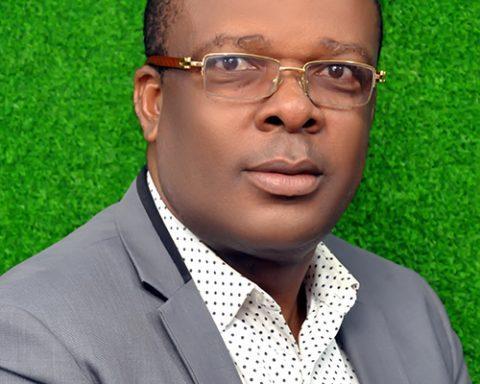
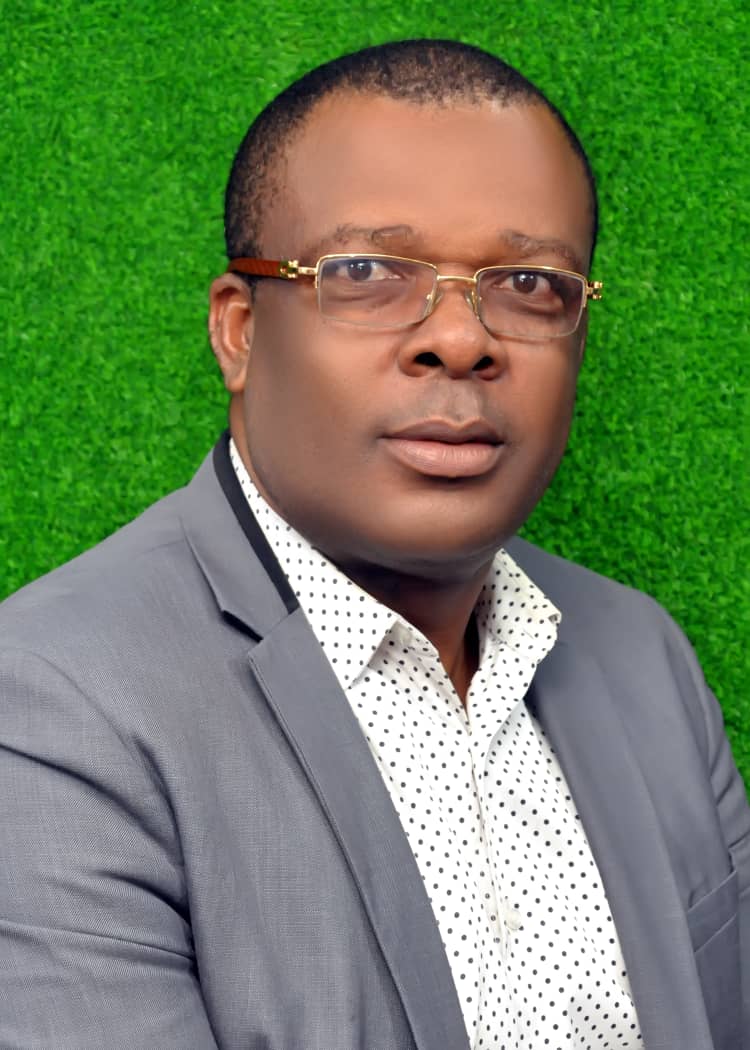
Dr. Marcel Mbamalu is a distinguished communication scholar, journalist, and entrepreneur with three decades of experience in the media industry. He holds a Ph.D. in Mass Communication from the University of Nigeria, Nsukka, and serves as the publisher of Prime Business Africa, a renowned multimedia news platform catering to Nigeria and Africa's socio-economic needs.
Dr. Mbamalu's journalism career spans over two decades, during which he honed his skills at The Guardian Newspaper, rising to the position of senior editor. Notably, between 2018 and 2023, he collaborated with the World Health Organization (WHO) in Northeast Nigeria, training senior journalists on conflict reporting and health journalism.
Dr. Mbamalu's expertise has earned him international recognition. He was the sole African representative at the 2023 Jefferson Fellowship program, participating in a study tour of the United States and Asia (Japan and Hong Kong) on inclusion, income gaps, and migration issues.
In 2020, he was part of a global media team that covered the United States presidential election.
Dr. Mbamalu has attended prestigious media trainings, including the Bloomberg Financial Journalism Training and the Reuters/AfDB Training on "Effective Coverage of Infrastructural Development in Africa."
As a columnist for The Punch Newspaper, with insightful articles published in other prominent Nigerian dailies, including ThisDay, Leadership, The Sun, and The Guardian, Dr. Mbamalu regularly provides in-depth analysis on socio-political and economic issues.