 Amanze Chinonye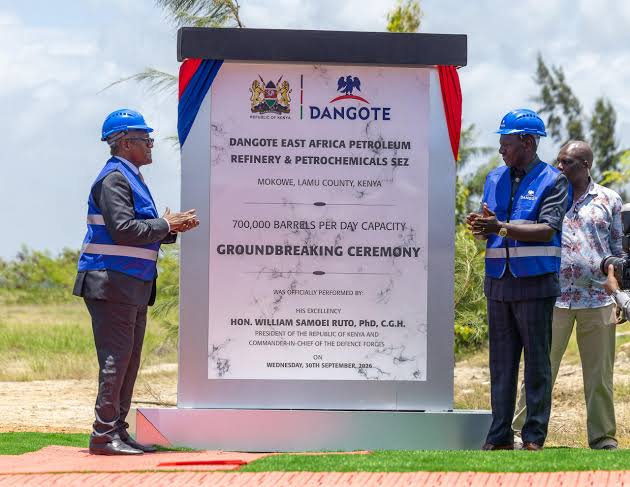
The launch of Dangote’s planned $16 billion refinery in Kenya has intensified scrutiny over the terms of the project, with lawmakers demanding access to an agreement they say sets out Kenya’s commitments but has not been made available to Parliament.
Nairobi Senator and Senate Deputy Minority Leader Edwin Sifuna said senators had not seen the agreement or been briefed on what Kenya had committed to provide for the proposed 700,000-barrel-per-day refinery in Lamu.
Join our WhatsApp ChannelREAD ALSO :
Museveni says Uganda will Proceed with Refinery Despite Lamu Project
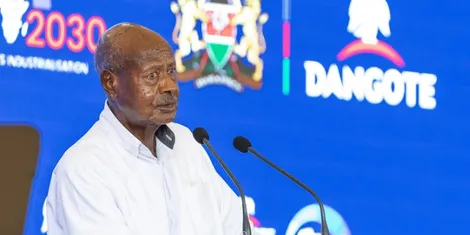
His remarks came on Wednesday as President William Ruto, Ethiopian Prime Minister Abiy Ahmed and Ugandan President Yoweri Museveni attended the project’s groundbreaking.
“None of us has seen the agreement on that refinery. None of us knows the commitments that this country has given in order for that refinery to be built,” Sifuna told the Senate.
The disclosure dispute has shifted attention from the refinery’s headline investment value to the commercial terms behind one of East Africa’s largest proposed private-sector projects.
At issue is whether Kenya is contributing land, infrastructure, guarantees or other public resources, and whether any such commitments could create liabilities requiring parliamentary oversight.
Sifuna said major development projects must comply with Kenya’s Constitution and involve the public where required. He also linked the issue to concerns raised by residents of Lamu who have taken aspects of the project to court.
“Our own people are actually in court and they are crying out for help from their leaders,” he said, arguing that the speed of development should not override constitutional requirements. “If you want to invest in our country, we have values. There is nothing wrong with explaining things to our people.”
The scrutiny extends beyond the Senate. Kiharu MP Ndindi Nyoro has called for disclosure of the refinery’s ownership structure and the identities of its shareholders, while Tetu MP Geoffrey Wandeto has questioned the speed with which the project progressed from discussions over its location to the groundbreaking in Lamu.
The questions come against a significant legal backdrop. Kenya’s High Court ruled in September that provisions of the Public-Private Partnerships Act were unconstitutional to the extent that they failed to provide for parliamentary approval where PPP arrangements create government expenditure, guarantees, public debt or other public liabilities. The court suspended the effect of its ruling for six months to allow Parliament to amend the legislation.
The ruling does not automatically require parliamentary approval for the Dangote refinery. Its relevance depends on the structure of the agreement and whether Kenya assumes financial or other public liabilities.
READ MORE :
Kenya Court Keeps Lamu Refinery Plans on Track Despite Land Challenge
The project also faces a separate legal challenge over its proposed site. Residents of Chandavai in Lamu County have gone to court over land rights and issues including compensation, resettlement and environmental requirements. The court has ordered the parties to maintain the status quo pending further proceedings.
Dangote has said the project will proceed and rejected suggestions that the court action will derail the development.
The group has presented the refinery as a strategic regional investment, while Kenya has positioned Lamu as a potential energy and logistics hub that could help reduce East Africa’s reliance on imported refined petroleum products.
For now, the central question remains unanswered: what exactly has Kenya committed to the project, and why have lawmakers not seen the agreement?

Amanze Chinonye is a Staff Correspondent at Prime Business Africa, a rising star in the literary world, weaving captivating stories that transport readers to the vibrant landscapes of Nigeria and the rest of Africa. With a unique voice that blends with the newspaper's tradition and style, Chinonye's writing is a masterful exploration of the human condition, delving into themes of identity, culture, and social justice. Through her words, Chinonye paints vivid portraits of everyday African life, from the bustling markets of Nigeria's Lagos to the quiet villages of South Africa's countryside . With a keen eye for detail and a deep understanding of the complexities of Nigerian society, Chinonye's writing is both a testament to the country's rich cultural heritage and a powerful call to action for a brighter future. As a writer, Chinonye is a true storyteller, using her dexterity to educate, inspire, and uplift readers around the world.