 Amanze Chinonye
Nigeria’s National Assembly is moving to make federal legislation easier for citizens to access, understand and verify, with plans to digitise parliamentary records and translate laws into Hausa, Igbo, Yoruba and other indigenous languages.
Henry Nwawuba, Executive Secretary of the National Assembly Library Trust Fund, announced the plans in Abuja on Monday at the opening of the 2026 National Assembly Library Week, saying the initiative was intended to bring legislative information closer to the public.
Join our WhatsApp ChannelREAD ALSO :
The programme will include an expanded electronic repository of parliamentary records and an upgraded National Assembly e-library, alongside a mobile application for lawmakers, researchers, legislative aides and members of the public. A Bills Tracker is also being developed to enable users to follow legislation through the parliamentary process.
The library plans to complement the digital records with infographics, audiovisual materials and video explainers designed to simplify bills, Acts and parliamentary procedures. Nwawuba said translating laws into local languages would further broaden access and help citizens understand legislation affecting their daily lives.
The intervention also seeks to address a separate problem created by the rapid circulation of digital information: determining whether a legislative document is current and authentic. Clerk to the National Assembly Kamoru Ogunlana warned that digital platforms could facilitate the spread of altered, outdated or unauthorised versions of parliamentary documents.
He called for stronger systems for digital preservation, authentication, cybersecurity, access controls and backups. Ogunlana also highlighted the limitations of the Laws of the Federation of Nigeria 2004, which does not automatically incorporate legislation enacted after that revision, underscoring the need for reliable access to updated laws.
READ MORE :
SERAP, Editors Threaten Legal Action Over Foreign Aid Bill, Warn of Threat to Civic Space
The National Assembly said the broader digitisation effort would cover records including Order Papers, Votes and Proceedings, committee reports and Acts passed by the legislature. The library also plans public policy dialogues aimed at increasing public engagement with legislative processes.
The initiative comes as lawmakers seek to preserve Nigeria’s legislative record while responding to the growing influence of digital platforms and artificial intelligence on how citizens obtain public information.
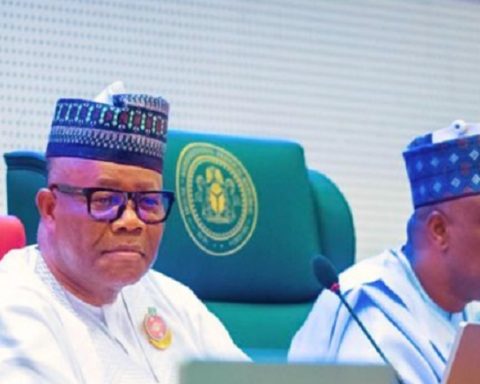
Senate President Godswill Akpabio and House Speaker Tajudeen Abbas, represented at the event, called for greater use of the parliamentary library and stronger safeguards around legislative information.
The proposed system would consequently serve two functions: making Nigerian laws more accessible to citizens who may not readily engage with formal legislative documents, while providing a centralised digital record against which parliamentary information circulating online can be checked.

Amanze Chinonye is a Staff Correspondent at Prime Business Africa, a rising star in the literary world, weaving captivating stories that transport readers to the vibrant landscapes of Nigeria and the rest of Africa. With a unique voice that blends with the newspaper's tradition and style, Chinonye's writing is a masterful exploration of the human condition, delving into themes of identity, culture, and social justice. Through her words, Chinonye paints vivid portraits of everyday African life, from the bustling markets of Nigeria's Lagos to the quiet villages of South Africa's countryside . With a keen eye for detail and a deep understanding of the complexities of Nigerian society, Chinonye's writing is both a testament to the country's rich cultural heritage and a powerful call to action for a brighter future. As a writer, Chinonye is a true storyteller, using her dexterity to educate, inspire, and uplift readers around the world.