 Marcel Okeke
To the informed players and watchers of the Nigerian economy, dissonance between the monetary and fiscal policies has been one of the root causes of the country’s stunted growth over the years.Particularly, in the past three years of President Bola Ahmed Tinubu administration, while the Central Bank of Nigeria (CBN) has maintained a very tight monetary stance, the fiscal authorities have been on borrowing and spending spree, literally.
While the apex bank, through its Monetary Policy Committee (MPC) stipulates monetary policy rates (MPRs) and cash reserve ratios(CRRs) that constrain banks’ credit creation capability, the Federal Government of Nigeria (FGN), on other hand, practically goes haywire—borrowing from everywhere—locally and internationally.Too, while the CBN runs a one-year activity cycle, the FGN, on the fiscal side, lumps two or three annual budgets together—especially, the capital components.
Join our WhatsApp ChannelREAD ALSO: CBN’s Monetary Policy Not Effective, Major Inflation Drivers More On Fiscal Side – Analyst
Consequent upon this, while the CBN would be busy mopping up ‘excess liquidity’ in the economy, the fiscal authorities would be celebrating billions of dollars being borrowed by the FGN, and trillions of naira being shared by the three tiers of government—under the aegis of the Federation Account Allocation Committee (FAAC).In the money and capital markets, the FGN looms large, crowding out private sector credit seekers—endlessly raising funds via bonds, treasury bills, etc.
All these have in various ways constituted a drag on the acceleration of the pace of the country’s economic development. Indeed, practically every measure of the fiscal authorities has largely ended up being a counterpoise to the initiatives of the monetary authorities in the past three years. The borrowing spree and mounting public debt, for instance, have led to high servicing obligations, which continue to consume a huge chunk of government revenues. Still, the FGN has also been making a lot of “transfer payments” under its palliative doles.
But a few days ago, barely eight months to the end of President Tinubu’s four-year first term, and in the heat of presidential campaigns, the FGN and the CBN made moves to “strengthen coordination of fiscal and monetary policies to control inflation, improve government borrowing and liquidity management, and protect private-sector access to credit.”
The Ministry of Finance and the CBN signed a Memorandum of Understanding (MoU) to provide for “regular consultation, information sharing, and joint policy assessment between the two institutions.” Minister of Finance and Coordinating Minister of the Economy, Taiwo Oyedele, said the new arrangement would make coordination between monetary and fiscal authorities more permanent and less dependent on the personalities occupying public offices.”
“Today matters not because we are signing an MoU, but because of what it represents: our determination to institutionalize coordination between fiscal and monetary policy,” Oyedele said. “Government borrowing affects liquidity and interest rates. Monetary policy affects the government’s financing cost. Tariffs and exchange rates affect prices and revenue; spending affects demand,” he said.
Also speaking, the CBN Governor, Olayemi Cardoso, said the framework embedded in the MoU would enable both institutions to align their actions, reduce policy conflicts and pursue common national economic objectives. He said the ultimate objective was to build a more stable, resilient and productive economy capable of delivering broad-based prosperity.
All these vividly point out the fact that the fiscal and monetary authorities have been working in ‘silos’, hallmarked by policy conflicts; each doing its things in its own ways and timing. This, without any equivocation, is what has brough the Nigerian economy to a blind alley: stuck at a point, such that the only thing on the FGN’s economic scorecard is macroeconomy stabilization. Had there been any coordination in the policies of the CBN and the Ministry of Finance in the past three years, the economy would have done better courtesy of policy sequencing and concerted implementation.
The apex bank, for example, should not have gone full blast with complete floatation of the naira, barely two weeks after fuel subsidy removal, on the fiscal side. The petrol subsidy withdrawal was a policy that affected every human activity in the country. No wonder, the local currency crashed, inflation rate spiked through the roof, and consumer purchasing power collapsed—almost irrecoverably. The economy has since remained almost comatose—literally.
Therefore, the recent signing of an MoU between the CBN and the Federal Ministry of Finance (FMF) seems rather too late in coming, and too small an effort—given the enormity of Nigeria’s current economic challenges. Today, almost every sector of the economy is in crisis: energy, agriculture, manufacturing, education, health, transportation, aviation, tourism. Name it! Each of the sectors has been badly hit by the contents of the reforms of the FGN in the past three years.
Besides, what the CBN and the FMF is doing by signing an MoU is unnecessary, and merely ceremonial. A veritable platform for their coordination had since been in existence. Had they (CBN and FMF) made the Financial Services Regulation Coordinating Committee (FSRCC) active all these years, the country wouldn’t be in the economic debacle it currently finds itself. The FSRCC is the key inter-agency body in Nigeria responsible for coordinating the supervision and regulation of the country’s financial institutions.
Member-agencies of the FSRCC include the CBN, FMF, the Nigeria Deposit Insurance Corporation (NDIC), the Securities and Exchange Commission (SEC), National Insurance Commission (NAICOM), National Pension Commission (PenCom), Corporate Affairs Commission (CAC) and the Financial Reporting Council of Nigeria (FRC). The FSRCC, established in 1994, has its legal foundation in Section 44 of the CBN Act 2007. It is headed by the CBN Governor.
At this point, the apex bank cannot save the economy from the ravages of a lingering tight monetary regime which it instituted: an assortment of local and external headwinds now confronts the CBN. Besides, the apex bank has come to be the greatest beneficiary from the policy—through which it has raked in substantial foreign exchange (FX) inflow via foreign portfolio investments (FPIs). All this, however, have been at the expense of local businesses—due to high cost of credit and inclement operating climate.
The Central Bank has also failed in its so-called fight against high inflation—the main reason why it has been keeping tight monetary stance. At over 15 per cent currently, headline inflation remains high vis-à-vis the single-digit target of the fiscal authorities. The FGN is also in no position to significantly drive down inflation rate due to factors such as insecurity in the land (which is abating food crisis), politics and electioneering funding, among others.
All these have rendered otiose, the MoU undertaking by the CBN and the FMF—three years after their separate efforts and initiatives have impoverished majority of Nigerians and spiked unemployment. Their New Agreement is as if the country is starting anew. Or is this part of the President Tinubu manifesto for 2027?

Marcel Okeke
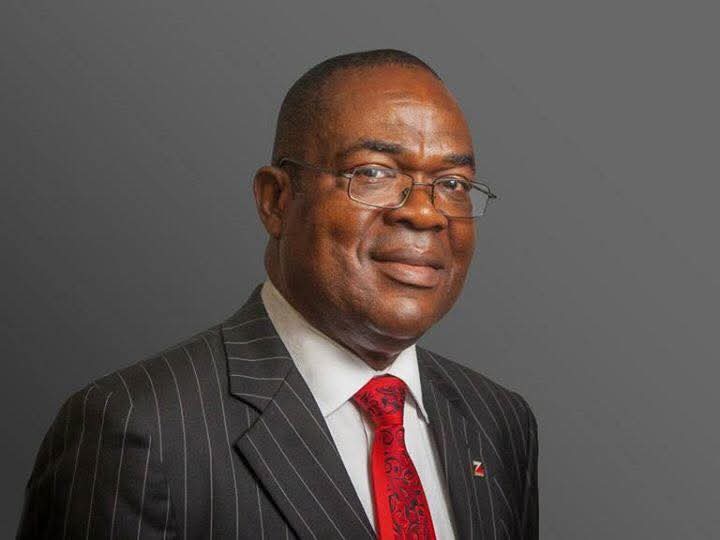
Dr Marcel Okeke, a practicing Economist, Business Strategist, Sustainability expert and ex-Chief Economist of Zenith Bank Plc, is a guest author at Prime Business Africa. He lives in Lekki, Lagos.