 MARCEL MBAMALU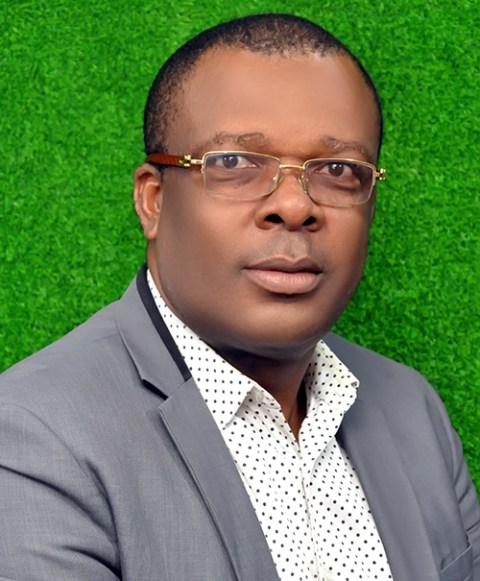
On August 11, Nigeria’s aviation unions decided to fight Air Peace. By August 12, they had also grounded 70 Air Peace flights, 30 United Nigeria flights, and the travel plans of more than 1,200 passengers who had done nothing wrong.
The National Union of Air Transport Employees and ATSSSAN, backed by NLC and TUC, said they had no choice. Their grievance: about N25 billion in unpaid 5% Ticket Sales Charge, with Air Peace alone allegedly owing more than N15 billion. Their second grievance: workers were being denied the right to join unions.
Join our WhatsApp ChannelFair demands. But let us talk about cost.
Air Peace says it lost over N2 billion in 48 hours. Passengers lost time, money, and confidence. United Nigeria lost operations in solidarity. And the unions? They won a standoff.
The uncomfortable question the Air Peace picketing forces us to ask is simple: when unions fight for workers by hurting the business that employs those workers, and by stranding the passengers who fund them, who exactly is being protected?
READ ALSO: Air Peace, Etihad Seal Landmark Aviation Deal, Expand Access Across Nigeria, West Africa
Worse, NCAA itself says airlines are “complying with directives” on TSC payments. A 2024 Federal High Court also restrained the unions from coercing Air Peace workers into union membership. Yet the airport, not the courtroom, became the battleground.
Industrial action is a right. But when it is selective, when it costs billions, when it turns passengers into collateral, then we must ask: is this about workers’ welfare, or something else entirely?
Because in the end, the unions may collect their 5%. But who pays for the trust that was lost at 30,000 feet?
READ ALSO: Mbamalu Faults Political Elite for Focusing on 2027 Amid Deepening Security Crisis
The Case the Unions Made
Whenever a trade union pickets a business, the logic is familiar: state the demand, name the victim, and claim all other options failed. Picketing, after all, should be the last resort.
NUATE, ATSSSAN and NAAPE said they issued successive notices before moving on August 11. Their first claim was money. They alleged that airlines were withholding the 5% Ticket Sales Charge and other statutory charges collected from passengers. Across all airlines, they put the outstanding figure at about N25 billion.
Their second claim was freedom. They accused airlines, including Air Peace, of preventing workers from freely joining trade unions of their choice. Employees, they said, were afraid of discrimination or victimisation. They demanded circulars and direct communication declaring that workers were free to join without fear.
The unions then linked both issues. They argued that the alleged withholding of aviation agencies’ funds had made it difficult to implement collective bargaining agreements and conditions of service. The result, they warned, was “disgruntled workers and potentially unsafe conditions within the aviation sector.”
On the TSC specifically, the unions said Air Peace was the biggest debtor — more than N15 billion of the N25 billion. That is a huge sum. If true, Air Peace owes an explanation. The airline has not publicly denied the figure.
But What Did It Cost?
The money reportedly lost from the disruption is also huge, and almost comparable in the short term. Air Peace says it lost more than N2 billion. One can argue N2 billion is not N15 billion. But is this only about immediate loss?
About 70 Air Peace flights were affected. More than 30 United Nigeria Airlines flights were also affected after that carrier suspended operations in solidarity with Air Peace. Over 1,200 passengers were stranded in Abuja and Lagos, where Air Peace was specifically targeted.
What happens when those passengers lose confidence in an airline, or in air travel generally? The cost compounds. A passenger who buys a ticket and ends up stranded because of an industrial dispute will likely book another airline next time. Businesses that depend on reliable air travel will also look elsewhere.
This is how a picketing exercise, when not tightly controlled by rules, moves past the original dispute. It begins to hurt a major business, its workers, its customers, and the wider aviation industry.
Was that the intention? Perhaps not. But those were the consequences.
And here is the contradiction. Oluwatoyin Olajide, Chief Operating Officer of Air Peace, revealed that “The Director-General of the Nigeria Civil Aviation Authority has publicly stated that the airlines, and not Air Peace alone, are complying with the directives of the NCAA regarding the applicable payment.”
If the unions were fighting for workers and for the industry, then is grounding planes, driving away passengers, and wiping billions off an airline’s books really the best way to protect the same workers? It forces us to ask: what is the money being fought for, and what is it meant to do?
What Exactly Is The 5%?
The 5% TSC is not a labour fund. It is not money meant for the unions. Under the Civil Aviation Act 2022, the Nigeria Civil Aviation Authority is empowered to collect the charge on tickets originating from Nigeria, as well as on certain cargo, charter and contract operations.
NCAA says the charge is collected and then shared among aviation agencies. Its published breakdown lists NAMA, NIMET, NCAT and AIB as beneficiaries, in addition to the NCAA itself.
So the argument cannot end at “do airlines owe?” It must also ask: how much value does the travelling public get from the remitted 5%?
Could it be that airlines are not seeing the value, and that is why remittance is a problem? If airlines are to collect from passengers and remit, there must be transparency so both airlines and passengers can see what they are paying for.
But even if there was a breach, why was the airport the battleground? Courts exist to determine disputes where one party believes another has failed to honour an obligation. Present evidence. Argue the case. Instead, the same passengers who had no part in the disagreement between unions, airline, and authorities were the ones left stranded.
Selective Targeting and the Law
Another layer complicates the matter. NCAA spokesperson Michael Achimugu reportedly said appropriate sanctions would be imposed on an Air Peace staff member for allegedly blocking the Lagos airport runway during the picketing. A source said FAAN had to tow the vehicle to restore movement airside.
This is not to defend the driver. But the incident strengthens the argument that Air Peace was singled out. The driver may have been angry that the company feeding him was shut down while others flew.
Evidently, Air Peace and United Nigeria Airlines were the only airlines that announced losses. United Nigeria was affected because of solidarity. What happened to the other airlines allegedly owing about N10 billion? Why were they allowed to operate?
That selective disruption looks like discrimination. This is especially so as Mrs Olajide alleged that videos showed union members asking passengers not to board Air Peace.
ATSSSAN, however, said Air Peace was targeted first because it owed more than half the money and denied workers unionisation. The unions did not, however, acknowledge that the airline’s expansion also creates more jobs and economic value.
Air Peace also cited a 2024 Federal High Court judgment restraining NLC, TUC, NUATE and others from coercing its workers into union membership. If valid, then the unions not only violated workers’ rights but also disobeyed a court order. Air Peace further alleged that its employees were attacked and some injured.
Amid all these allegations, ATSSSAN Secretary-General Francis Akinjole said the union would respond “at the appropriate time.” One wonders: why was there an appropriate time to picket, but another time to explain the evidence?
The Bottom Line
Unions exist to protect workers’ rights and improve welfare. There is nothing inherently wrong with industrial action when dialogue fails.
But the Air Peace episode raises a harder question: are there sometimes other interests behind the picketing of businesses in Nigeria?
When you ground planes to collect money, you also ground trust. When you picket to defend workers, you risk putting those same workers out of jobs. When you make passengers pay for a fight they did not start, you damage the entire sector.
The unions may yet get their N25 billion. NCAA may yet enforce remittance. But aviation in Nigeria runs on one fragile asset: passenger confidence.
On August 11, that was the real thing that got grounded.

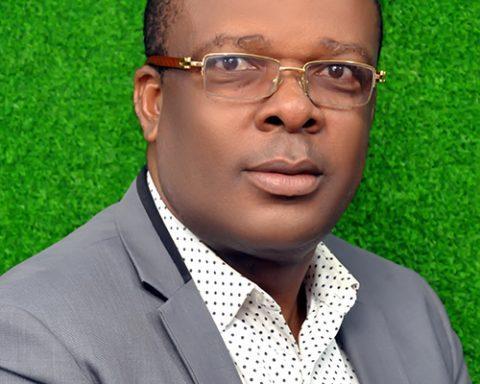
Dr. Marcel Mbamalu is a distinguished communication scholar, journalist, and entrepreneur with three decades of experience in the media industry. He holds a Ph.D. in Mass Communication from the University of Nigeria, Nsukka, and serves as the publisher of Prime Business Africa, a renowned multimedia news platform catering to Nigeria and Africa's socio-economic needs.
Dr. Mbamalu's journalism career spans over two decades, during which he honed his skills at The Guardian Newspaper, rising to the position of senior editor. Notably, between 2018 and 2023, he collaborated with the World Health Organization (WHO) in Northeast Nigeria, training senior journalists on conflict reporting and health journalism.
Dr. Mbamalu's expertise has earned him international recognition. He was the sole African representative at the 2023 Jefferson Fellowship program, participating in a study tour of the United States and Asia (Japan and Hong Kong) on inclusion, income gaps, and migration issues.
In 2020, he was part of a global media team that covered the United States presidential election.
Dr. Mbamalu has attended prestigious media trainings, including the Bloomberg Financial Journalism Training and the Reuters/AfDB Training on "Effective Coverage of Infrastructural Development in Africa."
As a columnist for The Punch Newspaper, with insightful articles published in other prominent Nigerian dailies, including ThisDay, Leadership, The Sun, and The Guardian, Dr. Mbamalu regularly provides in-depth analysis on socio-political and economic issues.