 Amanze Chinonye
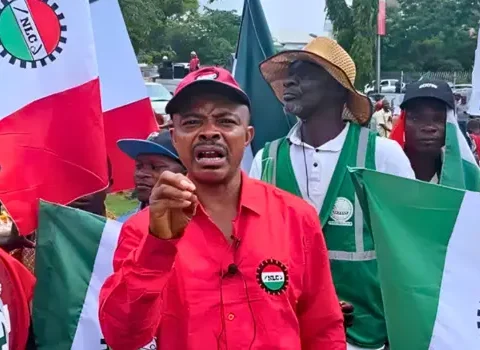
The Nigeria Labour Congress (NLC) is preparing to reopen negotiations with the Federal Government over Nigeria’s national minimum wage, saying the ₦70,000 statutory wage has been eroded by rising living costs and no longer adequately meets workers’ basic needs, Prime Business Africa reports.
NLC President Joe Ajaero disclosed the union’s position at the Rights of Workers Summit in Birnin Kebbi, where he was represented by the congress’s Deputy President, Audu Titus Amba. He said labour was preparing to engage the Federal and state governments on an upward review of workers’ salaries.
Join our WhatsApp ChannelREAD ALSO :
Ajaero said any new minimum wage below ₦500,000 would not adequately cater to workers’ needs under prevailing socioeconomic conditions, signalling a substantial increase from the current statutory floor.
The NLC’s demand comes as workers contend with higher costs of food, transportation, housing and other essential goods and services, which labour says have significantly reduced the purchasing power of the existing wage.
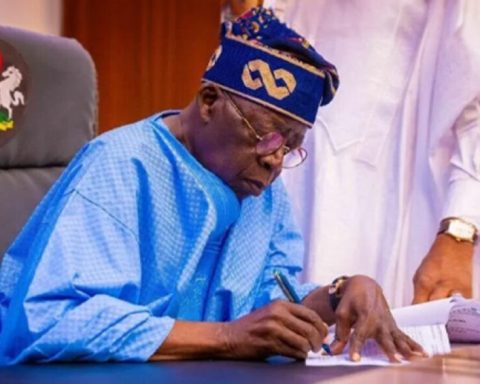
The ₦70,000 minimum wage was approved by President Bola Tinubu in July 2024, replacing the previous ₦30,000 benchmark. The legislation also shortened the statutory review period from five years to three years, providing for more frequent adjustments to wages in response to changing economic conditions.
The timing of the NLC’s latest demand therefore coincides with the review framework established under the 2024 wage agreement.
The union has increasingly argued that the issue is not simply the nominal value of workers’ salaries but their real purchasing power. Ajaero has described the ₦70,000 figure as a minimum wage rather than a living wage, maintaining that current economic conditions require a substantial adjustment.
The Federal Government has also indicated that the existing wage could be reviewed. Chief of Staff to the President, Femi Gbajabiamila, said in June that the administration recognised the need to reassess the ₦70,000 benchmark as economic conditions change. He pointed to the three-year review cycle as part of the mechanism for keeping wages closer to prevailing economic realities.
The 2024 wage increase more than doubled the previous national minimum from ₦30,000 to ₦70,000, following months of negotiations between the government and organised labour. The National Assembly subsequently passed legislation reducing the wage-review interval from five years to three.
READ MORE :
‘There Will Be No More Warnings Before The Next Strike’ – NLC Warns FG
The renewed wage debate is also playing out unevenly across the states, with some state governments already paying above the national benchmark. Kebbi State, for instance, has implemented a ₦75,000 minimum wage, while other states have announced higher wage floors.
For the Federal Government, any substantial increase would carry significant fiscal implications for public-sector wage bills, while state governments would face similar pressures in implementing a revised national benchmark.
For labour, however, the argument is that maintaining the ₦70,000 wage without accounting for changes in the cost of living would amount to a continued decline in workers’ real earnings.
The forthcoming negotiations are therefore expected to focus not only on the size of any new minimum wage but also on how frequently wages should be adjusted to preserve workers’ purchasing power as economic conditions evolve.

Amanze Chinonye is a Staff Correspondent at Prime Business Africa, a rising star in the literary world, weaving captivating stories that transport readers to the vibrant landscapes of Nigeria and the rest of Africa. With a unique voice that blends with the newspaper's tradition and style, Chinonye's writing is a masterful exploration of the human condition, delving into themes of identity, culture, and social justice. Through her words, Chinonye paints vivid portraits of everyday African life, from the bustling markets of Nigeria's Lagos to the quiet villages of South Africa's countryside . With a keen eye for detail and a deep understanding of the complexities of Nigerian society, Chinonye's writing is both a testament to the country's rich cultural heritage and a powerful call to action for a brighter future. As a writer, Chinonye is a true storyteller, using her dexterity to educate, inspire, and uplift readers around the world.