 MARCEL MBAMALU
A video posted Sunday by Dr. Uche Nworah, former chief executive of the Anambra Broadcasting Service (ABS), showing construction at the proposed airport site in Ndikelionwu has ignited a fierce debate among Anambra’s elite over Governor Charles Soludo’s plan for a second airport.
The footage, captioned “ongoing construction work at the site of the new Anambra state airport at Ndikelionwu, part of the planned mixed-use industrial city,” split contributors on “Anambra First” WhatsApp forum into two camps: those who see it as visionary economic planning, and those who call it a misplaced priority.
“Is this the priority now?”
The criticism was immediate and blunt.
JT Anyigbo asked, “Is this the priority now? Such unconscionable waste of public resources by a supposed economist? What happens to the Chinua Achebe airport? So the next governor will build another airport in his village?” He warned that “Anambra will be the first state with airports in all the local government areas!”
Join our WhatsApp ChannelDr. Pat Ndu kept it short: “Ezeudo, please what are we doing with a second airport? I come in peace.”
Mr Stanley Ezeamama expanded the list of competing needs: “Anambra has so many issues to be addressed, more pressing than a second airport especially when the first is underutilized. What about better primary and secondary schools? What about paying WAEC and JAMB (UTME) fees for indigent citizens? What about paying down the state’s debt? What about the repair of decaying roads?”
Chris Ikem Okeke (Ochi’ili na Nri) framed it as an opportunity cost problem. He argued the Chinua Achebe International Airport is “operating below capacity,” Asaba Airport is “relatively close,” and questioned if “the state’s fiscal resources can sustain two airports simultaneously. Is this another potential ‘white elephant’ project?”
Nn’emeka Maduegbuna, a seasoned Public Relations expert, said the proposal “illustrates a suboptimal characteristic of the Soludo administration,” arguing that “building another airport before fixing the first one shows a pattern: big announcements over fixing the basics.” He noted Anambra’s economy is growing at 3-4%, not the 8-10% needed for a “Dubai-Taiwan leap,” and cited unresolved issues in taxes, roads, power, and industrial value addition.
“Pathway to Dubai and Taiwan”
Defenders framed the project as long-term infrastructure for an industrial city, not a standalone airport.
Almost sacarstically, Joe Attueyi called it a “Pathway to Dubai and Taiwan.”
Christian Udechukwu, former Commissioner for Industry under Soludo, gave the most detailed defense. He linked the airport to the Anambra Mixed Use Industrial City (AMIC), a Special Economic Free Trade Zone approved by President Tinubu after Soludo’s post-November 2025 visit.
“Prof Soludo is not a trivial reformer,” Udechukwu said, citing Soludo’s banking consolidation and NEEDS/SEEDS programs that secured Nigeria’s $30bn debt relief in 2006. He compared the plan to London’s nine airports serving the greater London area, and to China’s rapid airport and port construction.
“The locational spread of our two airports means that in the future, people can opt to fly into Achebe International Airport in Umueri or fly into the Aerotropolis in the AMIC FTZ. Investors in the Anambra Mixed Use Industrial City have the option to fly themselves or cargoes directly into the FTZ,” he said.
He urged critics to “suspend your disbelief and accept that the past is an indicator of future performance,” arguing that “visionaries see and know the future before it unfolds.”
Dr. Augustine Onyekachukwu Ike agreed, calling the airport “a necessary good” that “will help make statement to the world on how prepared Anambra State is to drive economic development.”
Dr. Ebuka Onyekwelu added that the project is “an executive project that doesn’t necessarily need to be interrogated by the State Assembly,” noting it has been underway for “almost two or three years.”
Transparency and Process Under Fire
A third thread focused on process.
Chief Anayo Nwosu (Ojiakonaobi of Nnewi) asked if the project was “debated in the House of Assembly where our elected representatives query executive proposals.” He called it “a tragedy that all the HoAs in Nigeria except in Rivers, are lackeys of the executive.”
Bernard Obimma said “it appears the project is being carried out in secrecy, with very little information available in the public domain.” He questioned why it wasn’t subjected to “open bidding process, and extensive debate in the House of Assembly, within the Executive Council, and among the public.”
TPS and Okey Ibeke both suggested seeking “formal clarification from the Speaker of Anambra House of Assembly or demand for the details of the 2026 Budget.”
Ibeke also corrected the Lekki comparison: “the proposed Lekki airport is NOT ongoing. It’s still on drawing board almost 15 years after its first mention by then Governor Babatunde Fashola.”
Chris Ikem Okeke highlighted the shift in government messaging: “The government initially debunked reports of a second airport in late 2025… However, by early 2026, reports suggested land acquisition for a second airport was underway, causing community friction.”
Chibuzo Maduka argued the same industrial city “could have been achieved locating the mix industrial city somewhere near the current Anambra State Airport which still has vast area of land.”
The Core Dispute: Timing and Viability
Even those not outright opposed said the sequencing is wrong.
Solomon Ifeanyi Agbataekwe (Akudo Nibo) said the central issue is “whether a second airport in Anambra, at this present stage of economic reality, is commercially and economically viable.” He argued that “economic infrastructure is not judged only by vision or ambition. It is judged by sustainability, utilization, return on investment, maintenance realities, and opportunity cost.”
Fred Chukwulobe said the governor “appears to have made up his mind… and there may be little we can say or do to stop him. He is no longer seeking re-election, so he does not need our votes anymore.” He urged Maduegbuna to speak up: “for ‘the man dies who keeps silent in the face of tyranny.”
Obi Trice said “there’s no justification whatsoever for a second Airport,” arguing “inter city rail comes ahead of all transport except roads.” He warned the project could become “the main project, while land expropriated from local farmers is eventually sold off to real estate investors.”
Uche Nworah tried to bridge the gap, saying the “mixed-Use Industrial City makes sense, just like we have the Lekki Export Free Trade Zone.” He blamed the backlash on poor communication: “what’s causing all the misconceptions is that the state government has not fully explained the project, scope, benefits etcetera.” He reassured that the Chinua Achebe airport “will not be abandoned.”
What’s Next
The debate exposes a deeper tension in Anambra politics: visionary, top-down infrastructure planning versus demand-driven, incremental investment. With Soludo in his second term and not facing voters again, the government has more room to push unpopular projects. But as Agbataekwe put it, “asking whether a major infrastructure project is economically viable, properly timed or optimally prioritized does not amount to hostility towards government.”
For now, the bulldozers are moving in Ndikelionwu. Whether they are building the future or a monument remains the question Anambra’s elite cannot agree on.
Contributors to the ongoing debate in “Anambra First” WhatsApp Platform included JT Anyigbo, Dr. Pat Ndu, Joe Attueyi, Nn’emeka Maduegbuna, Fred Chukwulobe, Chief Anayo Nwosu, Bernard Obimma, TPS, Okey Ibeke, Chris Ikem Okeke, Uche Nworah, Stanley Ezeamama, Henry Ebubeogu, Chibuzo Maduka, Dr. Augustine Onyekachukwu Ike, Christian Udechukwu, Solomon Ifeanyi Agbataekwe, Obi Asika, ObibTrice and Dr. Ebuka Onyekwelu.
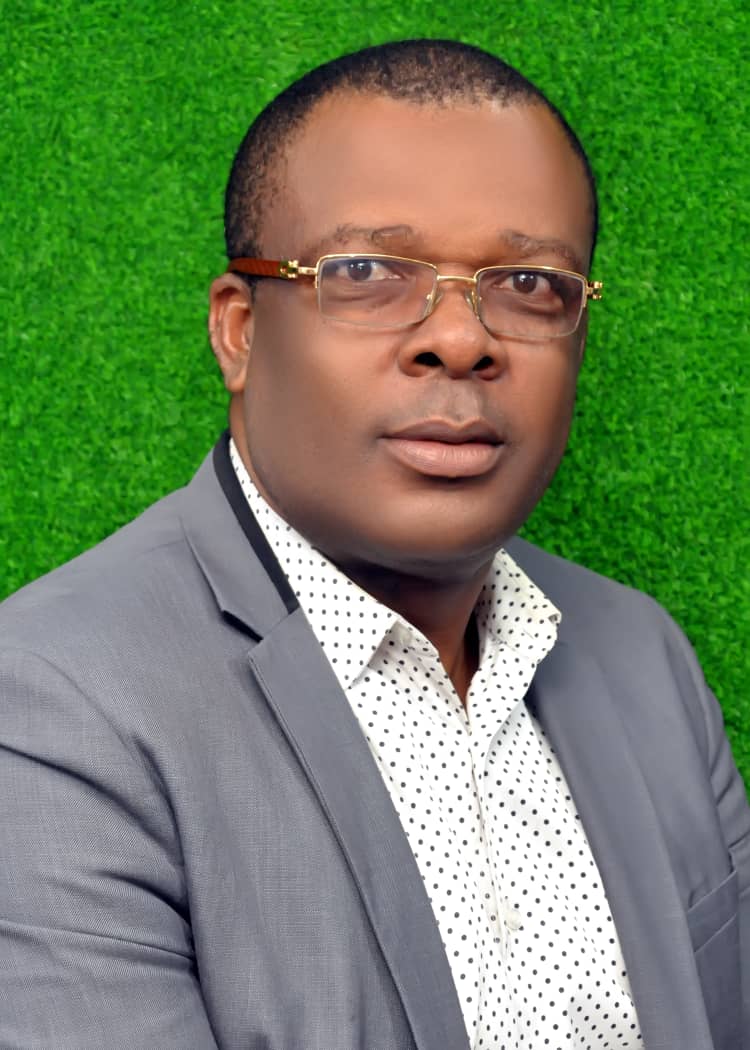
Dr Marcel Mbamalu, publisher of Prime Business Africa and member of the “Anambra First” elite forum monitored the conversation Sunday evening.

Dr. Marcel Mbamalu is a distinguished communication scholar, journalist, and entrepreneur with three decades of experience in the media industry. He holds a Ph.D. in Mass Communication from the University of Nigeria, Nsukka, and serves as the publisher of Prime Business Africa, a renowned multimedia news platform catering to Nigeria and Africa's socio-economic needs.
Dr. Mbamalu's journalism career spans over two decades, during which he honed his skills at The Guardian Newspaper, rising to the position of senior editor. Notably, between 2018 and 2023, he collaborated with the World Health Organization (WHO) in Northeast Nigeria, training senior journalists on conflict reporting and health journalism.
Dr. Mbamalu's expertise has earned him international recognition. He was the sole African representative at the 2023 Jefferson Fellowship program, participating in a study tour of the United States and Asia (Japan and Hong Kong) on inclusion, income gaps, and migration issues.
In 2020, he was part of a global media team that covered the United States presidential election.
Dr. Mbamalu has attended prestigious media trainings, including the Bloomberg Financial Journalism Training and the Reuters/AfDB Training on "Effective Coverage of Infrastructural Development in Africa."
As a columnist for The Punch Newspaper, with insightful articles published in other prominent Nigerian dailies, including ThisDay, Leadership, The Sun, and The Guardian, Dr. Mbamalu regularly provides in-depth analysis on socio-political and economic issues.