 MARCEL MBAMALU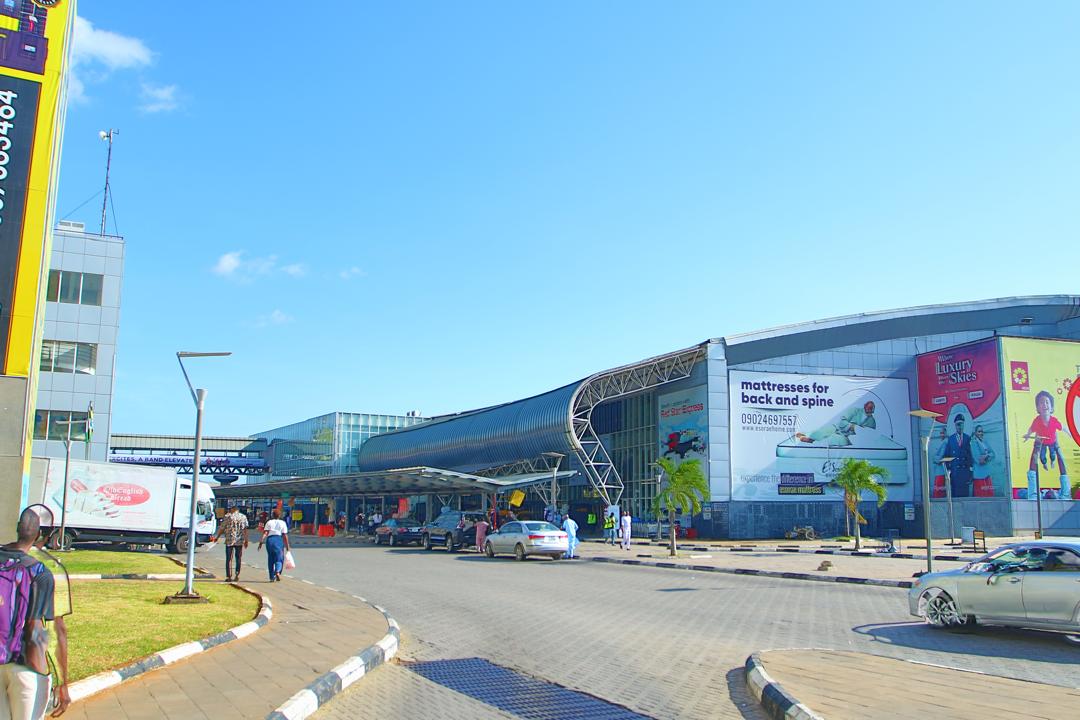
At the turn of the millennium, Nigeria’s aviation sector was under visible pressure. Airports were congested, facilities were aging, and passengers were increasingly frustrated with declining service quality.
Then came the inexplicable fire disaster that gutted parts of the airport, exposing how fragile and underfunded Nigeria’s aviation infrastructure had become. The incident became the tipping point. Overnight, a public-private partnership was no longer an option. It was a necessity.
It was in response to these challenges that the Federal Government adopted a Public-Private Partnership (PPP) model for the development and operation of the Murtala Muhammed Airport Terminal Two (MMA2).
The concession agreement, awarded in 2003 during the administration of President Olusegun Obasanjo, came at a time when the aviation system was stretched beyond its limits. Government funding for infrastructure maintenance and expansion was no longer sufficient to meet demand, while existing terminals struggled with rising passenger traffic and operational inefficiencies.
Join our WhatsApp ChannelREAD ALSO: Lagos Airport Paralysis Continues As Blind Protesters Hold Ground, Passengers Stranded
Through the Federal Airports Authority of Nigeria (FAAN), the government therefore turned to the private sector to share both the financial burden and operational responsibility of airport development. The agreement with Bi-Courtney Aviation Services Limited, a Nigerian-owned company, was expected to deliver a modern domestic terminal that would ease pressure on the overstretched old terminal at Lagos’ busiest airport, while introducing efficiency, innovation, and private sector discipline into aviation operations.
What followed after the agreement was signed did not immediately translate into smooth delivery. Expectations were high, but implementation quickly moved into difficult terrain shaped by disagreement, institutional tension, and differing interpretations of the concession terms.
The most recent chapter in this long-running dispute came with the resolution, April 30, of nearly 20 years of legal and contractual tension between the Federal Government and Bi-Courtney Aviation Services Limited, the concessionaire of MMA2.
READ ALSO: MMA2 to Implement Tariff Adjustments In Car Park, VIP Lounge From November
The conflict stemmed from disagreements over the interpretation of the 2003 concession agreement, particularly issues relating to exclusivity, operational control, and revenue rights at the domestic terminal. Over time, the dispute escalated into multiple court actions. Bi-Courtney maintained that key provisions of the agreement were being breached, while government agencies contested several of those claims.
No doubt, that dispute had exposed deep disagreements over contract interpretation, exclusivity rights, revenue control, and regulatory authority. It also created uncertainty around the stability of long-term concessions. For investors and policymakers, it became a reference point for the risks embedded in Nigeria’s infrastructure agreements.
The recent resolution, as announced by the aviation minister, Festus Keyamo, reportedly involved the write-off of a N132 billion judgment debt against the Nigerian government and a restructuring of key operational and legal terms governing the concession.
The settlement, therefore, goes beyond legal closure. It is a policy moment that raises fresh questions about how Nigeria negotiates, manages, and enforces long-term infrastructure contracts. It also signals an attempt to restore investor confidence in the PPP framework after years of uncertainty and litigation-heavy engagement.
Growth amid dispute
Notwithstanding those years of strain, MMA2 cannot be understood only through its courtroom history. Its physical and operational performance tells a parallel story.
From its inception, Murtala Muhammed Airport Terminal Two was conceived as a large-scale domestic terminal project under a Build-Operate-Transfer arrangement, with a modern integrated design spanning approximately 20,000 square metres.
As one of Nigeria’s earliest major privately financed domestic terminal projects under a concession framework, it demonstrated what structured private sector participation could achieve in airport design and management. Built to combine functionality with efficiency, the terminal redefined expectations around passenger flow, terminal organisation, and operational discipline in domestic aviation.
While Nigeria did not replicate its model in full across other airports, its influence has been visible in policy discussions on airport concessions and gradual improvements in terminal upgrades and service delivery standards across the aviation system.
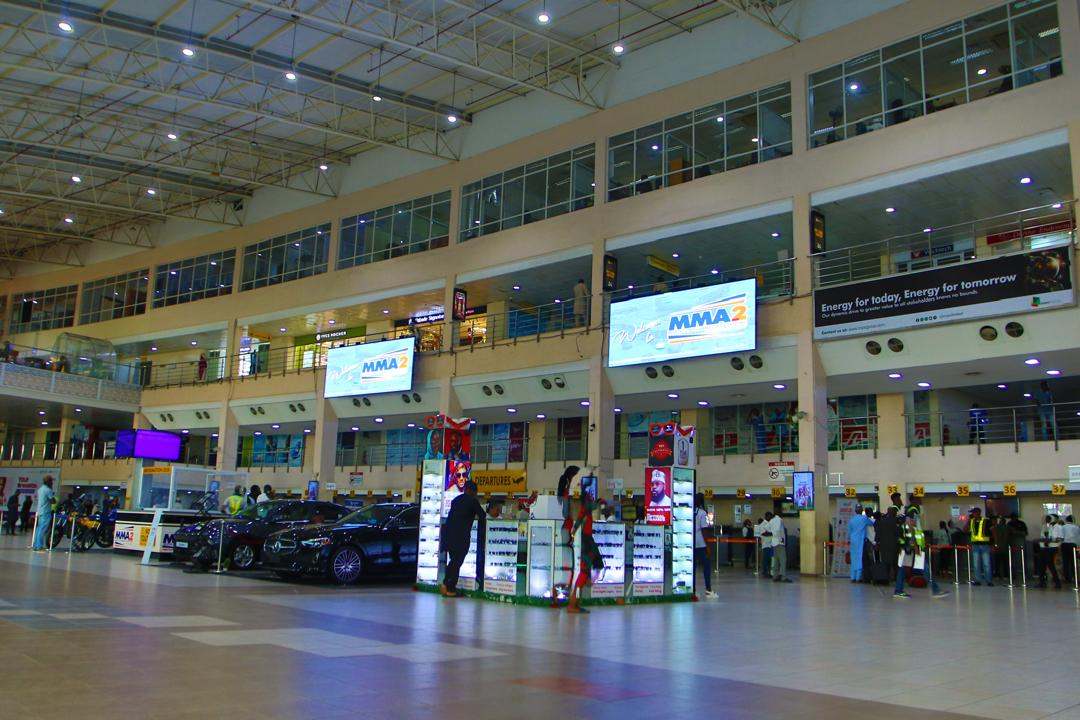
Over time, it became a reference point within the industry for structured terminal operations and service efficiency. Its presence helped shift expectations of what a functional domestic terminal should look and feel like.
Nearly two decades later, much of that original design remains intact. In a country where infrastructure often deteriorates quickly or demands constant reconstruction, that durability has become a quiet but important statement.
Operationally, MMA2 has built a reputation for relative order in a sector often defined by congestion and inconsistency.
Across Africa, infrastructure development through Public-Private Partnerships has produced mixed outcomes. In countries such as South Africa and Kenya, airport and transport concessions have benefited from clearer regulatory frameworks and more predictable enforcement environments. Nigeria’s experience sits between strong potential and recurring institutional friction.
Evidently, MMA2 has reinforced its position through industry recognition over the years. It has been named Best Domestic Airport Terminal on multiple occasions by aviation industry bodies. It has also received awards for functionality, operational efficiency, inclusivity, and accessibility. At different points, it has been recognised as one of Nigeria’s most efficient airport terminals, alongside commendations for passenger experience and service delivery.
Taken together, these recognitions form a pattern rather than isolated moments of praise. They reflect sustained operational performance in a system where consistency is difficult to maintain.
Nigeria’s experience with MMA2, therefore, reflects both the promise of private sector participation and the cost of weak contractual stability as the terminal shows that well-structured private investment can deliver infrastructure that remains functional far beyond initial expectations. Its design resilience and operational consistency suggest that PPP projects can survive beyond political cycles and budget constraints when properly executed.
At the same time, its legal history shows that infrastructure success cannot be separated from governance quality. Without clear rules, stable enforcement, and institutional predictability, even successful projects can become trapped in prolonged disputes that weaken investor confidence.
As MMA2 marks 19 years of operation, it stands at an inflexion point. It is no longer an experiment. It is now a mature case study with both achievements and cautionary lessons.
Broader lessons
Beyond the story of MMA2 and its concessionaire, the broader issue goes much deeper. It is not simply about one company or one terminal. It is about what Nigeria chooses to learn, preserve, and improve from its own infrastructure experiments. Nigeria does not lack examples of infrastructure delivered through PPP arrangements.
The challenge lies not in conception, but in sustaining the institutional discipline required to protect and replicate those outcomes over time.
MMA2 reflects this dual reality. It shows what is possible when design, investment, and operational discipline align.
It also reveals what can go wrong when governance systems fail to evolve at the same pace as long-term infrastructure agreements, especially in environments where policy direction and institutional continuity are not always guaranteed.
As the terminal moves beyond its 19th year, its significance extends beyond its physical structure or daily operations. It has become a reference point in broader conversations about infrastructure policy, governance stability, and investor confidence in Nigeria’s PPP framework.
In that sense, MMA2 is no longer just an airport terminal. It is a national case study in ambition, endurance, and the unfinished work of infrastructure governance.

Dr. Marcel Mbamalu is a distinguished communication scholar, journalist, and entrepreneur with three decades of experience in the media industry. He holds a Ph.D. in Mass Communication from the University of Nigeria, Nsukka, and serves as the publisher of Prime Business Africa, a renowned multimedia news platform catering to Nigeria and Africa's socio-economic needs.
Dr. Mbamalu's journalism career spans over two decades, during which he honed his skills at The Guardian Newspaper, rising to the position of senior editor. Notably, between 2018 and 2023, he collaborated with the World Health Organization (WHO) in Northeast Nigeria, training senior journalists on conflict reporting and health journalism.
Dr. Mbamalu's expertise has earned him international recognition. He was the sole African representative at the 2023 Jefferson Fellowship program, participating in a study tour of the United States and Asia (Japan and Hong Kong) on inclusion, income gaps, and migration issues.
In 2020, he was part of a global media team that covered the United States presidential election.
Dr. Mbamalu has attended prestigious media trainings, including the Bloomberg Financial Journalism Training and the Reuters/AfDB Training on "Effective Coverage of Infrastructural Development in Africa."
As a columnist for The Punch Newspaper, with insightful articles published in other prominent Nigerian dailies, including ThisDay, Leadership, The Sun, and The Guardian, Dr. Mbamalu regularly provides in-depth analysis on socio-political and economic issues.