 MARCEL MBAMALU
A proposal circulating on social media under the title “Nigeria Geo-Political Zone Bill 2026” has again reignited conversations on restructuring, state creation, and fiscal federalism in Nigeria.
The document, widely shared on X (formerly Twitter), is attributed to individuals like columnist Ayo Akinfe. It outlines a radical restructuring framework that would transform Nigeria into six geopolitical zones, each made up of seven states, creating a 42-state federation.
Join our WhatsApp ChannelIt also proposes a four-tier system of government comprising the federal government, geopolitical zones, states and local governments. It suggests sweeping fiscal and administrative changes, including a new revenue formula allocating 50 per cent to states, 20 per cent to the federal government, 15 per cent to geopolitical zones and 15 per cent to a national trust fund.
READ: Nigeria Presidency: Lawmakers Push For 6-year Single Tenure, Rotation Among Zones
The proposal further claims that geopolitical zones would assume responsibility for policing, electricity generation and transmission, and specialist healthcare services, while leadership of each zone would rotate among governors.
Yet, there is no evidence that this document has been introduced as a bill in the National Assembly, adopted as government policy or embedded in any constitutional amendment process. It remains an online circulation without institutional backing.
Beyond its headline claims, the document also sets out a detailed configuration of Nigeria’s 42 states under six geopolitical zones.
In the South-South, it lists Bayelsa, Rivers, Cross River, Akwa Ibom, Edo and Delta states, alongside a proposed West Izon State.
In the South-East, it retains Anambra, Imo, Enugu, Abia and Ebonyi states, while adding proposed Anioma and Orashi states.
In the South-West, it lists Lagos, Ogun, Oyo, Osun, Ondo and Ekiti states, alongside a proposed Odo Oya State.
In the North-Central, it includes Abuja, Benue, Plateau, Nasarawa, Kogi and Niger states, alongside Gurara State.
In the North-East, it lists Borno, Yobe, Adamawa, Taraba, Bauchi and Gombe states, alongside Mambilla State.
In the North-West, it retains Kano, Kaduna, Katsina, Jigawa, Sokoto, Kebbi and Zamfara states.
The document also proposes that zones would intervene financially if any state is unable to meet its running costs, while the federal government would intervene only through emergency powers where necessary.
Since the proposal does not appear in any official constitutional amendment process or government white paper, it remains part of a growing body of online restructuring content often attributed to commentators and advocacy writers, rather than state institutions. But such proposals gain attention because they speak directly to long-standing governance frustrations.
Nigeria continues to operate a highly centralised fiscal system where the federal government controls major revenue streams before redistribution to states and local governments. Many states remain heavily dependent on monthly allocations from the federation account, with limited internal revenue capacity.
This renewed debate is further shaped by prevailing economic conditions in the country. Rising inflation, which climbed to 15.38 per cent in March 2026 from 15.06 per cent in February, alongside mounting debt servicing pressures and the rising cost of governance, has intensified public concern over whether Nigeria’s current federal arrangement remains economically sustainable.
The macroeconomic strain is further underscored by Nigeria’s debt profile, which currently stands at about N158 trillion (approximately $116 billion), against a Naira Gross Domestic Product (GDP) of roughly N435 trillion (about $340 billion at an exchange rate of N1,350 to the dollar), according to International Monetary Fund-based figures. This reflects a debt-to-GDP ratio that continues to fuel concerns about fiscal sustainability and limited revenue headroom.
READ: Rising Debt, Lingering Insecurity: What Is Nigeria Really Funding?
It is within this context that proposals such as the circulating restructuring document gain attention. Since the documents proposes a revenue framework in which states retain 50 per cent of federally collected revenue, while the federal government, geopolitical zones and a national trust fund share the remainder. In effect, it reflects a broader argument common in restructuring debates: that stronger subnational control over resources could improve efficiency, accountability and development outcomes.
Meanwhile, Nigeria has repeatedly engaged in restructuring discussions over the past two decades, with limited structural change. Perhaps, successive constitutional amendment processes have produced incremental changes, but core issues such as state police, resource control and deep fiscal decentralisation remain unresolved.
It then means that reforms struggle to materialise because of reasons like constitutional rigidity. Any major restructuring requires approval by two-thirds of the National Assembly and at least 24 state houses of assembly. This makes consensus-building across regions essential.
Also is the political sensitivity of resource distribution. Restructuring often implies a redistribution of fiscal and administrative power, which directly affects entrenched political and economic interests.
There is also the absence of a sustained elite consensus. Nigerian federal politics is highly competitive, and reform proposals are often assessed through the lens of regional, religious and political advantage rather than policy merit.
These constraints ensure that even widely discussed reforms struggle to move beyond proposal stages. Nigeria’s reform history also reveals a recurring timing challenge.
Structural reforms often emerge either too early in a political cycle, when consensus is weak, or too late, when political capital is already diminished. This creates a pattern where reform initiatives struggle to survive the political environment in which they are introduced.
A major reference point is the 2014 National Conference convened under former President Goodluck Jonathan in March 2014, during his first elected term and in the final phase of his administration.
The conference produced extensive recommendations on restructuring, including proposals for the creation of new states, devolution of powers, fiscal federalism and broader governance reforms. However, most of its recommendations were not implemented, as the political window for execution narrowed towards the end of the administration’s first elected term. In Nigeria’s political context, such far-reaching reform projects often struggle when initiated late in a tenure cycle, as the focus shifts to succession politics and electoral considerations rather than implementation.
So, even if such proposals were to attract institutional attention, their implementation would remain difficult under the current administration of President Tinubu, which is already preparing for a second term. This is especially so now that much of the administration’s attention is focused on the 2027 election cycle. Evidently, the combination of entrenched fiscal interests, constitutional barriers, elite competition and regional sensitivities makes sweeping restructuring a long-term, rather than immediate, possibility.
Another recurring obstacle and a sister to the aforementioned is the question of political ownership. In Nigeria, reforms are often filtered through questions of who initiates them and who benefits from them. Even broadly supported ideas can face resistance if rival political blocs perceive them as strengthening opposing interests.
This dynamic often slows consensus-building and contributes to policy stagnation, particularly in sensitive areas such as federal restructuring.
More worthy of nothing is that social media platforms have become alternative spaces for policy imagination, where ideas circulate rapidly across Facebook pages, WhatsApp groups and X accounts dedicated to political commentary. While these platforms broaden participation in governance debates, they also blur the boundary between official policy proposals and informal opinion writing.
Nonetheless, their popularity underscores sustained public interest in restructuring and constitutional reform.
Having examined the economic pressures, historical precedents and political constraints surrounding Nigeria’s restructuring debate, one conclusion stands out: the demand for reform remains strong, but the conditions for implementation remain constrained.
In that sense, Nigeria’s challenge is not the absence of ideas, but the absence of the political alignment required to turn those ideas into action.

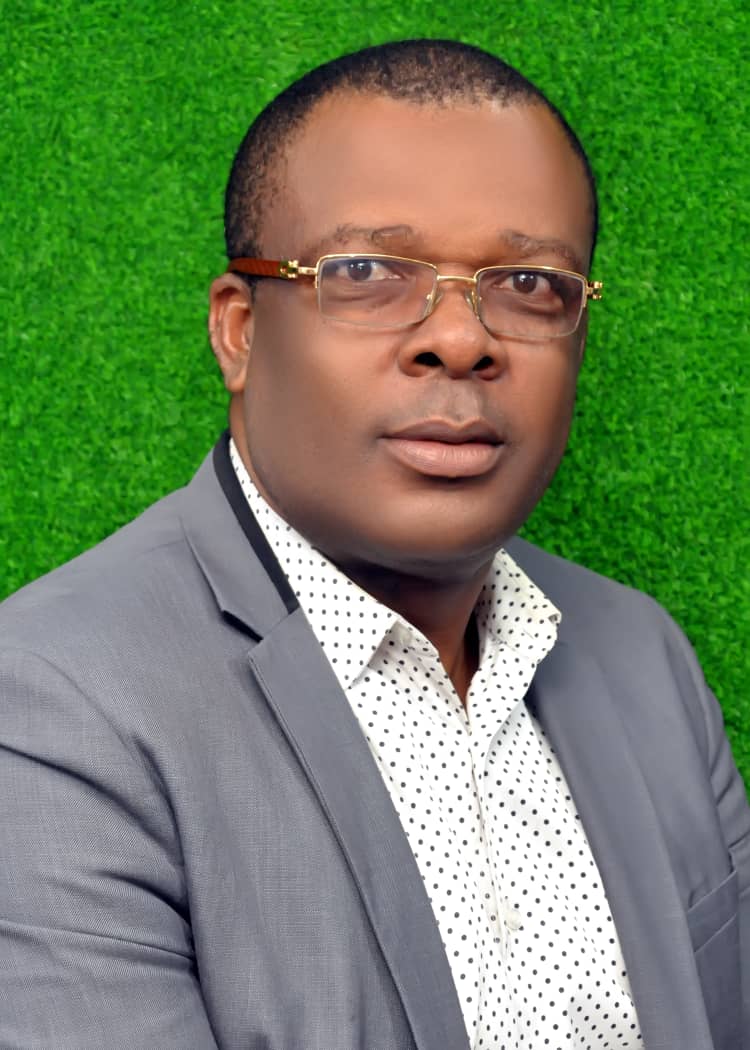
Dr. Marcel Mbamalu is a distinguished communication scholar, journalist, and entrepreneur with three decades of experience in the media industry. He holds a Ph.D. in Mass Communication from the University of Nigeria, Nsukka, and serves as the publisher of Prime Business Africa, a renowned multimedia news platform catering to Nigeria and Africa's socio-economic needs.
Dr. Mbamalu's journalism career spans over two decades, during which he honed his skills at The Guardian Newspaper, rising to the position of senior editor. Notably, between 2018 and 2023, he collaborated with the World Health Organization (WHO) in Northeast Nigeria, training senior journalists on conflict reporting and health journalism.
Dr. Mbamalu's expertise has earned him international recognition. He was the sole African representative at the 2023 Jefferson Fellowship program, participating in a study tour of the United States and Asia (Japan and Hong Kong) on inclusion, income gaps, and migration issues.
In 2020, he was part of a global media team that covered the United States presidential election.
Dr. Mbamalu has attended prestigious media trainings, including the Bloomberg Financial Journalism Training and the Reuters/AfDB Training on "Effective Coverage of Infrastructural Development in Africa."
As a columnist for The Punch Newspaper, with insightful articles published in other prominent Nigerian dailies, including ThisDay, Leadership, The Sun, and The Guardian, Dr. Mbamalu regularly provides in-depth analysis on socio-political and economic issues.