 Amanze Chinonye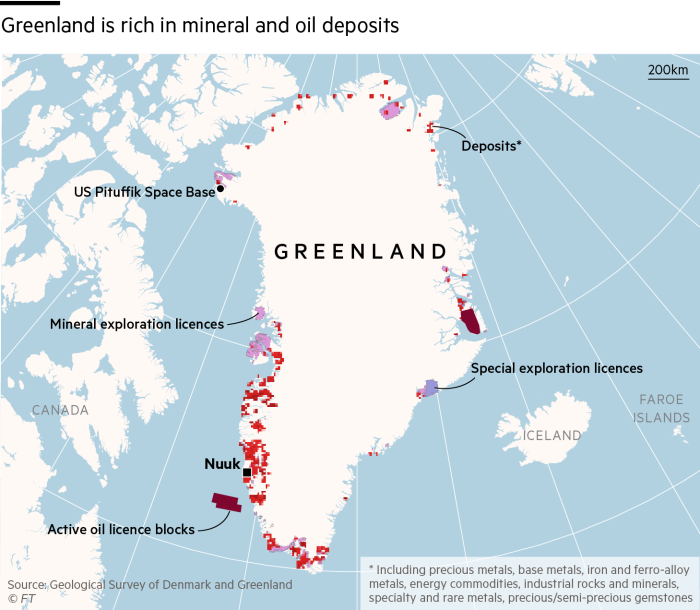
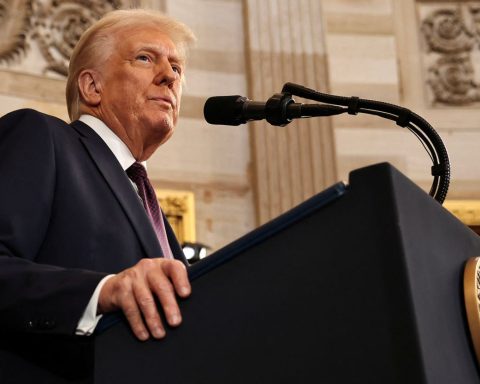
President Donald Trump has intensified his push for United States control of Greenland, describing the Arctic island as indispensable to American national security and warning that anything short of U.S. ownership would weaken the NATO alliance.
Trump’s renewed remarks followed high-level White House talks with Danish and Greenlandic officials that ended without agreement, underscoring widening tensions between Washington and its European allies over Arctic security. The president said the United States could not rely on Denmark to adequately defend Greenland, despite its existing status under NATO’s collective defence framework.
The U.S. president has framed Greenland as “essential” to American defence planning, linking its strategic value to missile defence architecture he refers to as the “Golden Dome,” as well as to broader competition with Russia and China in the Arctic. He has repeatedly warned that without U.S. control, rival powers could expand their influence in the region, insisting that such an outcome was unacceptable.
Join our WhatsApp ChannelTrump has argued that NATO would become “far more formidable and effective” if Greenland were under U.S. control, saying the alliance would not be a credible deterrent without the dominant military power of the United States. He has described any arrangement short of U.S. ownership of the territory as insufficient to meet Washington’s security needs.
READ ALSO : Nigerian Govt To Partner Denmark For Green Energy Transition
Trump Expresses Confidence In Buying Greenland
Greenland, the world’s largest island, is an autonomous territory within the Kingdom of Denmark and already benefits from NATO’s security umbrella. The United States has maintained a long-standing military presence on the island through Pituffik Space Base, a critical installation for missile warning and space surveillance.
Trump’s latest stance marks a significant escalation from his first-term proposal in 2019 to purchase Greenland. While that earlier effort was framed largely as a commercial and strategic acquisition, the current push has been cast more explicitly in terms of military competition and great-power rivalry, as melting Arctic ice opens new shipping routes and access to natural resources.
The proposal has been firmly rejected by Danish and Greenlandic leaders, who have reiterated that Greenland is not for sale and that its future can only be decided by its people. In response to U.S. pressure, Denmark with backing from several European allies has moved to strengthen its military presence in Greenland, signalling resistance to any change in sovereignty.
Despite the sharp rhetoric, the United States, Denmark and Greenland agreed during the recent talks to establish a working group on Arctic security and defence cooperation. Officials said the mechanism was intended to manage security concerns, though it stopped short of addressing the core disagreement over U.S. control.
The dispute has also revealed limited domestic support in the United States for Trump’s position. Recent polling shows only a minority of Americans back efforts to acquire Greenland, with opposition rising sharply when the possibility of military force is raised.
As diplomatic engagement continues, analysts warn that the Greenland issue risks becoming a broader test of NATO cohesion, even as all sides maintain that their overriding objective remains stability and security in the increasingly strategic Arctic region.

Amanze Chinonye is a Staff Correspondent at Prime Business Africa, a rising star in the literary world, weaving captivating stories that transport readers to the vibrant landscapes of Nigeria and the rest of Africa. With a unique voice that blends with the newspaper's tradition and style, Chinonye's writing is a masterful exploration of the human condition, delving into themes of identity, culture, and social justice. Through her words, Chinonye paints vivid portraits of everyday African life, from the bustling markets of Nigeria's Lagos to the quiet villages of South Africa's countryside . With a keen eye for detail and a deep understanding of the complexities of Nigerian society, Chinonye's writing is both a testament to the country's rich cultural heritage and a powerful call to action for a brighter future. As a writer, Chinonye is a true storyteller, using her dexterity to educate, inspire, and uplift readers around the world.